Tensile Lightweight Structure in India - RS Tensile Pvt. Ltd.

| Product Description | Upgrade your spaces with our Tensile Lightweight Structures, designed to provide efficient and stylish solutions for outdoor areas. Made from premium materials like PVC, PTFE, or HDPE, these structures are engineered for durability, weather resistance, and minimal maintenance. |
| Membrane Material | PVC / PTFE / HDPE |
| Fabric Color | White or Customized |
| Shape & Size | Customized |
| Certification | ISO 45001:2018(OHSAS), ISO 45001:2015, ISO 9001:2015 |
| Place of Origin | India |
Order Now
ENQUIRE NOW
If you are looking for a reliable tensile lightweight structure in India, RS Tensile Pvt. Ltd. has been delivering engineered fabric and steel solutions to clients across the country. From small commercial shades to large public infrastructure canopies, our team handles projects of all sizes with consistent quality.
These structures are used where a permanent roof would be too heavy, too costly, or too restrictive - and where aesthetics also matter. They work across industries ranging from hospitality and retail to sports, healthcare, and government projects. India's varied climate - from coastal humidity in Odisha and Andhra Pradesh to the dry heat of Rajasthan and cold winters in Himachal - makes the choice of material and engineering critical. Our structures are designed with these conditions in mind.
What Is a Tensile Lightweight Structure?
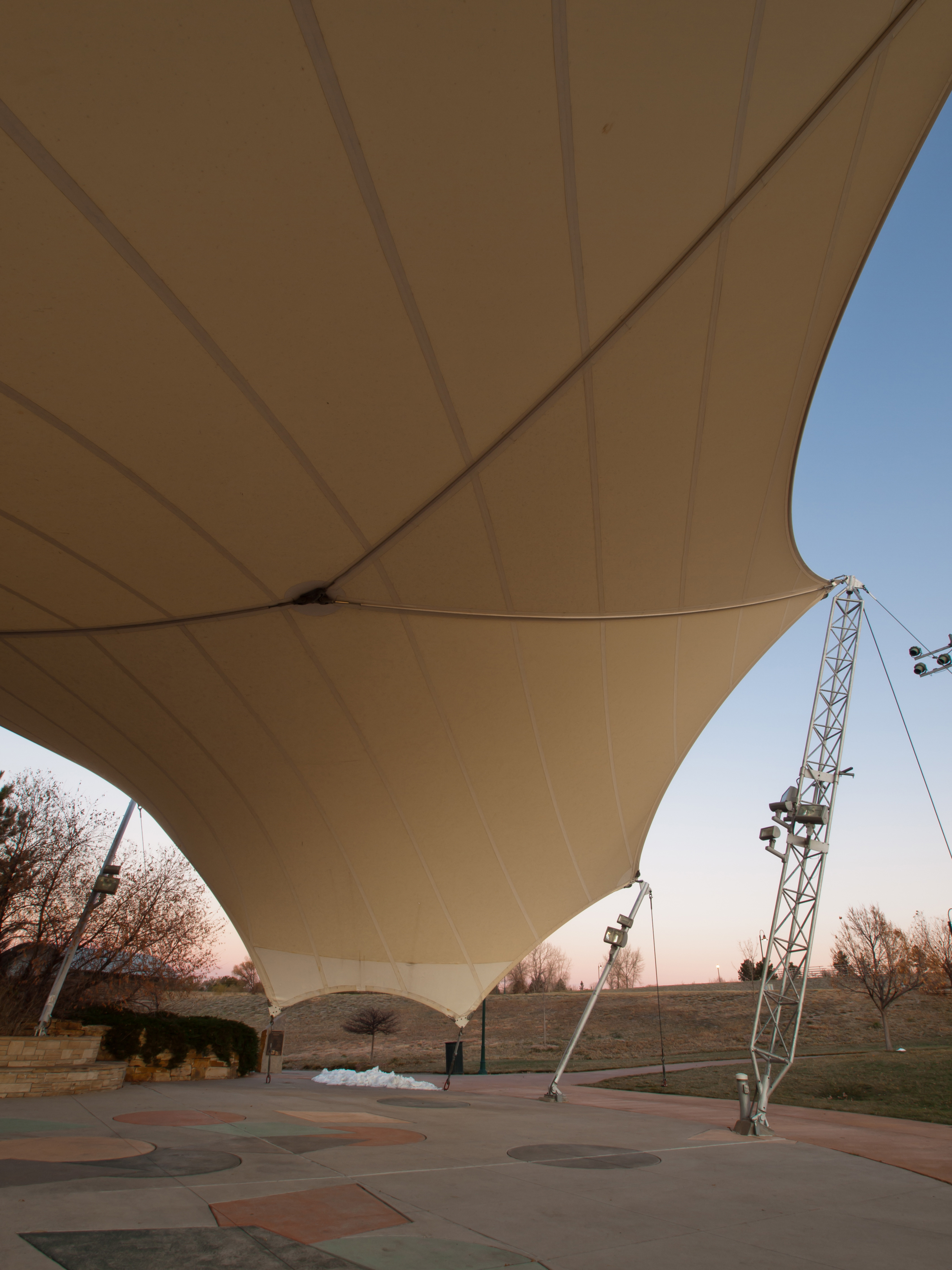
A tensile lightweight structure is an architectural system where a fabric membrane is held in tension by a steel frame, cables, or masts to form a stable, weather-resistant surface. Unlike conventional rigid roofing, the load-bearing principle here is tension rather than compression. The result is a structure that covers large areas with minimal material weight.
The core components include:
- Fabric membrane - typically made from high-density polyethylene (HDPE), PVC-coated polyester, or PTFE-coated fibreglass
- Steel substructure - columns, masts, and/or cable systems that support and anchor the fabric
- Connection hardware - stainless steel fittings, clamps, and tensioning devices
- Foundation anchors - embedded fasteners or ground anchors depending on the site
The fabric is stretched between fixed points and held under calculated tension, which gives the structure its shape and rigidity. Proper engineering ensures the membrane does not sag or flutter under wind or snow loads.
Key Features of Tensile Lightweight Structures
Durability
Quality membranes carry service lives of 15 to 25 years depending on the material grade. Steel components, when properly treated, last decades.
Weather Resistance
Structures handle heavy rainfall, strong winds, and temperature extremes. Whether in coastal Visakhapatnam or high-altitude Manali, the right membrane and frame combination holds up season after season.
UV Protection
PVC and HDPE membranes block a significant proportion of UV radiation, making shaded areas cooler and protecting people, vehicles, and goods underneath.
Low Maintenance
Tensile membranes require periodic inspection and occasional cleaning. They do not rust, rot, or require repainting like traditional roofing materials.
Modern Visual Appeal
The curved, flowing forms of tensile structures provide a clean, contemporary look that suits modern commercial and public spaces.
Custom Design Options
Each project is shaped to the site. Hypar, cone, barrel vault, and free-form shapes are all achievable.
Long Service Life
With proper installation and basic maintenance, a well-designed tensile lightweight structure gives consistent performance for many years.
Benefits of Choosing a Tensile Lightweight Structure
- Cost Effectiveness : The reduced structural dead load means lighter foundations and substructures, which lowers overall project cost compared to conventional roofing of the same span.
- Fast Installation : Fabrication happens off-site. Once the steel frame is erected, fabric installation takes days rather than weeks. This is especially useful for time-sensitive commercial projects in cities like Noida, Gurgaon, Pune, and Mumbai.
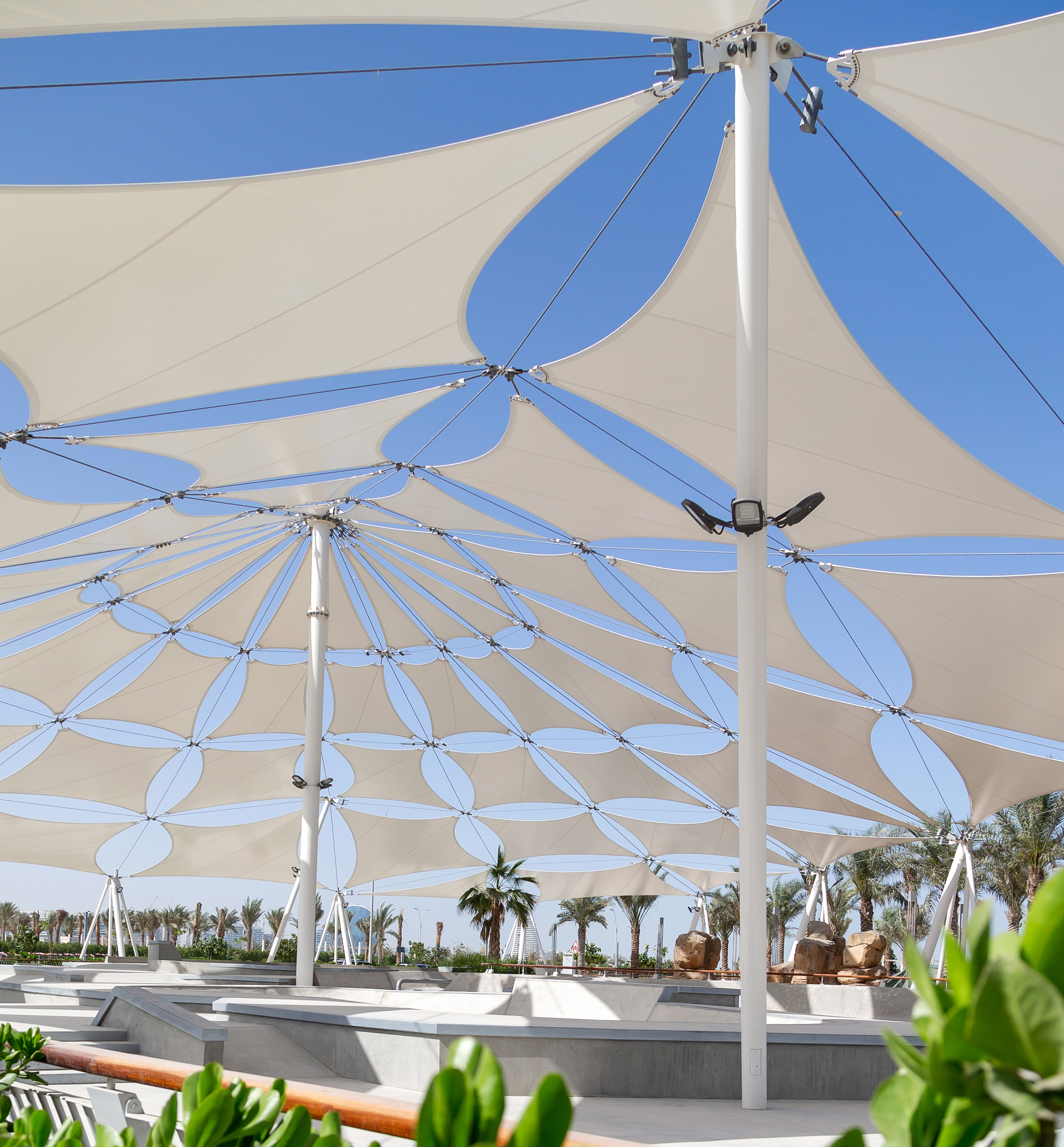
- Large Span Coverage: Tensile systems can cover expansive areas — parking lots, event grounds, sports courts, and industrial yards — with fewer internal columns than traditional structures.
- Structural Flexibility: The fabric can be installed over irregular shapes, slopes, and existing structures. Projects in hilly areas like Shimla, Mussoorie, Dharamsala, and Nainital particularly benefit from this adaptability.
- Aesthetic Value: Architects and developers in cities like Jaipur, Udaipur, and Chandigarh often specify tensile structures specifically for their visual impact.
- Partial Natural Lighting : Translucent membranes allow diffused daylight, reducing dependence on artificial lighting during the day.
Applications of Tensile Lightweight Structures Across Industries
- Commercial Complexes Retail malls, showrooms, and commercial plazas in Lucknow, Kanpur, Bhopal, and Indore use tensile canopies at entrances and walkways to create inviting covered spaces.
- Industrial Facilities Factories, warehouses, and logistics hubs in Rudrapur, Baddi, Bhiwadi, Panipat, and Dewas use tensile structures for loading bays, machinery shelters, and covered yards.
- Educational Institutions Schools, colleges, and universities across Haryana, Uttar Pradesh, and Madhya Pradesh install tensile structures over courtyards, amphitheatres, and sports courts.
- Hotels and Resorts Properties in Rishikesh, Pahalgam, Manali, Kasauli, and Lansdowne use fabric canopies for poolside shading, outdoor dining, and event pergolas.
- Hospitals and Healthcare Covered entry zones, ambulance bays, and courtyard shading structures serve healthcare facilities in Agra, Meerut, Rohtak, and Sonipat.
- Shopping Centres Walkways, food courts, and car parks in Faridabad, Ghaziabad, Thane, and Greater Noida regularly specify tensile solutions for covered pedestrian zones.
- Public Infrastructure Metro stations, bus terminals, public squares, and heritage sites such as Fatehpur Sikri, Sarnath, and Ayodhya use tensile canopies to manage visitor foot traffic while maintaining visual harmony with the surroundings.
- Sports Facilities Cricket academies, badminton courts, swimming pools, and multi-use sports arenas in Panchkula, Karnal, Yamuna Nagar, and Rohini need large-span, UV-resistant coverings.
- Residential Projects Gated communities, housing societies, and luxury villas in Dwarka, Saket, Mahipalpur, and Rohini benefit from tensile shades at parking areas and entrance plazas.
- Government Projects Smart city initiatives, public parks, railway stations, and civic facilities in cities like Varanasi, Prayagraj, Haridwar, and Katra increasingly specify tensile structures.
Design and Customization Options for Tensile Lightweight Structures
Every site is different. RS Tensile Pvt. Ltd. works with clients to develop a design that fits the site, the budget, and the intended use.
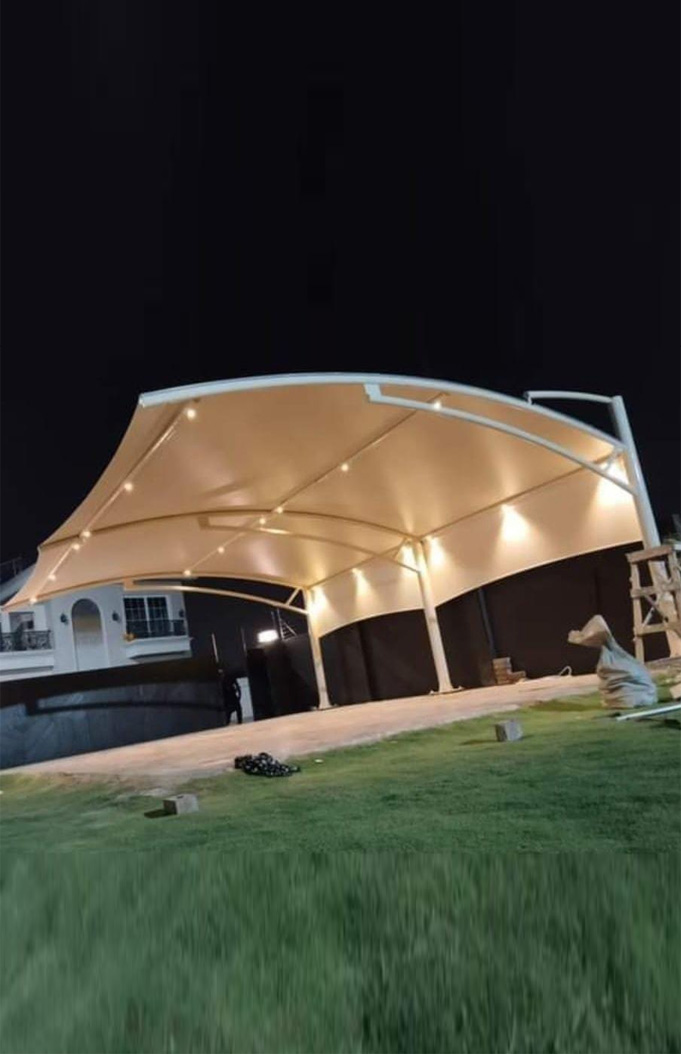
- Shapes and Configurations Common forms include hypar (saddle shape), cone (with one or more peaks), barrel vault (curved tunnel), sail, and free-form. Each shape carries different structural and visual characteristics.
- Shape: From a 10 sq. m. entrance canopy to a 5,000 sq. m. parking shade, we fabricate structures at any scale.
- Sizes: PVC-coated polyester is the most common choice for its durability, water resistance, and cost. HDPE knitted fabric is used for open-weave applications that allow airflow. PTFE-coated fibreglass is selected for high-performance, long-life projects.
- Membrane Materials: HDPE knitted fabric — cost-effective, excellent for parking and open-air shading
PVC-coated polyester — waterproof, suitable for rain protection in areas like Puri, Brahmapur, and Balasore
PTFE-coated fibreglass — premium grade, fire-resistant, long life, used in permanent architectural applications - Colour and Opacity: Fabrics come in a range of colours and translucency levels. Clients in Chandigarh and Faridabad often match shading structures to brand colours or building facades.
- Steel Finishes: Hot-dip galvanised or epoxy powder-coated steel frames suit humid coastal regions such as Visakhapatnam, Kakinada, and Ongole. Stainless steel hardware is available for premium applications.
- Structural Configurations: Mast-supported, wall-mounted, column-supported, or cable-suspended systems — the engineering team selects the most practical configuration for the site.
Installation Process for Tensile Lightweight Structures
Site Assessment
Our team conducts a site survey to record dimensions, ground conditions, existing structures, and local environmental factors. Projects in locations such as Jaisalmer, Barmer, Bikaner, or Sundargarh require specific wind and temperature data.
Design & Engineering
Using structural analysis software, engineers develop the fabric geometry, steel substructure, and connection details. Drawings are submitted for client approval before fabrication begins.
Fabrication
Fabric cutting, welding, and assembly happen at our facility. Steel components are cut, welded, and finished simultaneously to keep schedules on track.
Structural Assembly
On-site, the steel frame is erected and anchored according to the approved drawings. Foundation work is minimal in most cases.
Fabric Installation
The membrane is tensioned onto the steel frame using stainless steel hardware. Tensioning is measured and verified to meet the design specification.
Final Inspection
A thorough check of all connections, fabric tension, drainage paths, and finishes is carried out before handover. Any adjustments are made on-site.
How to Choose a Reliable Tensile Lightweight Structure Manufacturer in India?
With many suppliers active across Rajasthan, Haryana, Maharashtra, Uttar Pradesh, and other states, buyers should evaluate a few key factors:
Manufacturer & Installer
Ask for structural calculations and drawings. A credible manufacturer provides these, not just product catalogues.
Material Sourcing
Enquire about membrane brand, weight, and warranty. Reputable membranes carry manufacturer warranties of 10 years or more.
Project Portfolio
Ask for completed project references in your region — whether in Himachal, Uttarakhand, Andhra Pradesh, or Odisha. Site visits or photographs confirm real delivery capability.
Installation Team
Experienced on-site teams reduce errors and delays. Ask whether installation is in-house or outsourced.
After-Sales Support
Tensile structures need periodic re-tensioning and inspection. Confirm whether the supplier provides post-installation service.
Compliance and Standards
Check if the company follows relevant structural design standards and uses certified materials.
Why Choose RS Tensile Pvt. Ltd. for Tensile Lightweight Structures in India?
RS Tensile Pvt. Ltd. serves clients across India — from Jammu & Kashmir in the north to Andhra Pradesh in the south, from Himachal and Uttarakhand in the hills to coastal Odisha and Maharashtra.
Experience Across Diverse Projects We have handled projects at industrial parks, tourist destinations, educational campuses, and civic spaces. Locations served include Jagatsinghpur, Kokernag, Yanam, Nalagarh, Achalpur, Devprayag, Kathua, Rudraprayag, Rajamahendravaram, Bhawanipatna, Nabarangpur, and many others.
Skilled Engineering Team Our in-house engineers handle structural analysis and design for every project. We do not use generic templates.
Quality Materials We source membranes and hardware from reliable manufacturers with verifiable quality records.
Nationwide Service We deliver and install across all major cities and smaller towns — whether in Pushkar or Puri, Dalhousie or Dhenkanal, Anantnag or Almora, Udhampur or Ujjain.
Project Support From first enquiry to post-installation check, our team stays accessible. We keep timelines realistic and communicate clearly when conditions change.
Custom Engineering No two sites are identical. We engineer each structure to its specific requirements rather than forcing standard products onto non-standard situations.
FAQs About Tensile Lightweight Structures
1. What is the expected lifespan of a tensile lightweight structure?
Most tensile lightweight structures last between 15 and 25 years depending on the membrane material used, local climate, and quality of installation. Premium PTFE membranes can last longer.
2. Is a tensile lightweight structure suitable for heavy rainfall areas?
Yes. Waterproof PVC-coated membranes are specifically chosen for sites in high-rainfall zones. Proper slope design ensures water drains without pooling.
3. Can a tensile lightweight structure withstand strong winds?
Yes, when engineered correctly. Wind load analysis is part of the design process. Structures installed in exposed areas such as Jaisalmer, Hanumangarh, or coastal Visakhapatnam are designed to specific wind speed requirements.
4. Can tensile lightweight structures be installed in cold hilly regions?
Yes. Projects in Shimla, Dharamsala, Chamba, Mussoorie, Roorkee, Almora, Pithoragarh, and Paonta Sahib use membranes and hardware rated for low-temperature performance.
5. Do you provide custom designs for tensile lightweight structures?
Yes. We develop project-specific designs based on the site, intended use, and aesthetic preference. We do not supply off-the-shelf products for permanent installations.
6. Does RS Tensile serve projects across India?
Yes. We supply and install tensile lightweight structures across states including Haryana, Uttar Pradesh, Rajasthan, Madhya Pradesh, Maharashtra, Odisha, Andhra Pradesh, Himachal Pradesh, Uttarakhand, and Jammu & Kashmir.
7. What maintenance does a tensile lightweight structure require?
Periodic inspection of fabric tension, hardware tightness, and drainage is recommended annually. Fabric cleaning every one to two years keeps the membrane in good condition. Major repairs are rarely required when installation quality is high.
8. How long does installation of a tensile lightweight structure take?
For medium-sized projects, installation typically takes 5 to 15 working days after fabrication is complete. Larger structures may take longer. We provide a schedule at project confirmation.
9. What is the minimum or maximum size for a tensile lightweight structure project?
We handle projects from 15 sq. m. entry canopies to multi-thousand square metre industrial or public space covers. Size is not a constraint.
10. Are tensile lightweight structures fire-resistant?
PTFE-coated fibreglass membranes carry high fire resistance ratings. PVC membranes are available in fire-retardant grades. We recommend the appropriate material based on the project type and local fire safety requirements.
Conclusion
A tensile lightweight structure in India offers a practical combination of large-span coverage, weather protection, design flexibility, and relative cost efficiency compared to conventional roofing. RS Tensile Pvt. Ltd. supplies these structures for commercial, industrial, institutional, hospitality, sports, and government applications across the country — from Srinagar and Dalhousie in the north to Tirupati and Vijayawada in the south, from Jodhpur and Jaisalmer in the west to Cuttack, Bhubaneswar, and Brahmapur in the east.
Whether your project is in a large metro like Delhi, Mumbai, Pune, Hyderabad, Kolkata, or Bengaluru, or in smaller towns like Hindaun, Dausa, Kishangarh, Morena, Sambalpur, Khordha, Dholpur, or Hindupuram — we have the capability and experience to deliver it well.
To discuss your project requirements, reach out to our team for a site-specific consultation and quote.
