Swimming Pool Tensile Structure in India

| Product Description | Shield your swimming pool in style with our Swimming Pool Tensile Structure, designed to combine functionality and visual appeal. This innovative structure offers reliable protection while enhancing the ambiance of your pool area, making it perfect for residential, commercial, or recreational spaces. |
| Membrane Material | PVC / PTFE / HDPE |
| Fabric Color | White or Customized |
| Shape & Size | Customized |
| Certification | ISO 45001:2018(OHSAS), ISO 45001:2015, ISO 9001:2015 |
| Place of Origin | India |
Order Now
ENQUIRE NOW
A swimming pool tensile structure in India serves one of the most practical purposes in outdoor architecture — it covers the pool area without closing it off. Unlike rigid roofing that blocks air and light, a fabric tensile membrane filters natural light, cuts UV exposure, and keeps rain and debris out, all at the same time.
Across hotels, resorts, residential communities, sports complexes, and aquatic training centres, this structure type has become a preferred choice for pool enclosures. The reason is straightforward: it performs in Indian weather conditions — whether that is the intense heat of Rajasthan, the coastal humidity of Andhra Pradesh, or the seasonal rainfall of Maharashtra and Odisha.
RS Tensile Pvt. Ltd., led by CEO Radhey Shayam, manufactures swimming pool tensile structures for clients across the country. As a manufacturer, the company handles design, fabrication, and installation in-house, giving project teams a single point of accountability from start to finish.
What Is a Swimming Pool Tensile Structure?
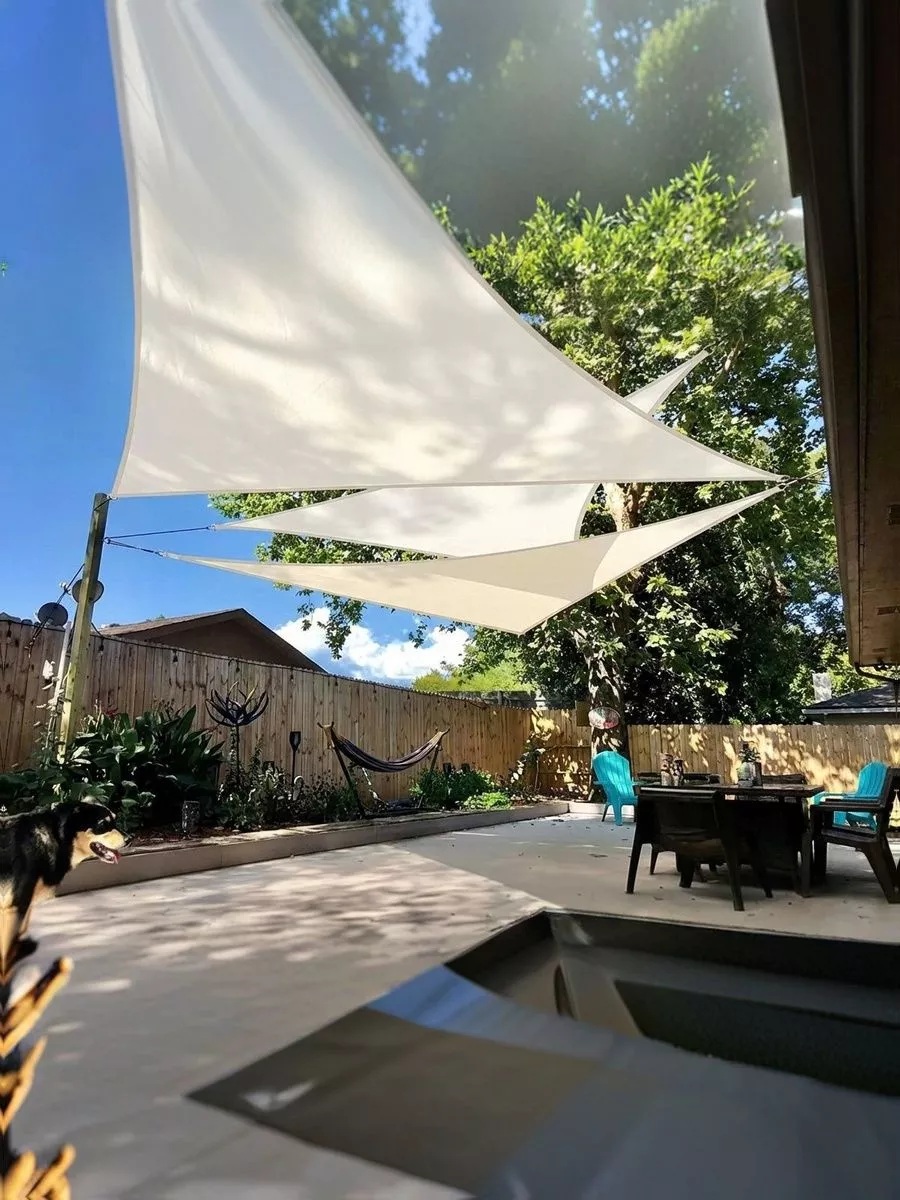
A swimming pool tensile structure is a steel-framed, fabric-covered canopy system built specifically to cover pool areas. The structure works through tension — the fabric membrane is pulled tight across steel posts, masts, or arches, creating a stable surface without internal columns or solid walls that would block ventilation.
The core components include structural steel supports (hot-dip galvanised or powder-coated), high-tenacity PVC or HDPE fabric, stainless steel fittings, and drainage channels to manage rainwater runoff. The membrane is typically pre-fabricated at the workshop and tensioned on site once the steelwork is erected.
Structurally, the membrane transfers loads — wind, rain, and its own weight — into the supporting frame through tension rather than compression. This is what allows lightweight fabric to cover large spans that would otherwise require heavy structural steel or concrete roofing.
Types of Swimming Pool Tensile Structures
Different pool configurations call for different structural forms. The common types used in India include:
Hyperbolic Paraboloid (Hypar)
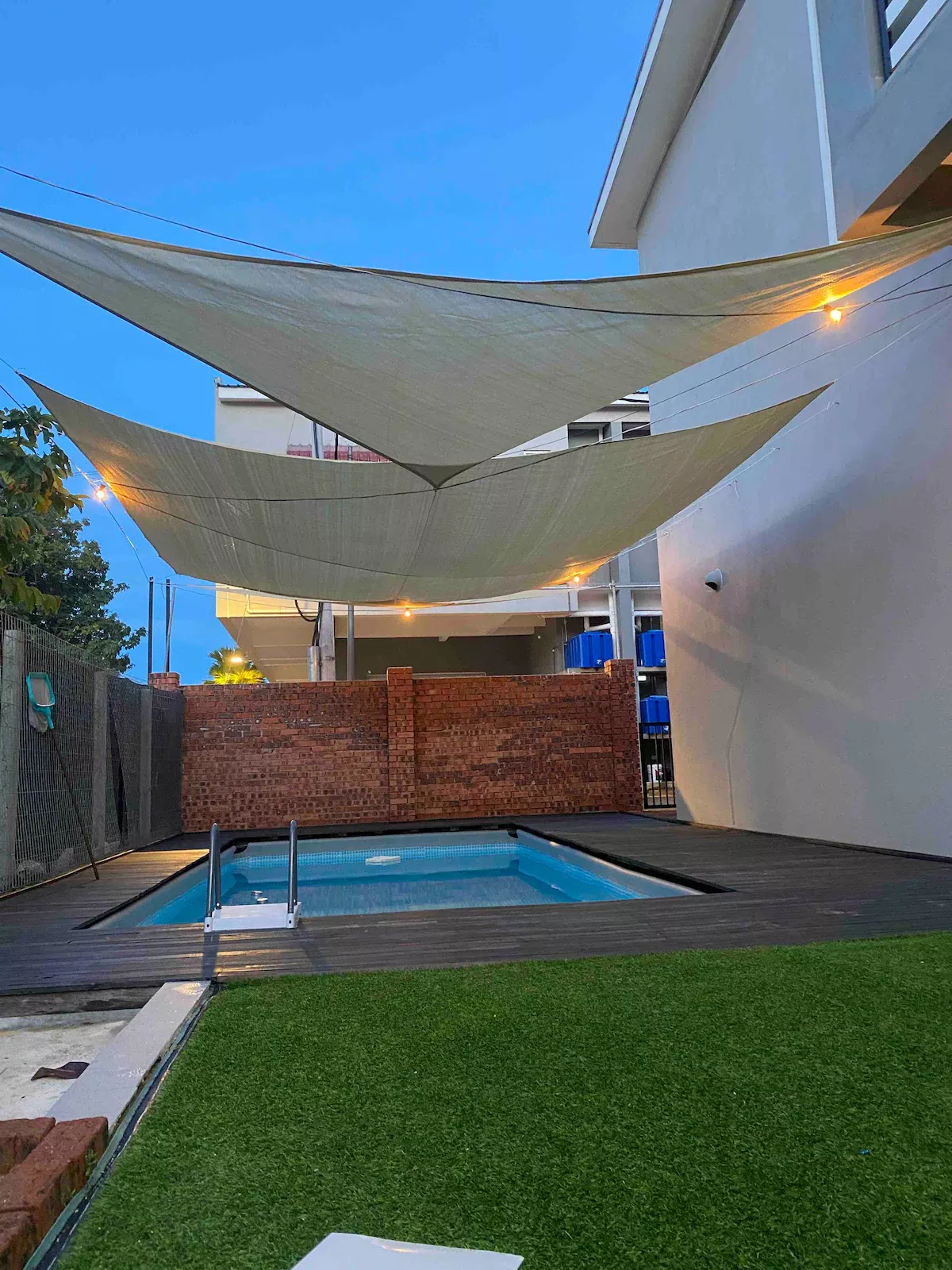
Double-curved saddle shapes that add visual interest and perform well in drainage. Common for rectangular pools in resorts and hotels.
Conical / Mast-Supported
A central mast supports the membrane from above. Used for circular or irregularly shaped pool decks, particularly in Rajasthan and hill stations like Mussoorie and Nainital.
Multi-Point Tensile
Multiple high and low points create a wave-like form. Suits large commercial pools in cities such as Gurgaon, Noida, and Pune.
Barrel Vault / Arch Tensile
A semi-cylindrical arched frame with fabric skin. Used for lap pools and competition pools requiring longer, narrower coverage in facilities across Delhi, Lucknow, and Bhopal.
Frame / Flat Tensile
A flat or slightly sloped membrane supported on a perimeter frame. Simpler to fabricate and suited for budget-conscious residential pool projects.
Key Features of Swimming Pool Tensile Structures
- UV-Stabilised Fabric: High-tenacity PVC and HDPE membranes block 90–98% of UV radiation, protecting swimmers and reducing chlorine degradation caused by direct sunlight.
- Weather Resistance: Fabric membranes rated for wind speeds above 120 km/h and tested for heavy monsoon loads, making them reliable across Odisha, Andhra Pradesh, and coastal Maharashtra.
- Low Maintenance: The steel framework requires periodic anti-corrosion checks; the fabric can be cleaned with standard cleaning agents. There are no tiles, gutters, or drainage systems that need frequent attention.
- Natural Ventilation: Open sides and the breathable nature of some fabrics maintain airflow around the pool, preventing the humidity buildup typical of fully enclosed enclosures.
- Long Service Life: Quality PVC membranes carry a 10-year minimum warranty against UV degradation and fabric tear. The steel structure, when correctly treated, lasts 25 years or more.
- Custom Aesthetics: Fabric is available in a wide colour palette — white, cream, grey, and translucent options — allowing the structure to match the surrounding architecture.
Our Swimming Pool Tensile Structure Cost in India
Our Swimming Pool tensile structure (and similar manufacturers in India) typically range from ₹300 to ₹450 per square foot, depending on the size, design complexity, and membrane fabric (such as PVC or PVDF).
Cost Breakdown of our Pool Canopies
- Basic Structure: ₹300 - ₹350 per sq. ft.
- Custom/Triangular Design: ₹350 - ₹450 per sq. ft.
- RS Tensile (Pvt. Ltd.) Standard Price: Approximately ₹350 per sq. ft.
Factors Affecting Our Total Price of Pool Shade
Benefits of Choosing a Swimming Pool Tensile Structure in India
The decision to install a tensile canopy over a pool usually comes down to a few practical factors:
- Cost vs. Concrete Roofing: A tensile structure costs significantly less than a permanent RCC or polycarbonate enclosure for equivalent coverage. For facilities in cities like Kanpur, Varanasi, or Jaipur, this represents a meaningful budget saving on large pool decks.
- Installation Speed: Most pool canopies are installed within 7–21 days depending on size, compared to months for a structural enclosure. This matters for hospitality projects in locations like Udaipur, Shimla, or Rishikesh where operational downtime is expensive.
- Large Span Capability: Tensile systems can cover 15–40 metre spans without intermediate columns, keeping the pool area unobstructed. Olympic-size and competition pools in Hyderabad, Visakhapatnam, and Nagpur benefit from this in particular.
- Heat Reduction: By blocking direct solar radiation while allowing indirect light, tensile fabrics can reduce the surface temperature around the pool area by 8–12°C, which is material in places like Bikaner, Jodhpur, Ajmer, and Barmer.
- Reversibility: Unlike a permanent structure, a tensile canopy can be dismantled, relocated, or replaced without demolition work. This is useful for temporary event pools or facilities undergoing phased expansion.
It is also worth comparing tensile vs polycarbonate roofing for pool projects. Polycarbonate sheets offer full closure but tend to trap heat, yellow over time, and require regular replacement in India's climate. A tensile membrane breathes, maintains colour longer, and generally offers better temperature management in an outdoor pool context.
Swimming Pool Tensile Structure Installation Process
A structured installation sequence keeps the project on schedule and ensures structural integrity. The typical process followed by RS Tensile Pvt. Ltd. covers six stages:
Site Assessment
Engineers visit the site to measure the pool area, assess soil and anchor conditions, check for obstruction points, and evaluate wind and weather exposure. This is conducted before any design work begins.
Design & Engineering
Structural calculations are completed using load data for the location — including wind zone classification per IS 875. For pool sites in high-wind regions such as Odisha, coastal Andhra Pradesh, or Jammu & Kashmir, additional design factors are applied.
Fabrication
Steel members are cut, drilled, welded, and treated at the workshop. The fabric membrane is cut and welded using high-frequency welding to produce seams with tensile strength comparable to the base material.
Structural Erection
Foundation anchor bolts are cast first. Once cured, the steel framework — posts, masts, arches, or purlins — is erected and plumbed.
Membrane Installation
The pre-cut fabric is lifted into position and tensioned progressively using edge cables, clamps, or lacing systems until the required pre-stress is achieved.
Inspection and Handover
The completed installation is checked for even tension, correct drainage fall, and all structural connections. The client team is briefed on maintenance requirements and warranty terms before handover.
How to Choose a Reliable Swimming Pool Tensile Structure Manufacturer in India?
With fabricators operating across many Indian cities, the selection process matters. A few factors to evaluate:
- In-House Manufacturing: Verify that the vendor manufactures the fabric and steelwork themselves, rather than outsourcing fabrication. Manufacturers maintain tighter quality control and faster turnaround than trading companies.
- Fabric Specification: Ask for the fabric grade, GSM (grams per square metre), tensile strength, and UV stabilisation data sheet. Quality PVC-coated polyester fabric for a pool application should carry a minimum 900–1050 GSM specification.
- Engineering Documentation: A credible manufacturer will provide structural calculation reports, not just drawings. For projects in seismic zones or high-wind corridors — such as areas near Srinagar, Anantnag, Pahalgam, Kathua, or Udhampur — engineering documentation is non-negotiable.
- Project Portfolio: Review completed pool projects, not just commercial or parking tensile structures. Pool environments are chemically aggressive (chlorine fumes, water exposure) and require specific material selections.
- After-Sales Support: Tensile structures require periodic tensioning and inspection. A manufacturer with a service team — rather than one that disappears post-installation — is the safer choice, especially for projects in remote locations such as Pithoragarh, Chakrata, Lansdowne, Yanam, Kokernag, or Devprayag.
- Pan-India Reach: Confirm the vendor has experience delivering and installing across multiple states, not just local or regional markets.
Why Choose RS Tensile Pvt. Ltd. for Swimming Pool Tensile Structures in India?
RS Tensile Pvt. Ltd. is a manufacturer — not a trader or reseller. Every structure is engineered, fabricated, and installed by the company's own team. This matters for accountability: if there is a design adjustment needed, a material issue, or an installation query, there is one team responsible for the answer.
The company supplies swimming pool tensile structures to clients across northern, central, western, southern, and eastern India. Projects have been completed across Uttar Pradesh, Madhya Pradesh, Haryana, Himachal Pradesh, Rajasthan, Maharashtra, Andhra Pradesh, and Odisha. Locations served include major metros as well as smaller urban centres — from Agra, Mathura, Aligarh, Meerut, Saharanpur, Muzaffarnagar, Yamuna Nagar, Ambala, Karnal, Kurukshetra, Panipat, and Hisar in north India; to Jaipur, Ajmer, Alwar, Bharatpur, Sikar, Chittorgarh, Bhilwara, Kota, Udaipur, Jodhpur, Barmer, Bikaner, Jaisalmer, Dausa, Hanumangarh, Sri Ganganagar, Hindaun, Kishangarh, Pratapgarh, and Pushkar across Rajasthan.
In Uttar Pradesh, the company serves Lucknow, Kanpur, Varanasi, Prayagraj, Agra, Gorakhpur, Jhansi, Gwalior, Moradabad, Bareilly, Aligarh, Mathura, Muzaffarnagar, Saharanpur, Faizabad, Amethi, Jaunpur, Satna, and Ayodhya. In Uttarakhand, projects are completed in Dehradun, Haridwar, Roorkee, Rishikesh, Rudrapur, Haldwani, Nainital, Mussoorie, Almora, Pithoragarh, Rudraprayag, and Chakrata.
In Himachal Pradesh, installations cover Shimla, Dharamsala, Manali, Kullu, Mandi, Solan, Dalhousie, Chamba, Kasauli, Baddi, Nalagarh, Bilaspur, Paonta Sahib, and Una. In Haryana, the company operates across Gurgaon, Faridabad, Panipat, Sonipat, Rohtak, Hisar, Karnal, Kurukshetra, Ambala, Panchkula, Rewari, Jhajjar, Bahadurgarh, Sirsa, Kaithal, Palwal, Narwana, Jind, Fatehabad, Hansi, Bhiwani, Nuh, and Sohna.
In Maharashtra, the company covers Mumbai, Pune, Nashik, Nagpur, Aurangabad, Kolhapur, Solapur, Satara, Thane, Bhiwandi, Vasai, Virar, Panvel, Jalgaon, Latur, Amravati, and Ulhasnagar. In Odisha, delivery and installation services cover Bhubaneswar, Cuttack, Rourkela, Brahmapur, Puri, Sambalpur, Balasore, Dhenkanal, Sundargarh, Bargarh, Khordha, Nabarangpur, Bhawanipatna, and Jagatsinghpur.
In Andhra Pradesh, the company supplies to Vijayawada, Visakhapatnam, Guntur, Nellore, Chittoor, Kurnool, Kakinada, Vizianagaram, Tirupati, Ongole, Rajamahendravaram, and Hindupuram. In Jammu & Kashmir, installations have been completed in Srinagar, Jammu, Anantnag, Pahalgam, Katra, Kathua, Udhampur, Handwara, Kokernag, and Baramulla. Other locations served include Delhi (Mahipalpur, Rohini, Dwarka, Alipur, Saket), Ghaziabad, Noida, Greater Noida, Faridabad, Bhiwadi, and Samalkha in the NCR; Indore, Bhopal, Jabalpur, Gwalior, Ujjain, Ratlam, Dewas, Sagar, Satna, Shivpuri, Chhatarpur, Morena, Bhind, and Itarsi in Madhya Pradesh; and Jaipur, Jodhpur, Bikaner, Ajmer, Udaipur, Kota, Alwar, Bharatpur, Sikar, Jhunjhunu, Pali, and other Rajasthan towns.
FAQs About Swimming Pool Tensile Structures
1. How long does a swimming pool tensile structure last?
A correctly specified PVC-coated polyester membrane carries a service life of 10–15 years before replacement. The steel framework, with proper surface treatment, lasts 20–25 years. Regular inspection of cable tensions and anchor points helps achieve the upper end of these ranges.
2. Can a swimming pool tensile structure handle heavy monsoon rainfall?
Yes. The membrane geometry is engineered with drainage fall angles so rainwater channels to edge gutters and downpipes rather than pooling on the fabric. Structures in Odisha, coastal Andhra Pradesh, and Western Maharashtra are designed specifically for high-rainfall loading.
3. Will the swimming pool tensile structure fabric withstand strong winds?
Tensile membranes are designed to wind load specifications per IS 875 (Part 3). For projects in wind-exposed locations — hill stations, coastal towns, and open plains of Rajasthan and Haryana — wind tunnel considerations are factored into structural calculations. Properly anchored structures perform well even at wind speeds of 120+ km/h.
4. What is the approximate tensile structure cost for a swimming pool in India?
Tensile structure price in India varies based on span, structural form, fabric grade, and location. For pool canopies, the range typically falls between ₹800–₹2,500 per square foot depending on these variables. A detailed quotation requires site dimensions and structural requirements. Tensile shade cost per sqft for simpler flat or single-curve designs is at the lower end of this range.
5. How does a swimming pool tensile structure compare with polycarbonate roofing?
Tensile vs polycarbonate sheet comparisons favour tensile membranes for pool applications in most cases. Polycarbonate traps heat, yellows under UV exposure over time, and creates a greenhouse effect. Tensile fabric maintains ventilation, handles UV exposure without significant yellowing, and generally provides better thermal comfort around the pool area.
6. Can the swimming pool tensile structure design be customised?
Yes. RS Tensile Pvt. Ltd. provides custom engineering for every project. Structural form, span, fabric colour, steel finish, and accessory provisions are all adjustable based on project requirements. There is no single standard product — each pool structure is designed and fabricated specifically for the project site.
7. Is the swimming pool tensile structure suitable for hot, dry climates like Rajasthan?
Fabric membranes used for pool structures carry UV stabilisation treatment that maintains structural integrity and colour in high UV environments. For Jaisalmer, Barmer, Bikaner, Chittorgarh, Bhilwara, Ratlam, and similar hot-dry locations, white or light-coloured fabric with a high UV blocking rating is typically specified.
8. What maintenance does a swimming pool tensile structure require?
Annual inspection of cable tensions, anchor points, and steel connections is recommended. Fabric can be washed down with mild detergent and water once or twice a year. Drainage channels should be checked for blockages at the start of the monsoon season. No painting or tile replacement is involved, making this a lower maintenance option than most permanent roofing systems.
9. Does RS Tensile Pvt. Ltd. serve swimming pool projects outside major cities?
Yes. The company completes installations in tier-2 and tier-3 cities, tourist towns, hill stations, and smaller municipal areas. Past installations have covered locations including Sarnath, Fatehpur Sikri, Dhenkanal, Bargarh, Nabarangpur, Bhawanipatna, Achalpur, Rajamahendravaram, Rudraprayag, and others outside the large metro corridors.
10. How does the weather resistance of tensile fabric work in hill station environments?
In snow-prone hill areas such as Manali, Nainital, Almora, Dalhousie, and Mussoorie, fabric membranes are designed with steeper pitch to shed snow load. UV-stabilised fabric that maintains flexibility at low temperatures is specified for these environments to prevent cracking in cold conditions.
Conclusion
A swimming pool tensile structure in India is one of the most practical and cost-effective ways to cover a pool area without closing it off. It blocks UV radiation and rain, reduces ambient temperature, allows airflow, and adds a polished appearance to the facility — all without the weight, cost, and construction timeline of a concrete or polycarbonate enclosure.
The right structure for a pool project depends on site dimensions, structural requirements, the local climate, and the intended use. For hotels and resorts in Himachal Pradesh and Jammu & Kashmir, aesthetics and weather protection are both critical. For residential communities across Delhi NCR, Gurgaon, Noida, and Faridabad, cost and maintenance simplicity tend to drive the brief. For sports facilities and aquatic centres in Maharashtra, Andhra Pradesh, and Uttar Pradesh, span capability and durability take priority.
RS Tensile Pvt. Ltd. manufactures and supplies swimming pool tensile structures for all these project types. With in-house design, fabrication, and installation capacity, the company provides complete project delivery across India. To discuss your project requirements, share the pool dimensions and site location with the team for a detailed proposal.
