Tensile Structure in India - Manufacturer & Supplier | RS Tensile Pvt. Ltd.
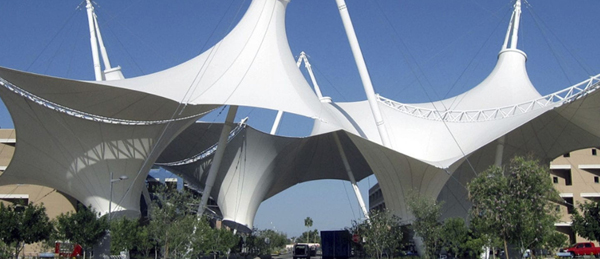
| Product Description | Transform your spaces with our Tensile Structures, designed to provide efficient and stylish solutions. Manufactured with premium materials like PVC, PTFE or HDPE, these structures are engineered for durability, weather resistance, and minimal maintenance. |
| Membrane Material | PVC / PTFE / HDPE |
| Fabric Color | White or Customized |
| Shape & Size | Customized |
| Certification | ISO 45001:2018(OHSAS), ISO 45001:2015, ISO 9001:2015 |
| Place of Origin | India |
Order Now
ENQUIRE NOW
When you need shade, shelter, or a weather-proof covering for a large open area, a tensile structure in India is one of the most practical and cost-effective solutions available. These structures use high-strength fabric membranes stretched across steel frameworks to cover wide spans without the need for internal columns or heavy supports.
RS Tensile Pvt. Ltd. manufactures and supplies tensile structures for projects across the country — from busy urban centres like Delhi, Mumbai, Pune, and Bengaluru to smaller cities and towns such as Jagatsinghpur, Fatehpur Sikri, Sarnath, Kokernag, Kasauli, Lansdowne, Handwara, and Chakrata. Whether your project is a commercial complex, a hospital, a resort, or a public facility, we design and deliver tensile structures built to perform in Indian conditions.
India's climate varies widely — from the intense heat and dust of Rajasthan to the heavy monsoon rains of Odisha and the snowfall of Himachal Pradesh. Tensile structures are engineered to handle all of this, making them a reliable long-term investment for outdoor and semi-outdoor spaces.
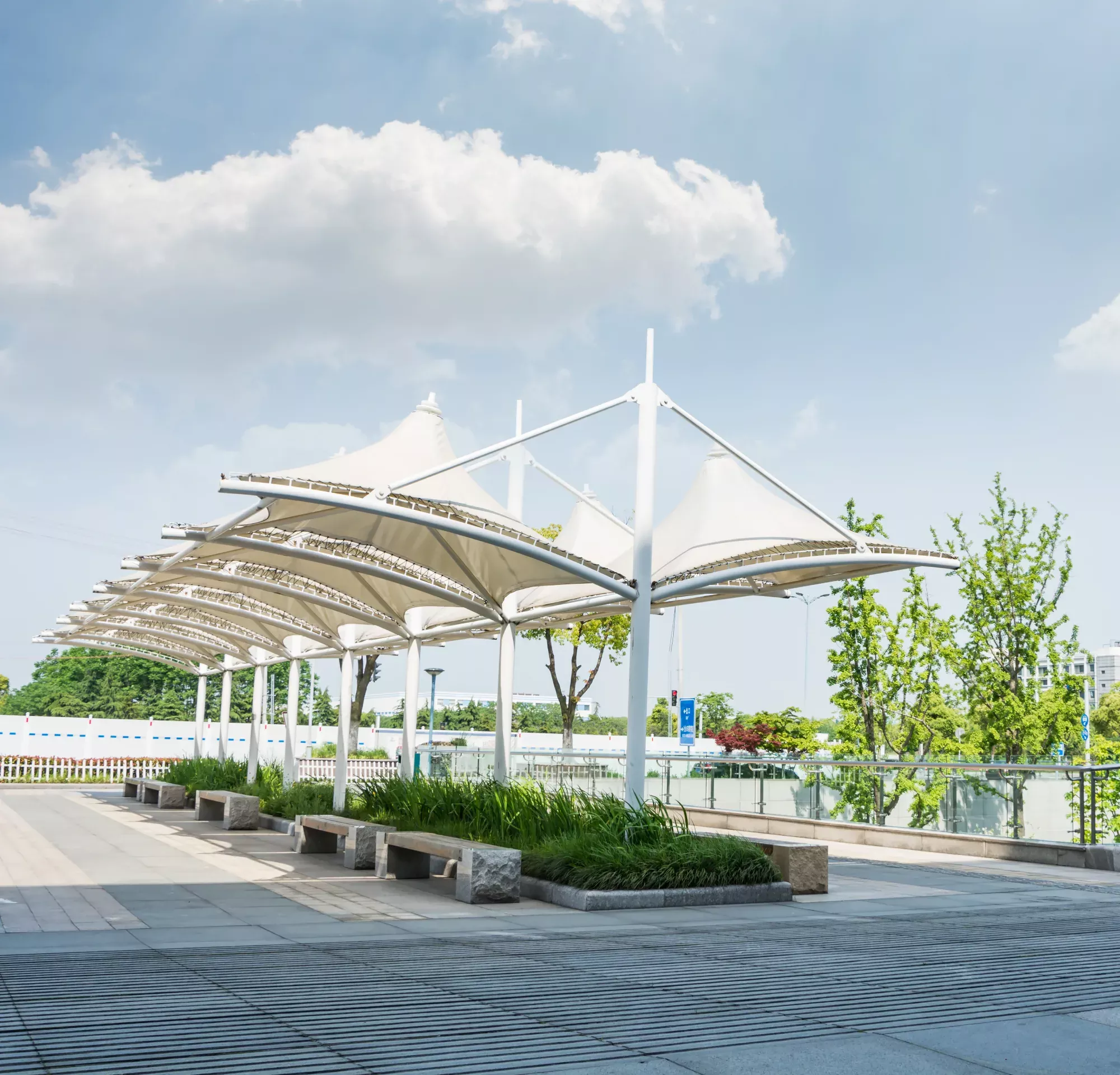
What Is a Tensile Structure in India?
A tensile structure is a type of lightweight architectural covering in which the fabric is held in tension rather than compression. Unlike conventional roofs that rely on solid materials like concrete or steel sheets, a tensile structure uses a stretched fabric membrane supported by steel cables, masts, and anchor points. The tension in the fabric is what gives it strength, stability, and shape.
The main components of a tensile structure include:
- Fabric membrane - typically PVC-coated polyester, PTFE-coated fibreglass, or HDPE shade fabric
- Steel masts and posts - the primary vertical supports
- Steel cables and ropes- used to apply and maintain tension
- Foundation anchors - embedded into the ground or structure to hold the entire system in place
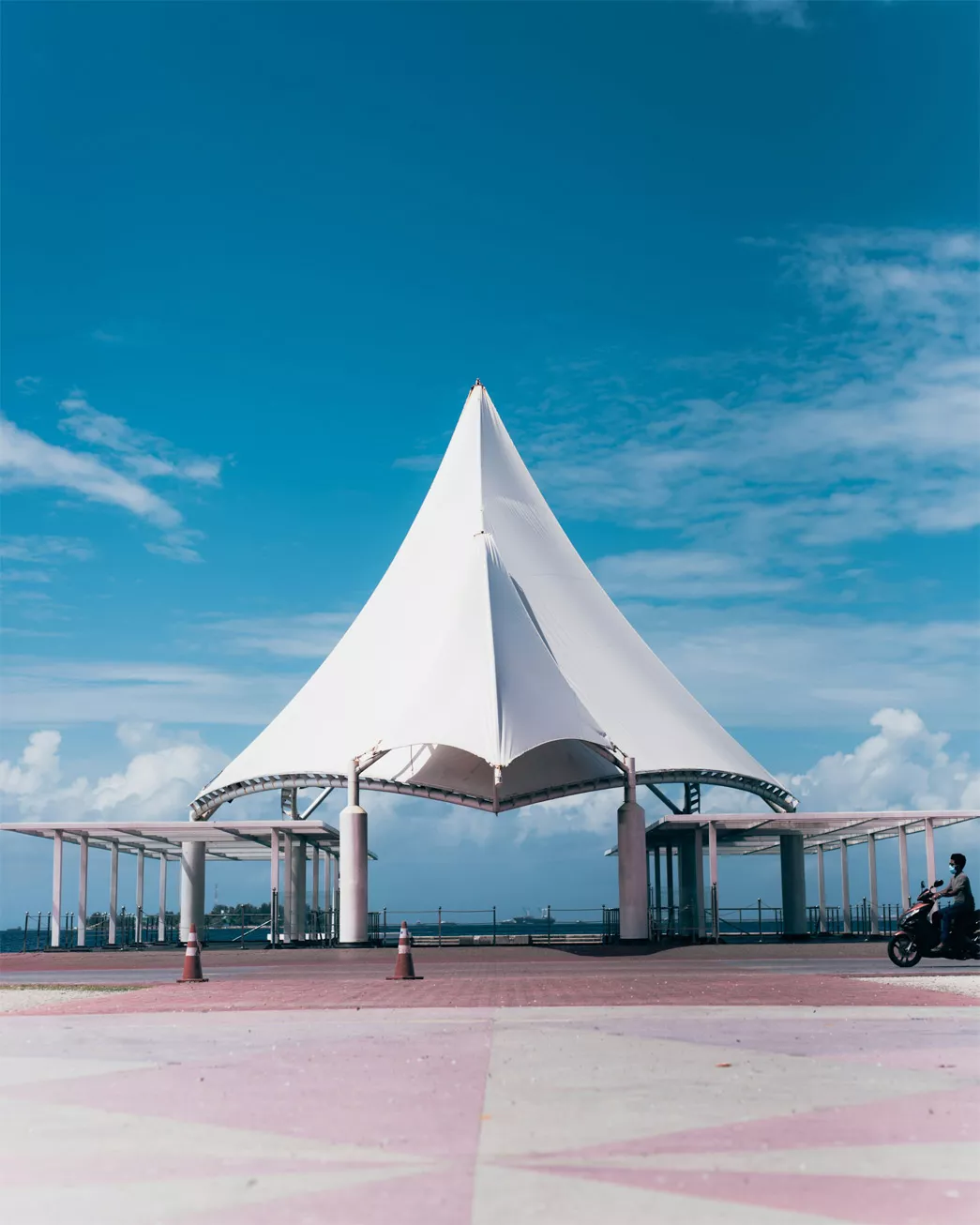
The shape of a tensile structure is defined by the tension distribution. Common forms include conical (pointed) shapes, hyperbolic paraboloids (saddle shapes), and barrel vaults. Each form is calculated using structural engineering software to ensure stability under load.
Key Features of Tensile Structures
Durability Under Varied Conditions
Quality tensile fabric is designed to last 15–25 years depending on the material grade and local environment. PVC-coated fabrics are particularly suited to areas with high rainfall, while PTFE materials offer excellent performance in high-temperature zones.
Weather Resistance
Whether you are in Yanam, Amethi, or the hill stations of Katra or Nalagarh, a well-engineered tensile structure handles rain, wind, and temperature variation reliably. The fabric sheds water efficiently and the steel framework is hot-dip galvanised or powder-coated to resist corrosion.
Low Maintenance Requirements
Unlike permanent roofs, tensile structures require minimal upkeep. Periodic cleaning of the fabric and inspection of the cable tension and anchor points is generally sufficient. The self-cleaning surface properties of many fabric types reduce the frequency of manual cleaning.
Contemporary Appearance
Tensile structures have a clean, modern look that complements both new construction and existing architecture. They are available in a wide range of fabric colours and can be shaped to match the aesthetic requirements of any project.
Custom Design Flexibility
Every tensile structure can be customised in size, shape, colour, and structural configuration. This makes them suitable for a wide variety of site conditions and project briefs — from a compact entrance canopy to a large multi-span parking or event shelter.
Benefits of Choosing a Tensile Structure in India
- Cost Effectiveness Compared to a conventional concrete or steel sheet roof, the tensile structure cost in India is generally lower — both in material and construction. The lighter structure means reduced foundation requirements, which saves further on civil work. Tensile structure price in India varies by project size and fabric type, but tensile shade cost per sqft is often competitive against traditional roofing options when the full project cost is evaluated.
- Faster Installation Because most components are prefabricated off-site, installation on site is fast. Medium-sized projects — such as a parking canopy in Pithoragarh or a school walkway cover in Itarsi — can typically be completed within a few days to a couple of weeks, depending on complexity.
- Large Span Coverage Without Internal Columns One of the most practical advantages of tensile structures is the ability to cover large open areas without any internal support columns. This is particularly useful for sports courts, parking areas, open-air markets, and event grounds where an unobstructed space is essential.
- Structural Flexibility for Varied Sites Tensile structures adapt well to irregular plot shapes, sloped terrain, and constrained sites. Whether the project is in the hills of Hansi or a flat urban plot in Narwana, the structural system can be adapted to suit the site conditions.
- Thermal Comfort The open-sided nature of many tensile structures allows natural airflow, reducing heat build-up under the cover. In hot locations like Pushkar, Shivpuri, Nellore, and Morena, this passive ventilation makes a significant difference to comfort levels beneath the structure.
Applications of Tensile Structures Across Different Industries
Tensile structures are used across a broad range of sectors throughout India. Here is where they are most commonly applied:
- Commercial Complexes and Shopping Centres Entry canopies, outdoor sitting areas, walkway covers, and atrium roofs. Widely used in cities like Dewas, Dausa, Ongole, and Prayagraj where commercial development is expanding.
- Industrial Facilities Covered loading docks, material storage areas, vehicle parking for fleets, and worker rest areas. Used extensively across industrial zones in Hanumangarh, Bhind, Kaithal, and Ratlam.
- Educational Institutions Schools and colleges use tensile structures for covered walkways, outdoor assembly areas, and sports court shading. Projects have been delivered in Barmer, Dhenkanal, Rourkela, and Aurangabad.
- Hotels and Resorts Poolside canopies, outdoor dining covers, entrance porticos, and garden event spaces. Popular in tourism-heavy locations like Ulhasnagar, Jaunpur, Chittoor, and Gorakhpur.
- Hospitals and Healthcare Facilities Patient drop-off zones, ambulance bays, covered walkways between blocks, and outdoor waiting areas. Tensile structures offer a hygienic, low-maintenance option suited to hospital environments in Sirsa, Chittorgarh, Una, and Kishangarh.
- Public Infrastructure and Government Projects Bus shelters, railway station canopies, open-air auditoriums, and covered public markets. Government and municipal bodies in Rishikesh, Faizabad, Bargarh, Mahipalpur, and Alipur have used tensile structures for public-facing infrastructure.
- Sports Facilities Spectator stands, swimming pool covers, tennis court and basketball court shading, and stadium entry canopies. Active use in Yamuna Nagar, Satara, Panvel, and Jind.
- Residential Projects Carport covers, terrace shading, and entrance canopies for residential complexes. Growing demand is seen in Baddi, Palwal, Amravati, Solapur, and Bhilwara.
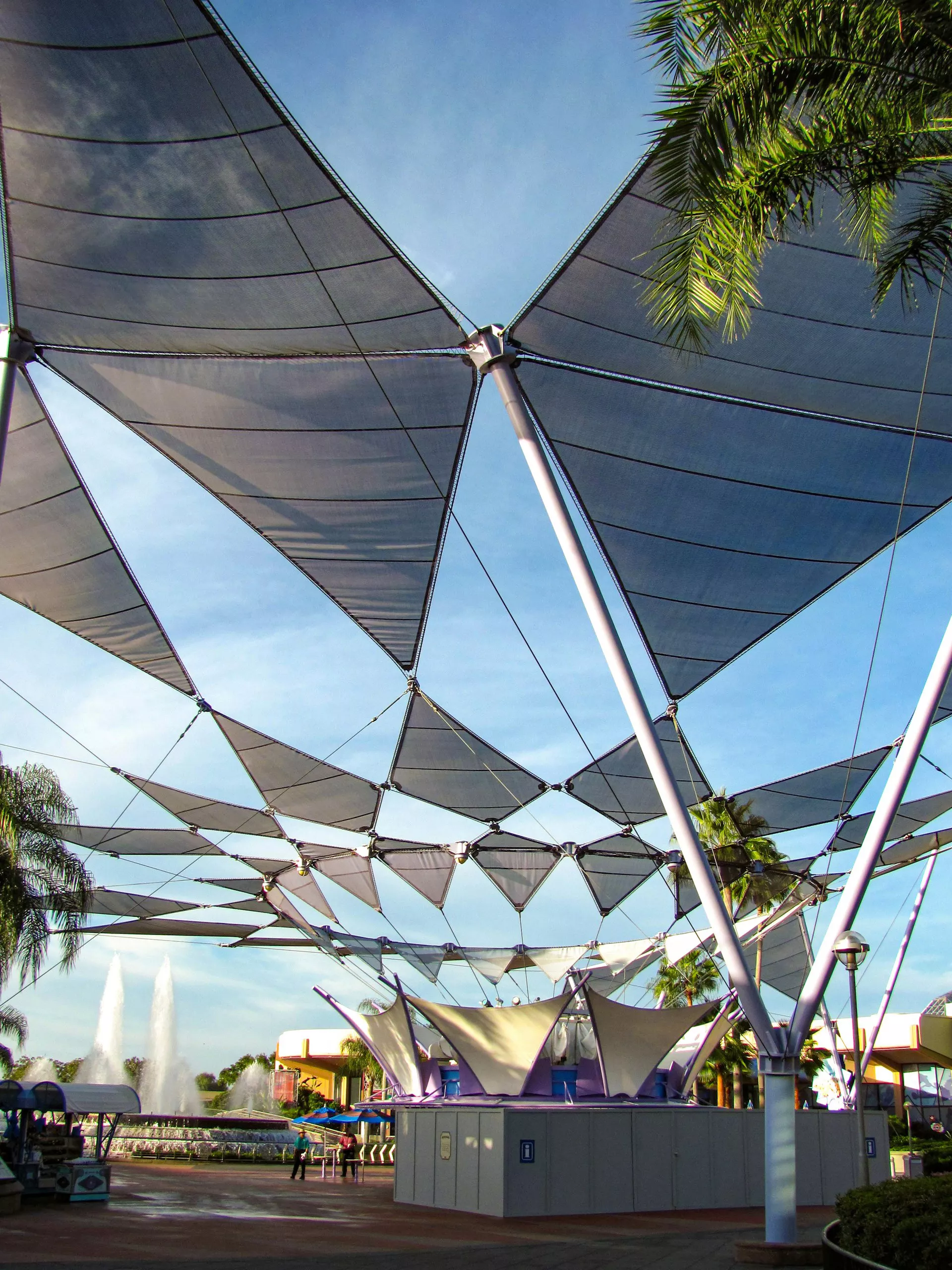
Design and Customisation Options for Tensile Structures
No two projects are the same. RS Tensile Pvt. Ltd. offers design flexibility across all aspects of tensile structure specification:
- Fabric Options
• PVC-coated polyester – durable, cost-effective, suitable for most projects
• HDPE shade cloth – breathable, ideal for agricultural or open-sided use
• PTFE-coated fibreglass – high-end, fire-resistant, very long lifespan
• Tensotherm and other composite fabrics – for insulated or translucent applications - Structural Configuration
• Conical / cone tensile structures
• Hypar (hyperbolic paraboloid) structures
• Barrel vault structures
• Wave / sail structures
• Multi-mast and multi-span layouts for large coverage - Colour and Finish Fabric is available in multiple standard colours, and steel components can be powder-coated or painted to match existing structures. Projects in Kullu, Pratapgarh, Hindaun, and Alwar often involve matching the structure to local architecture or brand guidelines.
- Size and Span Tensile structures can range from small entry canopies of 10–20 sqm to very large-span installations covering several thousand square metres. Each project is assessed individually to determine the right structural system for the span and load requirements.
How Tensile Structures Withstand Indian Weather?
One of the most common questions buyers ask is: how do tensile structures withstand Indian weather — especially the monsoon and extreme summer heat?
- Fabric Options Rain and Waterproofing : Weather resistant tensile fabric, particularly PVC-coated membranes, is waterproof and designed to shed rainwater rapidly. The curved geometry of tensile structures naturally directs water toward drainage points, preventing ponding. Tensile structures for rain and sun protection are installed routinely in high-rainfall areas such as Cuttack, Bhubaneswar, Brahmapur, Sambalpur, Nabarangpur, Dhenkanal, and Rourkela in Odisha.
- Wind Load : Tensile structures are designed to comply with Indian wind load standards (IS 875). The pre-tension in the fabric means the structure stiffens under wind load rather than collapsing. Mast positions and cable angles are calculated to handle the specific wind zone of the project location.
- Summer Heat : High-quality UV-resistant tensile fabric reflects a portion of solar radiation and absorbs some heat, reducing the temperature under the structure. The open-sided design — common in parking and sports applications — allows hot air to escape. This makes tensile structures for sun protection practical and effective across hot zones including Mathura, Hisar, Sohna, Balasore, Ujjain, Mandi, and Bharatpur.
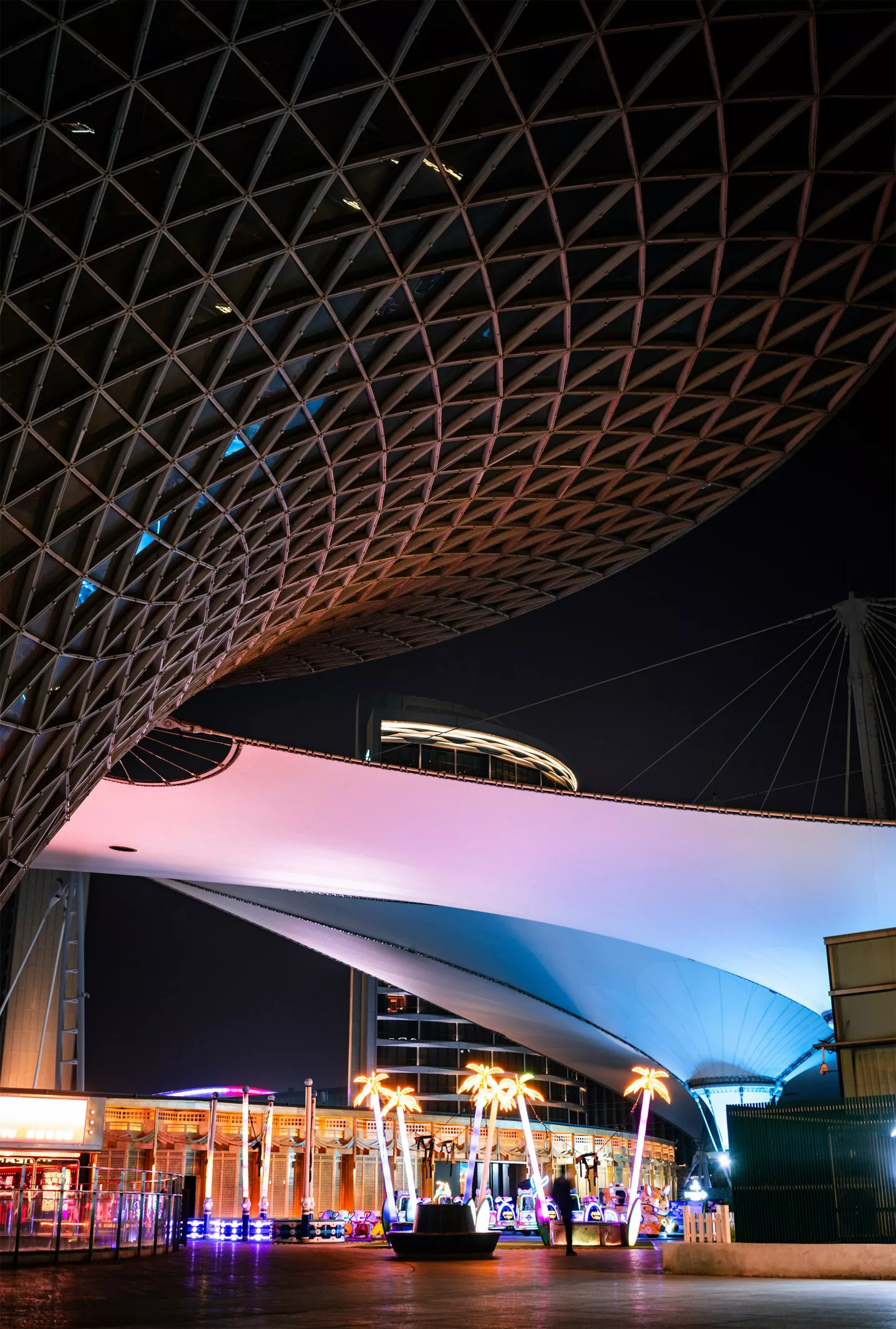
Tensile Structure Installation Process
A properly installed tensile structure requires careful planning and execution at each stage. Here is how we approach every project:
Site Assessment
Our team visits the site to evaluate the ground conditions, available space, existing structures, drainage, and wind exposure. This is essential for projects in hill locations like Khammam, Panchkula, Udaipur, Dholpur, Kolhapur, and Dehradun.
Design & Engineering
Based on the site data, our engineers prepare structural drawings and fabric pattern files. We use software-based form-finding tools to optimise the geometry for load performance.
Fabrication
Steel components are fabricated in our workshop to precise dimensions. Fabric panels are cut and welded using high-frequency welding equipment to ensure watertight seams.
Structural Assembly
Concrete foundations are cast at anchor points and mast bases. Once cured, steel masts and cables are erected and connected.
Fabric Installation
The fabric membrane is attached to the steel frame and tensioned progressively using clamps and edge cables until the designed pre-tension is achieved.
Final Inspection
The completed structure is inspected for geometry, tension uniformity, drainage performance, and structural integrity before handover to the client.
We follow this process for every project — whether in Meerut, Manali, Ajmer, Nashik, Muzaffarnagar, or Varanasi.
How to Choose a Reliable Tensile Structure Manufacturer in India?
With many suppliers operating across India, choosing the right manufacturer requires careful evaluation. Here is what to look for:
Engineering capability
Can they provide proper structural analysis and drawings, not just a visual concept?
Material quality
Do they use certified fabrics and structural steel, or low-cost alternatives?
Completed project experience
Ask to see past projects similar to yours in size and application.
After-sales support
Will they assist with repairs, re-tensioning, or replacement if needed?
Transparent pricing
Get a written quotation that includes fabric, steel, fabrication, and installation separately.
Nationwide reach
For projects outside major metros — in Gwalior, Sikar, Vijayawada, Nainital, Agra, or Nuh — confirm the manufacturer can actually service your location.
Comparing multiple quotes and visiting a completed project or the manufacturer's facility before committing is always a sensible step for larger investments.
Why Choose RS Tensile Pvt. Ltd. for Tensile Structures in India?
RS Tensile Pvt. Ltd. is a manufacturer and supplier of tensile structures serving clients across India. Our projects span from metro cities to smaller towns and industrial clusters, and we bring the same level of attention to every project regardless of size.
In-house manufacturing - We fabricate steel components and fabric panels ourselves, which gives us control over quality and lead times.
Engineering-backed design- Every structure we supply is designed using proper load analysis to meet Indian standards.
Material quality - We use certified tensile fabric and structural steel that meets relevant IS specifications.
Pan-India service - We have delivered and installed tensile structures in Jhansi, Haridwar, Bikaner, Rajasthan, Ayodhya, Odisha, Rudrapur, Sonipat, Bhiwani, Shimla, Moradabad, Haryana, Jammu, Sri Ganganagar, Jammu & Kashmir, Kota, Andhra Pradesh, Srinagar, Ghaziabad, Visakhapatnam, Dwarka, Himachal, Uttar Pradesh, Dalhousie, Achalpur, Devprayag, Kathua, Sundargarh, Rajamahendravaram, Rudraprayag, Udhampur, Dharamsala, Chamba, Kurnool, Kurukshetra, Roorkee, Vizianagaram, Pahalgam, Jaisalmer, Jalgaon, Mussoorie, Latur, Chhatarpur, Fatehabad, Sambalpur, Anantnag, Bahadurgarh, Jhajjar, Vasai, Panipat, Aligarh, Virar, Rohtak, Rohini, Thane, Haldwani, Saharanpur, Khordha, Indore, Karnal, Noida, Satna, Madhya Pradesh, Lucknow, Jabalpur, Mumbai, Pune, Saket, Bhiwadi, Uttarakhand, Paonta Sahib, Samalkha, Bhiwandi, Bilaspur, Tirupati, Almora, Bhawanipatna, Guntur, Greater Noida, Puri, Rewari, Jaipur, Jodhpur, Kakinada, Maharashtra, Faridabad, Gurgaon, Bhopal, Ambala, Nagpur, Bareilly, Delhi, and Hindupuram.
Project support from start to finish - From initial site assessment through to installation and post-installation checks, our team remains involved at every stage.
Honest timelines - We do not commit to deadlines we cannot meet. Clients receive a realistic schedule at the proposal stage.
We work with commercial developers, government bodies, educational institutions, hospitality groups, and private clients — and approach each engagement with the same professional standard.
Conclusion
A tensile structure in India offers a practical and cost-effective way to cover large outdoor or semi-outdoor spaces. With the right fabric, engineering design, and installation, these structures deliver reliable protection from sun and rain for many years with minimal upkeep.
They are used in commercial, industrial, institutional, hospitality, sports, and government projects — and are suited to India's wide range of climatic conditions, from the snowfall of the Himalayas to the coastal monsoons of Odisha and Andhra Pradesh.
RS Tensile Pvt. Ltd. manufactures and supplies tensile structures with in-house engineering, fabrication, and installation capabilities. We serve clients across India — from large metros to towns like Nellore, Morena, Dewas, Dausa, Ongole, and beyond.
If you have a project in mind, share your requirements with us. We will assess your site, suggest the right structure type, and provide a detailed quotation. Contact RS Tensile Pvt. Ltd. to get started.
FAQs About Tensile Structures in India
1. What is the typical lifespan of a tensile structure in India?
Most quality tensile structures last between 15 and 25 years. PVC-coated polyester fabric generally has a lifespan of 15–20 years, while PTFE-coated fibreglass can last 25 years or more. The steel framework, if properly galvanised and maintained, can outlast the fabric.
2. What is the tensile structure cost in India per square foot?
The tensile structure price in India varies by project size, fabric grade, location, and structural complexity. As a general indication, tensile shade cost per sqft for basic PVC structures can range from approximately Rs. 200–600 per sqft, while premium PTFE systems cost more. For an accurate quote, please share your project requirements with us.
3. Are tensile structures suitable for heavy monsoon rainfall in India?
Yes. Waterproof PVC tensile fabric is specifically suited to high-rainfall environments. The curved shape of the structure ensures rapid drainage and prevents water from accumulating on the membrane. Many of our projects in Odisha, Maharashtra, and coastal Andhra Pradesh are designed with this in mind.
4. Can tensile structures withstand strong winds?
Yes, provided they are designed to meet IS 875 wind load standards for the specific wind zone of the project location. Pre-tensioned fabric stiffens under wind load, which is one of the structural advantages of this system over loose or untensioned fabric shelters.
5. Do you offer customised designs for tensile structures?
Yes. Every project we undertake is custom-designed based on the client's site conditions, usage requirements, aesthetic preferences, and budget. We do not supply standard off-the-shelf units for permanent installations.
6. Do you supply and install tensile structures across India?
Yes. We work on projects across India — including major cities, tier-2 and tier-3 towns, and semi-urban or rural locations. Our team can mobilise to most project sites with reasonable access.
7. What maintenance does a tensile structure require?
Maintenance requirements are low. We recommend an annual inspection of cable tension, anchor points, and fabric surface condition. The fabric should be cleaned periodically using mild soap and water. Any accumulation of debris in drainage channels should be cleared, particularly after the monsoon season.
8. What fabrics do you use in tensile structures for sun and rain protection?
We use PVC-coated polyester for general sun and rain protection. For shade-only applications, breathable HDPE fabric is available. For premium or high-specification projects, we offer PTFE-coated fibreglass fabric. All fabrics used offer UV resistance and are sourced from reliable suppliers.
9. How long does it take to install a tensile structure?
Installation time depends on project size and complexity. Small canopies can be installed in 2–5 days. Larger multi-mast or multi-span structures may take 2–6 weeks from site mobilisation to handover. Lead time for fabrication is additional and is typically 3–6 weeks from design approval.
10. Can a tensile structure be dismantled and relocated?
In many cases, yes. Steel components can be disassembled and re-erected at a new location, though the fabric may require re-patterning if the geometry changes. This is worth discussing at the design stage if relocation is a possibility in the future.
