Auditorium Tensile Structure in India

| Product Description | Create an inviting and practical environment for your audience. Order your Auditorium Tensile Structure today to elevate your venue’s functionality and style! |
| Membrane Material | PVC / PTFE / HDPE |
| Fabric Color | White or Customized |
| Shape & Size | Customized |
| Certification | ISO 45001:2018(OHSAS), ISO 45001:2015, ISO 9001:2015 |
| Place of Origin | India |
Order Now
ENQUIRE NOW
Auditorium Tensile Structure in India has become a preferred roofing and shading solution for open-air venues, outdoor performance areas, public amphitheatres, and community gathering spaces. These structures use high-tensile fabric stretched across a steel or aluminium framework to create large, column-free covered areas that protect audiences from sun, rain, and dust without compromising visibility or airflow.
Unlike conventional roofing that relies on heavy beams and load-bearing walls, tensile structures rely on the geometric tension in the membrane itself to maintain rigidity and form. This makes them structurally efficient, visually striking, and much faster to install than brick-and-mortar alternatives.
Across India, municipalities, educational institutions, cultural organisations, hotels, and religious trusts are adopting tensile fabric canopies for their auditoriums and open stages. Cities and towns including Jaipur, Lucknow, Bhopal, Visakhapatnam, Pune, Nagpur, and Dehradun have seen significant demand for these installations in recent years. RS Tensile Pvt. Ltd. manufactures and supplies these structures across the country, serving both urban hubs and smaller towns with project-specific engineering support.
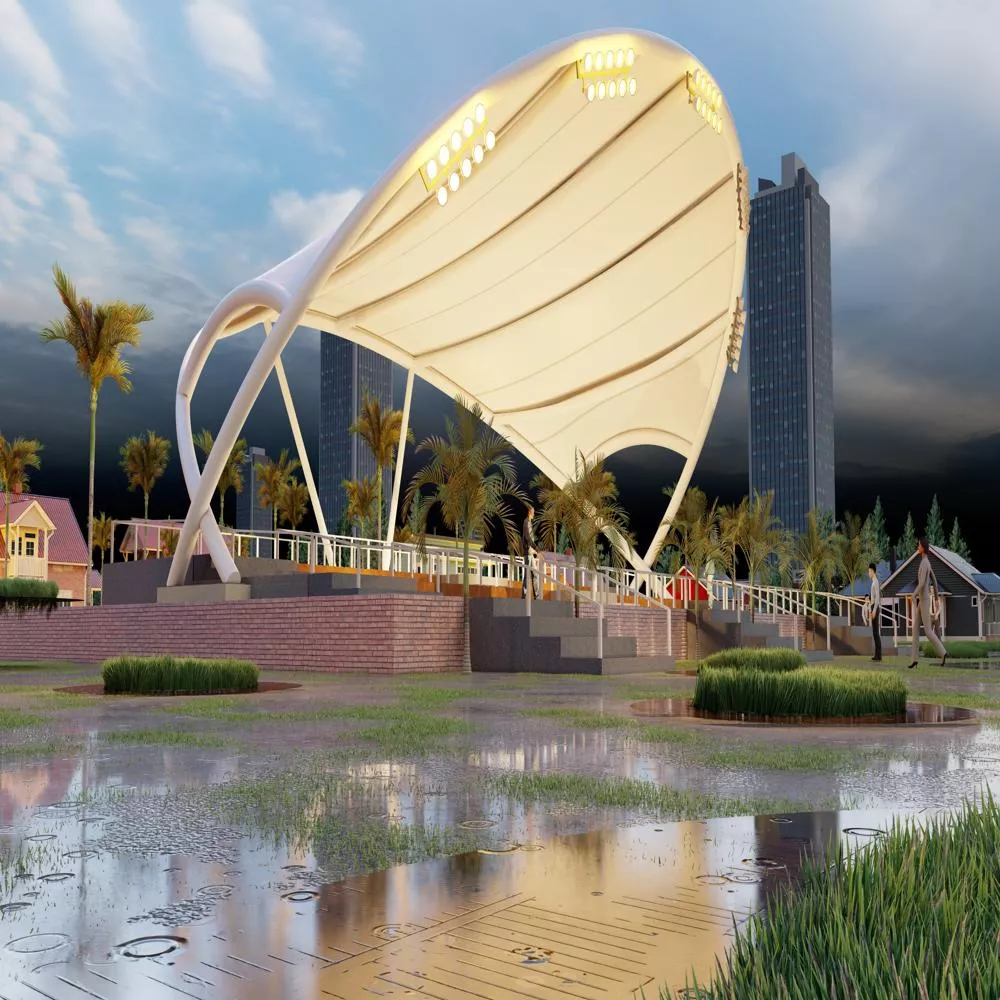
What Is an Auditorium Tensile Structure?
An auditorium tensile structure is a fabric-based architectural canopy designed to cover seating areas, performance stages, or open gathering spaces. The structure consists of a high-strength PVC or PTFE membrane that is pre-stressed and anchored to a rigid support frame. The tension in the fabric creates a self-supporting shell capable of spanning large distances without intermediate columns.
The main components of a typical installation include:
- High-tensile fabric membrane (PVC-coated polyester or PTFE glass fibre)
- Hot-dip galvanised steel or powder-coated structural columns
- Cable systems and edge plates for membrane tensioning
- Ridge beams or arched frames depending on the design shape
- Drainage channels and perimeter guttering
- Anchor foundations secured to the ground or existing structure
The working principle is straightforward: the fabric is cut and welded into a precise geometric pattern, then pulled taut between anchor points. This pre-tension stiffens the membrane and allows it to resist wind uplift, rain loads, and thermal expansion. The result is a lightweight, weather-resistant roof that can cover areas from a few hundred to several thousand square metres.
Types of Tensile Structures for Auditoriums
Hypar (Hyperbolic Paraboloid) Canopy
This saddle-shaped form is widely used for stages and event seating areas. The double-curved geometry distributes tension evenly across the fabric and sheds rainwater efficiently from opposite corners.
Barrel Vault (Arch) Structure
A continuous arched frame supports a curved fabric membrane. Commonly used for long, narrow seating areas such as grandstands or linear outdoor theatres. Found in facilities across Gorakhpur, Kanpur, Varanasi, and Agra.
Cone and Mast Structure
A central mast holds the fabric in a conical or inverted umbrella form. Single or multiple cones can be arranged to cover large seating grids. Used in public spaces in cities like Gurgaon, Noida, Greater Noida, and Faridabad.
Frame-Supported Canopy
A welded steel frame defines the perimeter and ridge, with the fabric suspended within. This approach suits venues that need a defined rectangular or polygonal covered area, common in school amphitheatres in Dehradun, Shimla, Mussoorie, and Nainital.
Freeform Membrane Structure
Custom-engineered geometry for high-profile cultural or civic projects. The shape is defined by the site and aesthetic requirements rather than standard geometry. Used in projects across Mumbai, Pune, Nashik, and Hyderabad.
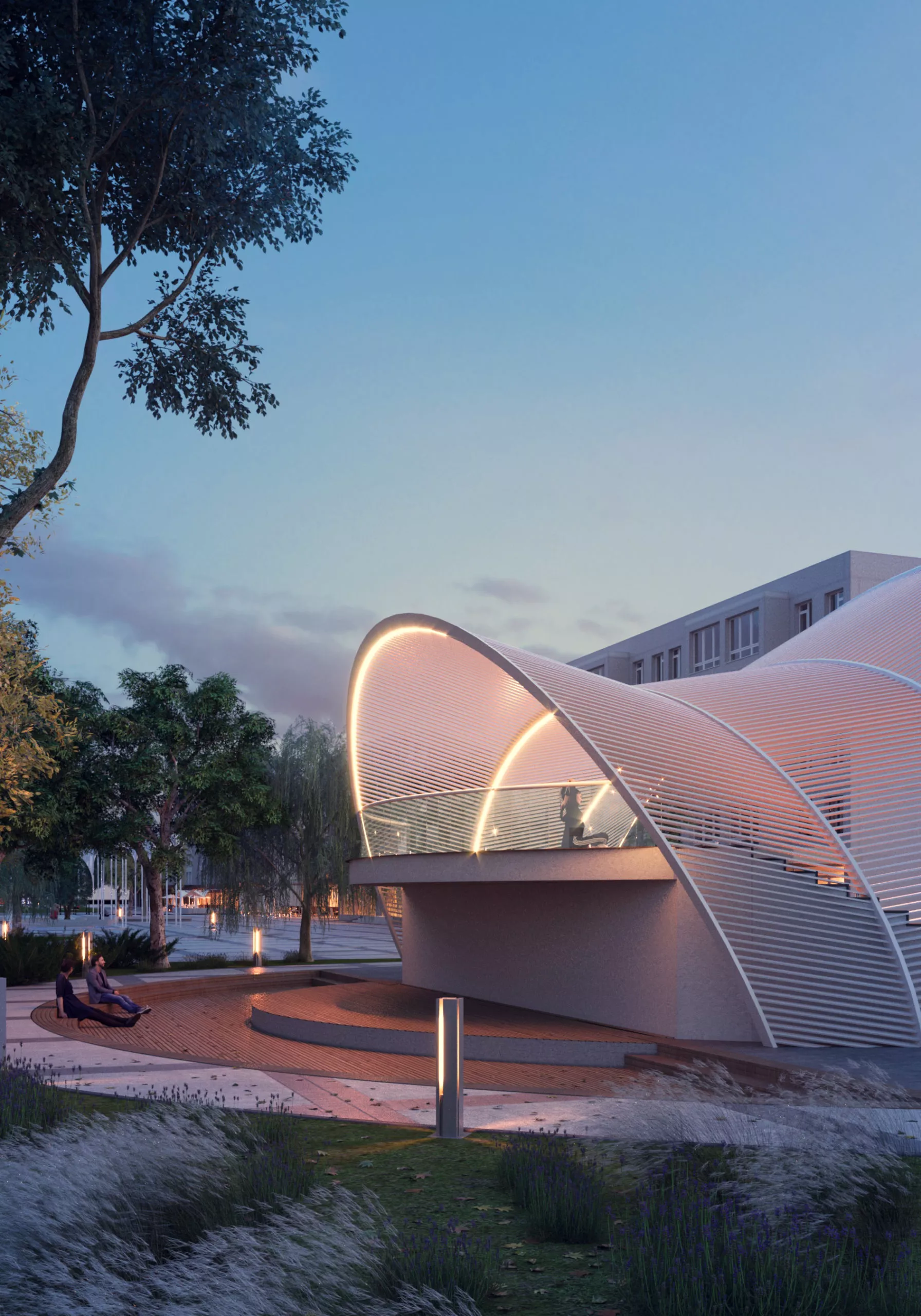
Key Features of Auditorium Tensile Structures
- Weather Resistance: The PVC and PTFE membranes used in these structures are specifically rated to handle India's extreme weather cycles - heavy monsoon rainfall in Odisha, Cuttack, and Bhubaneswar; intense summer heat in Rajasthan towns like Jaisalmer, Barmer, and Bikaner; and cold winters in hill stations including Manali, Shimla, and Kasauli.
- UV Protection: Membranes are manufactured with UV stabilisers that block a high percentage of ultraviolet radiation. This protects both the audience seated below and the fabric itself from degradation caused by direct solar exposure.
- Large Span Capability: Tensile structures can cover spans of 10 to 80 metres or more without intermediate columns, preserving clear sightlines across the seating area. This is critical for performance venues.
- Low Self-Weight: The fabric and frame assembly is significantly lighter than concrete or metal sheet roofing. Lower self-weight reduces foundation loads and simplifies structural design, particularly useful in heritage-adjacent sites like Fatehpur Sikri, Sarnath, and Ayodhya.
- Natural Ventilation: The fabric canopy covers the space without enclosing it. Air moves freely beneath the structure, reducing heat accumulation - an important factor for comfort in open-air events across Rajasthan, Uttar Pradesh, and Andhra Pradesh.
- Long Service Life: With proper installation and periodic care, a quality PVC membrane retains structural and optical performance for 10 to 15 years. PTFE membranes can last 25 years or more.
- Aesthetic Appeal: The organic curves and clean fabric surfaces create visual interest that complements both modern civic architecture and traditional landscape settings.
- Custom Colour and Translucency Options: Fabrics are available in a range of colours and translucency levels. Translucent membranes allow diffused natural light to enter the seating area during daytime events.
Our Auditorium Tensile Structure Cost in India
Auditorium tensile structures typically range from ₹320 to ₹550 per square foot, depending on the fabric quality, design, and structural steel required.
A breakdown of the baseline costs and typical specifications:
- Base Pricing: Starts at ₹320/sq. ft. for basic modular PVC tensile canopies and goes up to ₹550/sq. ft. for heavier FRP or high-GSM membrane structures.
- Fabric Details: Typically uses high-quality PVC or PVDF fabric with a density ranging from 750 to 1050 GSM, ensuring water resistance, UV protection, and fire retardancy.
- Structure: Includes a galvanized Mild Steel (MS) framework or FRP columns designed to withstand local weather conditions.
The exact final cost depends heavily on the specific design (e.g., conical, hypar, dome, or modular), the total square footage of the site, and any customized installation requirements.
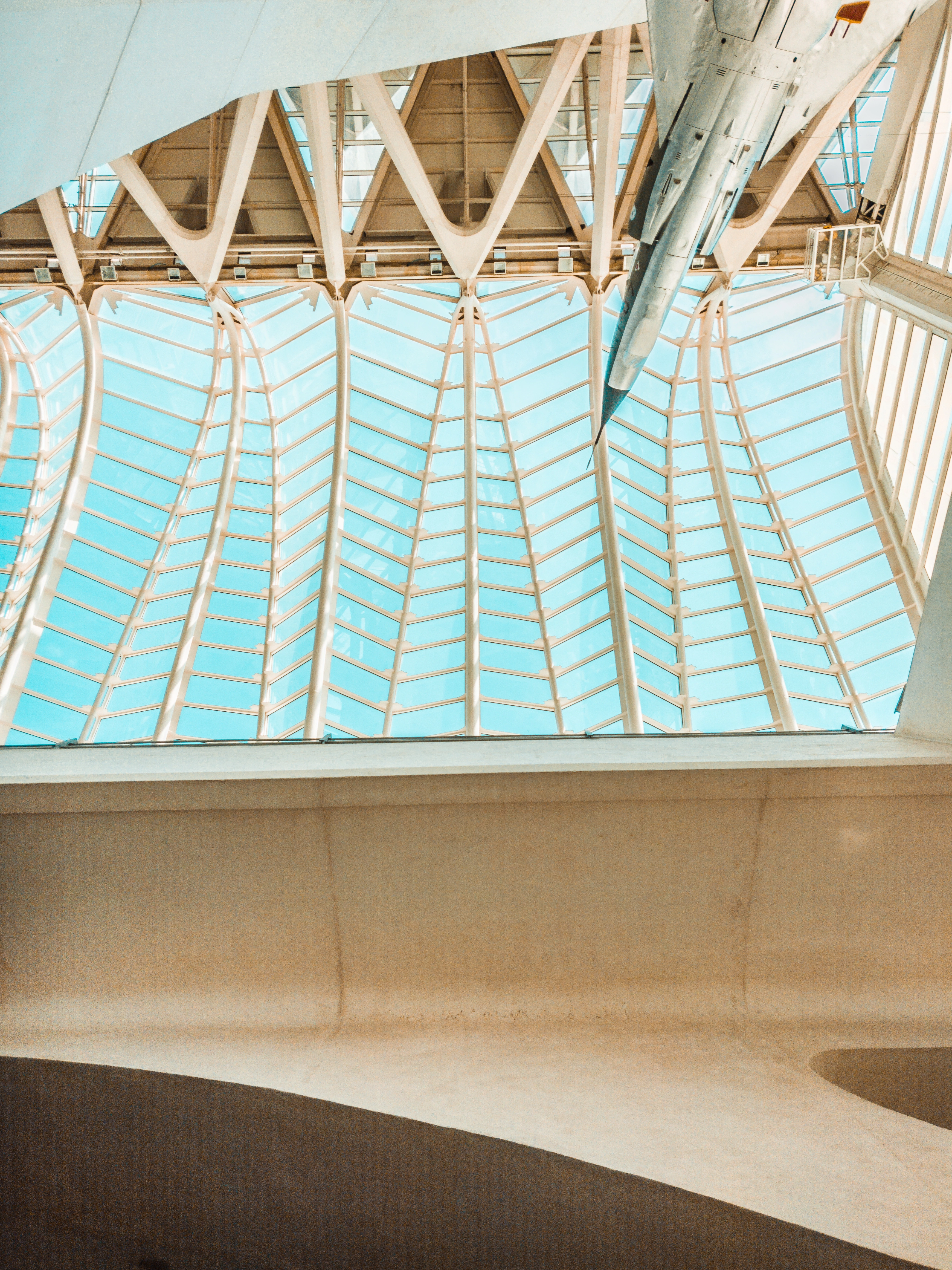
Benefits of Choosing an Auditorium Tensile Structure in India
Every site is different. RS Tensile Pvt. Ltd. provides project-specific design rather than off-the-shelf solutions.
- Cost-Effective Construction Compared to a permanent reinforced concrete roof of equivalent span, a tensile structure typically requires lower material costs and significantly less civil foundation work. The lighter structural loads mean simpler and less expensive footings, which reduces the overall project budget.
- Faster Installation The prefabricated steel framework and factory-welded membrane panels arrive at site ready for assembly. This reduces on-site construction time to days or weeks rather than months. Projects in Ghaziabad, Meerut, Muzaffarnagar, and Saharanpur have been completed with minimal disruption to ongoing venue operations.
- Adaptability to Site Conditions Tensile structures can be designed around existing trees, topography, or buildings. Sites in hill towns like Chakrata, Lansdowne, Devprayag, and Rudraprayag often have irregular terrain that makes conventional construction difficult. Tensile structures adapt more readily to such conditions.
- Reversibility and Relocation Unlike permanent roofing, a tensile structure can be dismantled and relocated if the site requirements change. Some municipalities and educational institutions use this feature to repurpose structures for different venues as their needs evolve.
- Energy Efficiency The reflective surface of PVC membranes reduces solar heat gain inside the covered area. In cities with high ambient temperatures - including Aurangabad, Nashik, Nagpur, Solapur, and Amravati - this can meaningfully reduce the cooling load for partially enclosed adjoining spaces.
- Compliance with Temporary Structure Norms In many regulated heritage or restricted zones, a temporary or demountable tensile canopy can receive regulatory clearance more readily than a permanent structure. This has enabled projects in sensitive locations including Katra, Pahalgam, Rishikesh, and Haridwar.
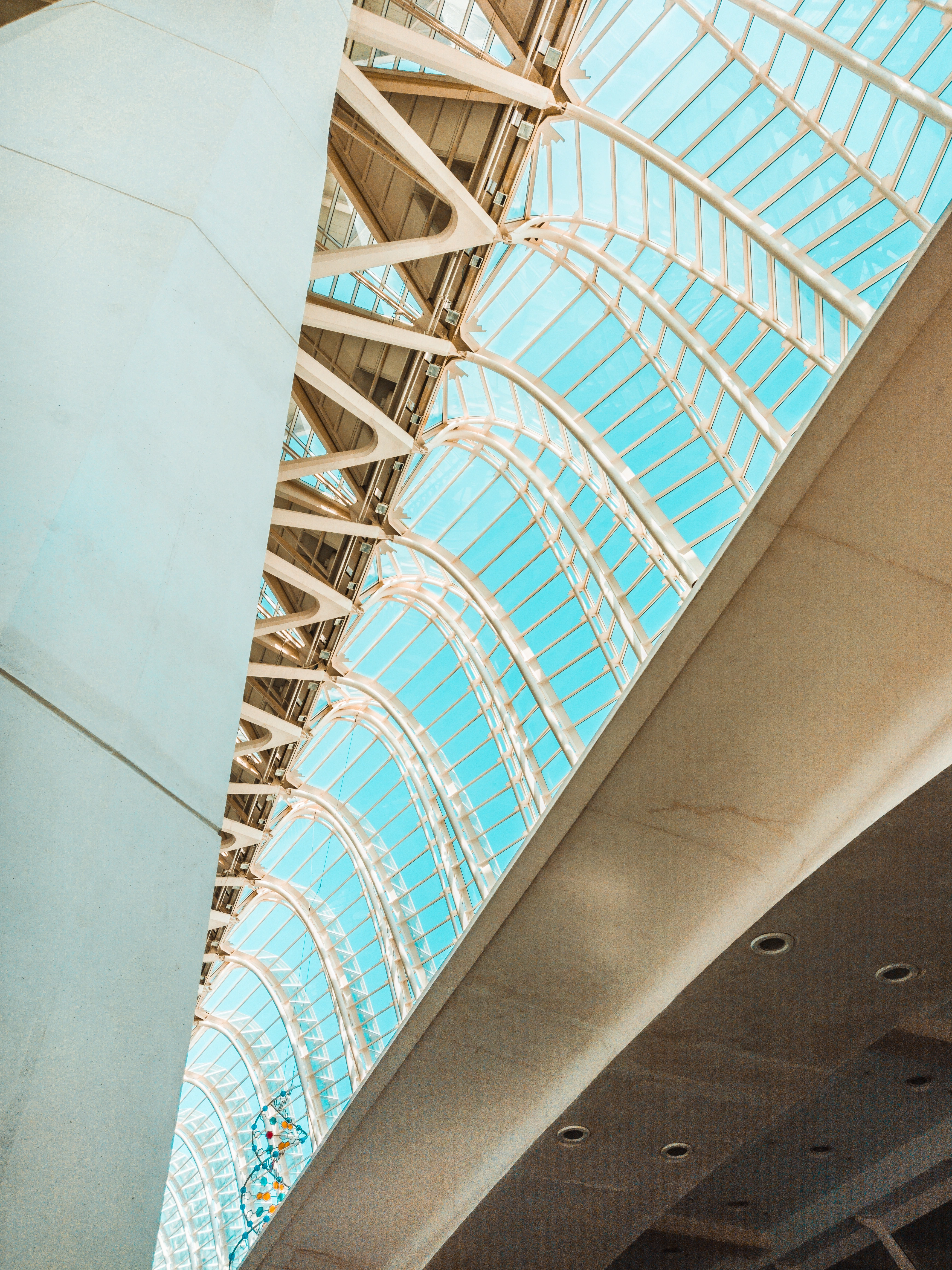
Applications of Auditorium Tensile Structures Across Different Industries
- Cultural and Civic Venues Open-air theatres, amphitheatres, municipal auditoriums, and town hall gathering spaces. These installations are common in district headquarters and tourist towns including Pushkar, Chittorgarh, Udaipur, Jaisalmer, and Dalhousie.
- Educational Institutions Schools, colleges, and universities use tensile canopies to create weather-protected outdoor assembly areas. Institutions in Rohtak, Panipat, Karnal, Ambala, Kurukshetra, Panchkula, and Yamuna Nagar have installed these structures for annual day events, cultural programmes, and sports ceremonies.
- Hotels and Resorts Luxury and mid-range properties in hill stations and heritage cities install tensile canopies over outdoor event lawns and al-fresco dining areas to extend usability through the rainy and winter seasons. Relevant markets include Manali, Shimla, Kullu, Dharamsala, Chamba, Mussoorie, and Nainital.
- Religious and Pilgrimage Sites Temples, ghats, and pilgrimage complexes across India require large covered areas for devotees. Tensile canopies are particularly suited to sites in Ayodhya, Mathura, Haridwar, Rishikesh, Sarnath, Puri, and Tirupati where congregation space must accommodate thousands of visitors during peak seasons.
- Government and Public Infrastructure District courts, government complexes, public parks, and civic plazas use tensile structures for ceremony spaces and covered walkways . Projects have been executed in administrative centres including Bhilwara, Sikar, Ajmer, Alwar, Bharatpur, Dausa, Hanumangarh, and Sri Ganganagar.
- Sports and Recreation Grandstands, open-air stadiums, and spectator areas benefit from tensile canopies that provide shade without obstructing sightlines. Sporting facilities in Hisar, Sirsa, Bhiwani, Jind, Fatehabad, Rohtak, and Rewari have used these structures for this purpose.
- Industrial and Corporate Campuses Large manufacturing and IT campuses with outdoor event plazas, employee recreation areas, or open-air meeting zones use tensile structures to create functional outdoor spaces. Demand is active in industrial belts around Baddi, Nalagarh, Paonta Sahib, Bhiwadi, Rudrapur, Panvel, and Bhiwandi.
- Commercial and Retail Shopping complexes, market areas, and commercial plazas in cities including Thane, Vasai, Virar, Ulhasnagar, Bhiwandi, Panvel, and Satara install tensile canopies over outdoor gathering spaces, entrance forecourts, and food court areas.
Design and Customization Options for Auditorium Tensile Structures
Every auditorium site has different geometry, seating capacity, structural constraints, and aesthetic requirements. RS Tensile Pvt. Ltd. provides engineering and design support across all project types rather than applying a single standard template.
Span and Height
Structures can be engineered from a small 10-metre community stage canopy up to a 60-metre or wider concert arena canopy. Column height and clearance are designed around the performance requirements and audience sightline angles.
Membrane Material Options
- Standard PVC-Coated Polyester: Cost-effective, good UV resistance, available in wide colour range. Suitable for most commercial and civic projects.
- High-Tenacity PVC with Lacquer Coating: Enhanced resistance to atmospheric pollutants and humidity. Used in coastal areas near Visakhapatnam, Vizianagaram, Kakinada, Vijayawada, Nellore, Ongole, and Rajamahendravaram.
- PTFE-Coated Glass Fibre: Premium membrane with very high chemical resistance and 25+ year service life. Used for permanent cultural landmark projects.
- HDPE Shade Cloth: Open-weave fabric allowing partial airflow. Used where wind loading is moderate and complete waterproofing is not required.
Structure Colour and Fabric Colour
Steel elements can be powder-coated or hot-dip galvanised. Fabric is available in white, off-white, ivory, grey, blue, red, green, and custom colour matches. White and off-white are most common for auditorium applications as they maximise light reflection while maintaining a neutral aesthetic.
Drainage Systems
Perimeter gutters, internal drainage channels, and downpipes are integrated into the design. For areas with heavy monsoon rainfall, including Brahmapur, Berhampur, Balasore, Khordha, Sambalpur, Dhenkanal, and Rourkela, the drainage system is sized for high-intensity storm events.
Acoustic Considerations
For performance venues, the membrane material and inner finish can be specified to reduce flutter echo and unwanted sound reflection. The soft surface of PVC fabric absorbs some high-frequency sound energy compared to rigid metal or concrete roofing.
Installation Process for Auditorium Tensile Structures
Site Assessment
The project team visits the site to record existing conditions including ground bearing capacity, existing structures, utilities, and site access. Drawings and photographs are prepared as the baseline for design.
Structural Design and Engineering
Based on the site data and client brief, the engineering team prepares structural calculations covering wind load, snow load where applicable, membrane tension, and foundation design. For hill locations including Pithoragarh, Almora, Rudraprayag, Devprayag, and Paonta Sahib, wind and snow load parameters are given special attention.
Fabrication of Steel Framework
The structural steel columns, beams, and connection hardware are fabricated at the factory, inspected for dimensional accuracy, and surface treated before dispatch.
Membrane Cutting and Welding
The fabric panels are cut to the exact pattern derived from the structural model and welded along seams using high-frequency welding or heat bonding. Edge cables and attachment hardware are integrated into the membrane at this stage.
Foundation and Column Erection
Concrete foundations are cast at the site. After curing, the steel columns are erected and aligned precisely as per the design drawings.
Frame Assembly
Arches, ridge beams, and cable systems are assembled and tensioned to the specified geometry. Quality checks are carried out on all structural connections.
Membrane Installation:
The pre-fabricated fabric panels are lifted into position and attached to the frame. The membrane is progressively tensioned to achieve the designed form and pre-stress level.
Final Inspection and Handover
The completed structure is inspected for membrane tension uniformity, drainage functionality, and structural connection integrity before being handed over to the client.
How to Choose a Reliable Auditorium Tensile Structure Manufacturer in India?
Selecting the right manufacturer for a tensile structure project is as important as the design itself. A poorly executed installation can develop membrane flutter, drainage failures, or premature fabric degradation within a few years. Here are key factors to evaluate:
- Engineering Capability Confirm that the manufacturer has in-house or qualified structural engineers who prepare project-specific calculations. Standard designs should not be applied without site-specific analysis, particularly for sites in seismic zones or high-wind regions including Jammu & Kashmir, Himachal Pradesh, Uttarakhand, and coastal Andhra Pradesh and Odisha.
- Material Traceability Ask for the source of the membrane fabric and steel. Reputable manufacturers procure PVC membranes from established mills with consistent quality control and clear technical data sheets covering breaking strength, UV resistance, and fire classification.
- Project References Review photographs, client references, and ideally visit completed installations. A manufacturer operating across Haryana, Uttar Pradesh, Rajasthan, Madhya Pradesh, and Maharashtra should be able to provide region-specific examples.
- After-Sales Support Tensile structures require periodic inspection and occasional fabric repairs. Confirm whether the manufacturer offers a maintenance contract, has service capabilities in your region, and stocks replacement hardware.
- Transparency in Quoting A reliable manufacturer will provide a detailed scope of work, Bill of Quantities, and clear payment milestones. Vague or all-inclusive quotes without technical specifications often lead to disputes during execution.
Why Choose RS Tensile Pvt. Ltd. for Auditorium Tensile Structures in India?
RS Tensile Pvt. Ltd. is a manufacturer based in India, with CEO Radhey Shayam leading a team of fabrication engineers and project managers who handle auditorium tensile structure projects from initial design to site installation.
- Direct Manufacturing: As a manufacturer, RS Tensile controls the fabrication process for both the steel framework and fabric membrane. This enables quality oversight at each stage and reduces lead times compared to companies that source from third parties.
- Pan-India Project Execution: The company has supplied and installed auditorium tensile structures in Uttar Pradesh, Haryana, Rajasthan, Madhya Pradesh, Maharashtra, Andhra Pradesh, Odisha, Himachal Pradesh, Uttarakhand, and Jammu & Kashmir, among other regions.
- Project-Specific Engineering: Each project is designed from site measurements and structural calculations. The team does not apply catalogue designs without reviewing site-specific load and geometry requirements.
- Fabric Quality: Membranes are sourced with documented technical specifications and fire-resistance ratings where required.
- On-Site Installation: The company deploys its own installation team for structural erection and membrane tensioning, rather than subcontracting all site work.
- Customer Support: Project communication, progress documentation, and post-installation follow-up are handled directly by the RS Tensile team.
Projects have been executed across locations including Jagatsinghpur, Kokernag, Yanam, Amethi, Itarsi, Hansi, Narwana, Dewas, Dausa, Morena, Bhind, Kaithal, Ratlam, Jaunpur, Chittoor, Una, Kishangarh, Faizabad, Bargarh, Mahipalpur, Alipur, Satara, Sambalpur, Sundargarh, Nabarangpur, Bhawanipatna, Kathua, Udhampur, Achalpur, Hindaun, Sohna, Dholpur, Khammam, Nuh, Jhajjar, Bahadurgarh, Samalkha, Bilaspur, Hindupuram, and many other cities and towns across India.
How to Choose a Reliable Auditorium Tensile Structure Manufacturer in India?
Selecting the right manufacturer for a tensile structure project is as important as the design itself. A poorly executed installation can develop membrane flutter, drainage failures, or premature fabric degradation within a few years. Here are key factors to evaluate:
- Engineering Capability Confirm that the manufacturer has in-house or qualified structural engineers who prepare project-specific calculations. Standard designs should not be applied without site-specific analysis, particularly for sites in seismic zones or high-wind regions including Jammu & Kashmir, Himachal Pradesh, Uttarakhand, and coastal Andhra Pradesh and Odisha.
- Material Traceability Ask for the source of the membrane fabric and steel. Reputable manufacturers procure PVC membranes from established mills with consistent quality control and clear technical data sheets covering breaking strength, UV resistance, and fire classification.
- Project References Review photographs, client references, and ideally visit completed installations. A manufacturer operating across Haryana, Uttar Pradesh, Rajasthan, Madhya Pradesh, and Maharashtra should be able to provide region-specific examples.
- After-Sales Support Tensile structures require periodic inspection and occasional fabric repairs. Confirm whether the manufacturer offers a maintenance contract, has service capabilities in your region, and stocks replacement hardware.
- Transparency in Quoting A reliable manufacturer will provide a detailed scope of work, Bill of Quantities, and clear payment milestones. Vague or all-inclusive quotes without technical specifications often lead to disputes during execution.
Tensile Structure vs Polycarbonate Roofing: A Brief Comparison
Buyers often compare tensile fabric roofing with polycarbonate sheet roofing for auditorium applications. Each has its role, but there are clear differences:
- Span Capacity: Tensile structures can cover far larger spans without columns. Polycarbonate sheets require closer column spacing.
- Weather Behaviour: Both shed rain effectively. PVC tensile fabric handles hail better than thinner polycarbonate sheets, which can crack under severe impact.
- Heat Transmission: Standard clear polycarbonate transmits significant solar heat. PVC tensile fabrics, particularly in white or reflective finishes, block more solar radiation.
- Aesthetics: Tensile fabric creates softer, more architectural forms. Polycarbonate roofing tends to look more industrial.
- Maintenance: Both require periodic cleaning. Polycarbonate can yellow over time. Quality PVC membranes with lacquer coating retain colour stability over 10+ years with basic maintenance.
- Cost: Polycarbonate sheeting over a simple frame can be less expensive for small areas. For large spans with complex geometry, tensile structures become more economical.
For auditorium applications requiring spans above 15 metres, strong visual identity, and long-term weather performance, tensile fabric structures are generally the more practical choice.
Understanding Tensile Structure Cost in India
The price of an auditorium tensile structure in India varies based on span, design complexity, membrane specification, site accessibility, and foundation requirements. Tensile structure cost per square foot is influenced by the following factors:
- Membrane grade: Standard PVC membranes are less expensive than PTFE glass fibre.
- Steel framework complexity: Cone-and-mast designs typically cost less than multi-point hypar or custom freeform structures.
- Foundation conditions: Rocky or waterlogged sites increase civil costs.
- Site location and logistics: Remote hill sites including Chakrata, Dalhousie, Almora, and Pahalgam involve higher transport and mobilisation costs than accessible urban locations.
- Project scale: Larger projects benefit from economies of scale in both fabrication and site erection.
For an accurate estimate, the project team at RS Tensile evaluates the site conditions, structural requirements, and fabric specification before providing a project-specific quotation. General indicative costs can be discussed during the initial inquiry.
Frequently Asked Questions About Auditorium Tensile Structures
1. What is the typical lifespan of an auditorium tensile structure?
A PVC membrane installed with good quality steel supports and proper tensioning typically performs for 10 to 15 years
before significant fabric replacement is needed. PTFE glass fibre membranes can exceed 25 years. The steel framework, if hot-dip galvanised, generally outlasts the membrane by a wide margin.
2. Can an auditorium tensile structure handle heavy monsoon rain?
Yes. The welded seams of quality PVC membranes are watertight. The geometry of the structure is designed to direct rainwater to perimeter drains rather than pooling on the fabric. Projects in high-rainfall regions including Odisha, parts of Uttarakhand, and coastal Andhra Pradesh are designed with drainage as a primary engineering consideration.
3. Is an auditorium tensile structure safe in strong winds?
Tensile structures are engineered for local wind speed requirements as per IS:875 (Part 3). The pre-tension in the membrane is calculated to prevent flutter and lift under design wind loads. Sites exposed to strong seasonal winds, such as those in Rajasthan, Haryana, and coastal areas, receive site-specific wind analysis.
4. Can the design of an auditorium tensile structure be customised?
Yes. Span, height, shape, fabric colour, membrane grade, and structural configuration are all project-specific variables. RS Tensile Pvt. Ltd. prepares custom engineering for each project rather than applying standard catalogue designs.
5. Do you supply and install auditorium tensile structures across India?
Yes. RS Tensile Pvt. Ltd. serves project sites across all major states including Uttar Pradesh, Rajasthan, Madhya Pradesh, Haryana, Maharashtra, Andhra Pradesh, Odisha, Himachal Pradesh, Uttarakhand, and Jammu & Kashmir, as well as smaller towns throughout the country.
6. What maintenance does an auditorium tensile structure require?
Periodic inspection of membrane tension and structural connections is recommended once every one to two years. The fabric surface should be cleaned to remove biological growth, which can degrade the surface coating. Drainage channels should be cleared before the monsoon season. Structural bolts should be re-torqued as part of the annual inspection.
7. How long does it take to install an auditorium tensile structure?
For a medium-scale project covering 500 to 1,500 square metres, on-site civil and erection work typically takes three to eight weeks depending on site complexity. The prefabrication of the steel frame and membrane adds four to ten weeks before site mobilisation, depending on the design.
8. Is an auditorium tensile structure fire resistant?
PVC membranes are available with fire-retardant classifications. For public assembly venues such as auditoriums, the specification sheet for the membrane should include the relevant fire test standard. RS Tensile Pvt. Ltd. can provide fire-rated membrane options for projects where this is a regulatory requirement.
9. What is the difference between a tensile structure and a polycarbonate structure for an auditorium?
Tensile fabric covers large spans with minimal columns, handles hail without cracking, provides a distinct architectural appearance, and can be engineered for UV blocking and heat reduction. Polycarbonate is better suited to smaller, enclosed areas where a rigid sheet material is needed. For open-air auditoriums, tensile structures typically offer better performance across multiple criteria.
10. How much does an auditorium tensile structure cost per square foot in India?
Tensile structure price in India varies with design complexity, membrane grade, site location, and project scale. A project-specific quote from RS Tensile is the most reliable way to understand costs for your site. Contact the team with site drawings, approximate area requirements, and the intended use to receive a technical and commercial proposal.
Conclusion
Auditorium Tensile Structure in India offers a practical, durable, and visually credible solution for outdoor performance spaces, civic gathering areas, educational amphitheatres, religious venues, and commercial event spaces. The combination of large span capability, weather resistance, UV protection, and design flexibility makes these structures well-suited to India's diverse climatic conditions and architectural requirements.
From small community stages in Kokernag and Yanam to large civic amphitheatres in Lucknow, Bhopal, Pune, and Visakhapatnam, RS Tensile Pvt. Ltd. delivers auditorium tensile structures with project-specific engineering and professional installation support.
If you are planning a covered outdoor venue or need to upgrade an existing seating area, contact RS Tensile Pvt. Ltd. to discuss your project requirements. The team will evaluate your site conditions, advise on suitable membrane and structural options, and provide a detailed technical and commercial proposal.
