Tensile Umbrella Structure in India – Design, Supply & Installation by RS Tensile Pvt. Ltd.

| Product Description | Available in various sizes and colors, our Tensile Umbrella Structures add sophistication and practicality to any setting. Upgrade your space today! Shop now to bring home the ultimate shade solution. |
| Membrane Material | PVC / PTFE / HDPE |
| Fabric Color | White or Customized |
| Shape & Size | Customized |
| Certification | ISO 45001:2018(OHSAS), ISO 45001:2015, ISO 9001:2015 |
| Place of Origin | India |
Order Now
ENQUIRE NOW
When you need shade, shelter, and a clean architectural look all at once, a tensile umbrella structure in India has become the go-to choice across a wide range of projects. Whether it is a parking lot in Gurgaon, a resort poolside in Udaipur, a temple courtyard in Ayodhya, or a commercial plaza in Pune, the umbrella-style tensile canopy delivers practical protection while keeping the space looking well-designed.
RS Tensile Pvt. Ltd. manufactures and installs tensile umbrella structures for projects across India. From metro cities like Delhi, Mumbai, Noida, Bengaluru, and Hyderabad to smaller towns such as Kokernag, Lansdowne, Yanam, and Chakrata, the company serves a wide geography with consistent quality and project-specific solutions.
This page covers everything you need to know: what these structures are, how they are built, where they are used, and how RS Tensile approaches each project from design to installation.
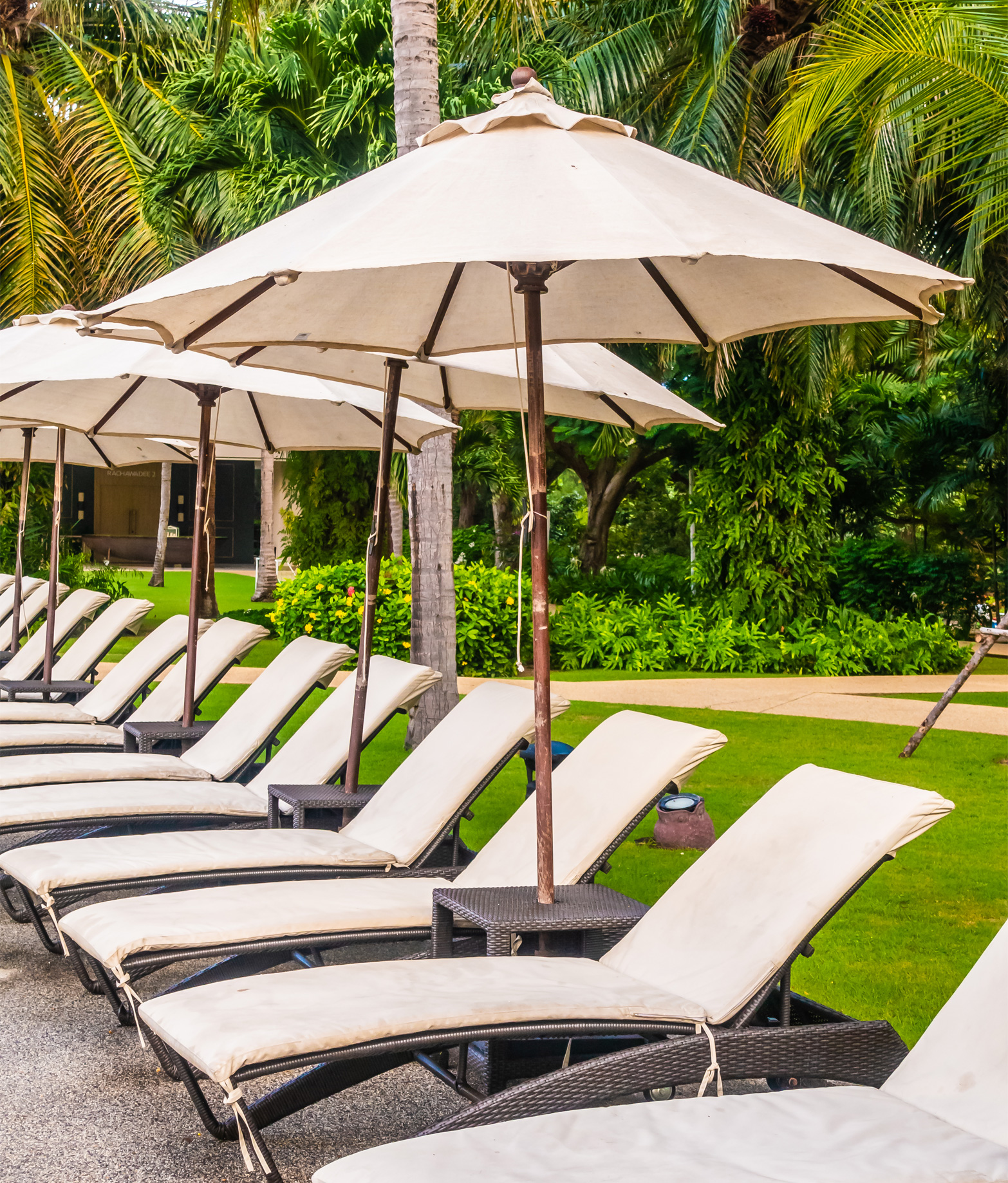
What Is a Tensile Umbrella Structure?
A tensile umbrella structure is a freestanding canopy system supported by a central mast or column. The fabric membrane is stretched outward from the top of this column and anchored at its outer edges, creating a wide, umbrella-like shade cover.
Unlike fixed roof systems, tensile structures work on the principle of tension rather than compression. The pre-tensioned fabric holds its shape without requiring a heavy framework, which makes the structure lighter, more flexible in design, and faster to install.
Key components of the structure include:
- Central support mast (steel, galvanised, or stainless steel)
- Radial arms or rafters extending outward from the mast
- Tensioned fabric membrane (PVC, HDPE, or PTFE coated)
- Edge cables and anchor points
- Foundation bolts and base plate assembly
The shape can be hexagonal, octagonal, square, circular, or completely custom. Multiple umbrella units can be combined together to cover large open areas without the need for perimeter columns.
Key Features of Tensile Umbrella Structures
Weather Resistance
The fabric is coated for resistance against heavy rain, UV radiation, and temperature extremes. This makes it well-suited for India's varied climate — from coastal humidity in Visakhapatnam and Kakinada to dry heat in Jaisalmer and Barmer.
UV Protection
High-quality PVC and HDPE fabrics block a significant portion of UV rays, keeping the shaded area cooler during peak summer months — particularly useful in cities like Nagpur, Aurangabad, and Kanpur.
Durability
With the right materials and installation, tensile umbrella canopies typically last 10 to 20 years, depending on maintenance and site conditions.
Low Maintenance
The structures need periodic cleaning and annual inspection. There are no complicated moving parts, and replacing the fabric membrane — when required — is straightforward.
Modern Aesthetic
The clean, minimalist profile of an umbrella canopy adds visual appeal to any space, whether it is a hotel courtyard in Shimla, a shopping centre in Indore, or a corporate campus in Ghaziabad.
Customisable Design
Sizes, shapes, fabric colours, and structural finishes are all configurable. Projects in Mussoorie, Dharamsala, and Manali often request earthy tones that blend with the surroundings, while commercial projects in Noida, Gurgaon, and Faridabad lean toward contemporary finishes.
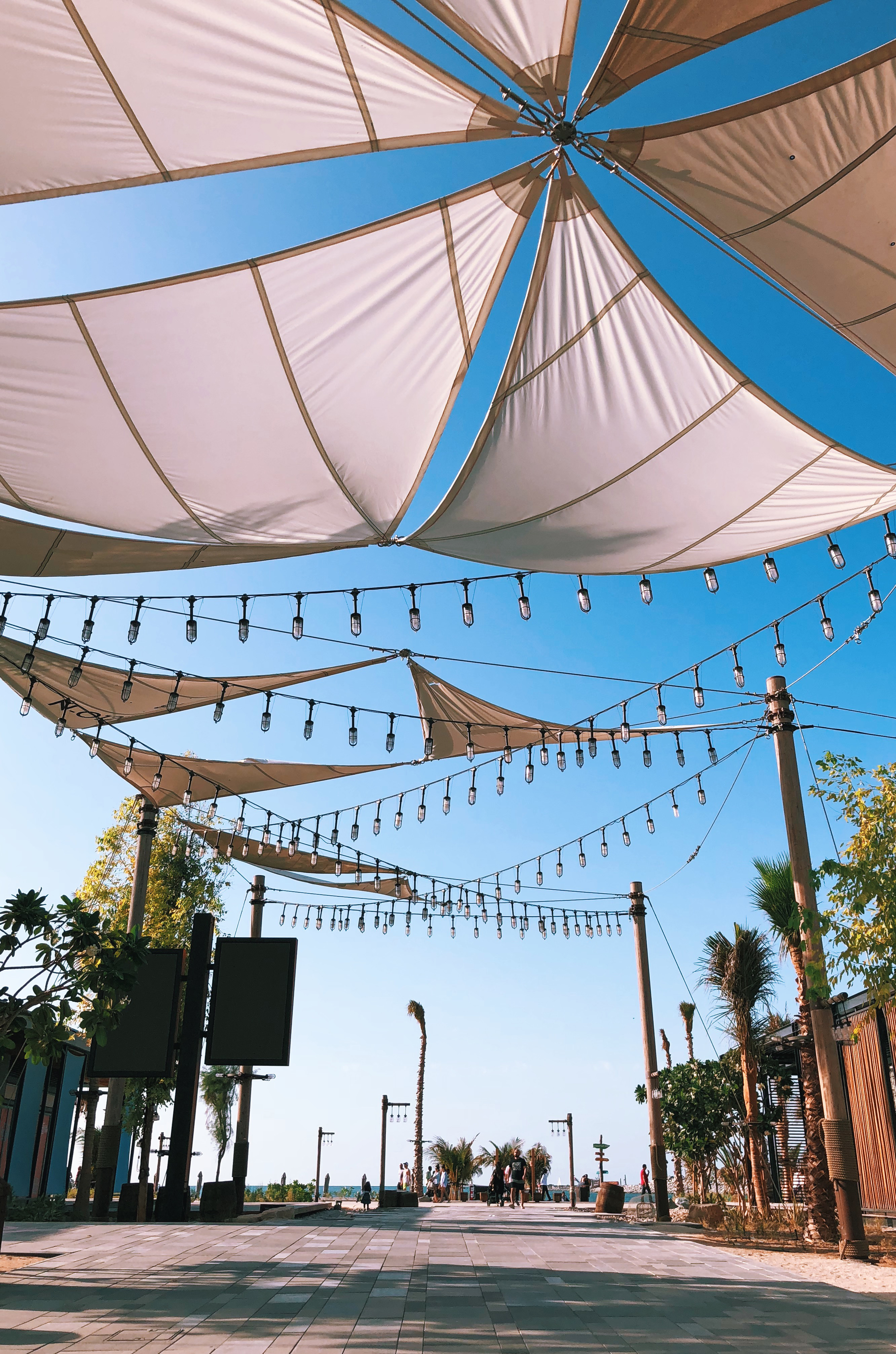
Benefits of Choosing Tensile Umbrella Structures
There are several practical reasons why project owners across India continue to choose tensile umbrella systems over conventional canopy options.
- Cost-Effective Coverage: A single large umbrella unit can shade a substantial area with minimal structural material. This makes it economical compared to building permanent RCC or metal sheet roofing — especially for temporary or semi-permanent setups.
- Quick Installation: Fabrication happens off-site. Once the foundation work is done, the structure can be assembled and installed within days. This matters for time-sensitive projects in Lucknow, Prayagraj, Varanasi, or Jaipur.
- Large Span Coverage: Individual umbrella units can span 5 to 15 metres or more. Multiple units can be combined to cover areas of any size — from a small hotel entrance in Pahalgam to a large parking bay in Rohtak.
- Structural Flexibility: The freestanding design does not require attachment to existing buildings. It works on open grounds, plazas, terraces, and patios — wherever a load-bearing foundation can be placed.
- Aesthetic Value: The visual impact of a well-designed tensile umbrella can significantly improve the appearance of outdoor commercial and hospitality spaces.
- Energy Efficiency: By reducing direct sunlight on outdoor and semi-outdoor areas, tensile umbrellas help lower the heat load on adjoining spaces, which can reduce cooling costs in buildings in cities like Hyderabad, Visakhapatnam, or Guntur.
Applications Across Different Industries for Tensile Umbrella
Tensile umbrella structures are used across a broad range of sectors. Below are the main application areas where RS Tensile has executed or supported projects across various states including Rajasthan, Odisha, Haryana, Himachal Pradesh, Uttarakhand, Uttar Pradesh, Madhya Pradesh, Maharashtra, Andhra Pradesh, and Jammu & Kashmir.
- Commercial Complexes: Shopping centres in Dehradun, Bhopal, Nashik, and Thane use umbrella canopies for outdoor seating zones , entry plazas, and car parks.
- Hotels and Resorts: Pool decks, open-air dining areas, and arrival forecourts in hospitality properties at Kullu, Dalhousie, Rishikesh, and Satara benefit from the shade and aesthetics of these structures.
- Religious and Heritage Sites: Pilgrimage towns such as Sarnath, Fatehpur Sikri, Pushkar, Katra, and Tirupati require shading for devotees in open courtyards and queuing areas. Tensile umbrella canopies provide cover without disturbing the historical character of the surroundings.
- Educational Institutions: Schools, colleges, and universities in Aligarh, Mathura, Meerut, and Moradabad install umbrella shades in playgrounds, campus walkways, and event grounds.
- Hospitals and Healthcare: Patient drop-off areas, ambulance bays, and outdoor waiting zones at healthcare facilities in Kanpur, Agra, Gwalior, and Jabalpur are covered using tensile umbrella systems.
- Industrial Facilities: Factories and warehouses in Baddi, Bhiwadi, Nalagarh, Paonta Sahib, and Rudrapur use tensile umbrellas for worker rest zones, material staging areas, and machinery storage.
- Sports Facilities: Spectator areas and waiting zones at sports grounds in Panchkula, Rohini, Saket, Dwarka, and Greater Noida benefit from open-span umbrella shading.
- Residential Projects: High-rise and villa communities in Panvel, Vasai, Virar, Bhiwandi, and Ulhasnagar install umbrella canopies over terrace gardens, swimming pools, and community spaces.
- Government and Public Infrastructure: Bus stops, railway waiting areas, public markets, and civic plazas in Sambalpur, Cuttack, Bhubaneswar, Rourkela, and Brahmapur have adopted tensile umbrella systems for public shade infrastructure.
The shape can be hexagonal, octagonal, square, circular, or completely custom. Multiple umbrella units can be combined together to cover large open areas without the need for perimeter columns.
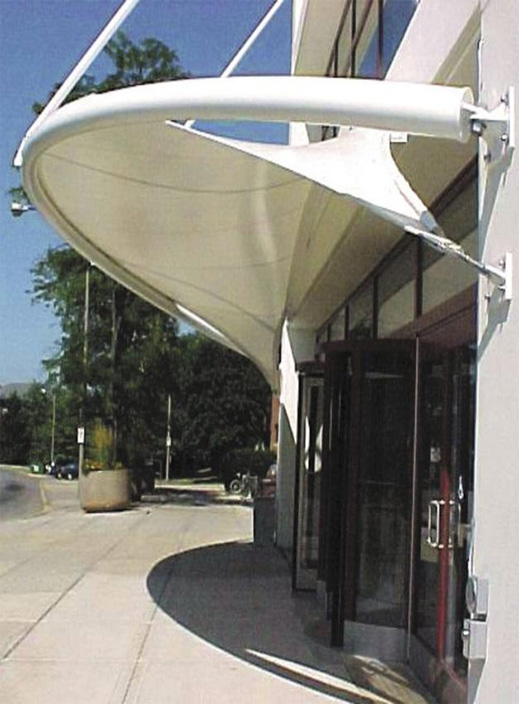
Design and Customisation Options for Umbrella Tensile
Every project is different, and a tensile umbrella structure should reflect the specific requirements of its location and use. RS Tensile works with clients at the design stage to develop solutions that fit the site conditions, budget, and visual expectations.
- Size: Units range from compact 4x4 metre designs for residential terraces to large 12x12 metre or custom canopies for commercial and public spaces.
- Shape: Square, rectangular, hexagonal, octagonal, and custom polygon shapes are available based on site geometry and coverage requirements.
- Fabric Material: PVC-coated polyester is the most common choice for its durability, water resistance, and cost. HDPE knitted fabric is used for open-weave applications that allow airflow. PTFE-coated fibreglass is selected for high-performance, long-life projects.
- Fabric Colour: Tensile fabric is available in a wide range of colours. Projects in Shimla, Almora, and Nainital often prefer muted, natural tones. Urban commercial projects in Indore, Lucknow, Mumbai, or Delhi tend toward white, grey, or bold accent colours.
- Structural Finish: Steel columns can be powder-coated in any RAL colour, hot-dip galvanised for corrosion protection, or finished in stainless steel for premium aesthetics.
- Configuration: Single umbrellas for small spaces, paired units sharing a central spine, and large cluster arrangements covering plazas or parking bays are all achievable.
For hill station projects in Mussoorie, Kasauli, Dalhousie, or Chamba, design configurations take into account higher wind loads and snow accumulation. Coastal installations in Yanam, Nellore, Ongole, and Vishakhapatnam factor in humidity and salt-air corrosion resistance.
Installation Process for Tensile Umbrella Structures
A structured installation process helps ensure safety, durability, and visual quality. Here is how RS Tensile handles projects from start to finish.
- Site Assessment: The team reviews the site conditions, including soil type, available space, wind and rain exposure, and any existing infrastructure that may affect foundation design or column placement.
- Design and Engineering: Based on the site assessment, engineers prepare structural drawings and fabric layout plans. Load calculations are done in line with applicable design standards to ensure the structure performs reliably.
- Fabrication:Steel components are fabricated and finished at the manufacturing facility. Fabric panels are cut and welded or stitched to the required dimensions and shapes.
- Foundation Work: Concrete foundations are laid at the column base locations. The depth and size of the foundation depend on the column height, canopy span, and local soil bearing capacity.
- Structural Assembly:The central mast and radial arms are erected and secured. All structural connections are inspected before the fabric is attached.
- Fabric Installation: The membrane is stretched and tensioned across the structural framework. Edge cables are tightened to achieve the correct shape and tension across the surface.
- Final Inspection: A post-installation check covers structural integrity, fabric tension uniformity, drainage points, and overall finish quality. Any adjustments are made before the site is handed over.
Why Choose RS Tensile for Tensile Umbrella Structure in India?
RS Tensile Pvt. Ltd. has worked on tensile structure projects across multiple states, serving clients in industries including hospitality, retail, education, healthcare, and public infrastructure. Here is what differentiates the company's approach.
Manufacturer & Installer
RS Tensile handles both fabrication and installation in-house. This reduces coordination issues and ensures consistency between what is designed, what is made, and what is erected on site.
Nationwide Project Support
The company serves projects across states including Rajasthan, Haryana, Uttar Pradesh, Madhya Pradesh, Maharashtra, Andhra Pradesh, Odisha, Himachal Pradesh, Uttarakhand, and Jammu & Kashmir. Whether the site is in a city like Jaipur, Jodhpur, or Agra, or in a town like Jagatsinghpur, Handwara, Pithoragarh, or Devprayag, RS Tensile can manage the project.
Quality Materials
The company uses tested fabric materials and structural steel to meet project-specific requirements, including resistance to local weather conditions.
Custom Engineering
Standard catalogue solutions are available, but most projects benefit from site-specific engineering. RS Tensile prepares structural drawings and load analysis for each installation.
Timely Execution
The team coordinates material delivery, site preparation, and installation scheduling to meet project timelines. This is particularly important for hospitality and commercial clients who are working around opening dates.
Post-Installation Support
Clients can reach the team for maintenance queries, fabric replacement, or structural inspection after the initial installation is complete.
Tensile Umbrella Structures Across India – Cities and States We Serve
RS Tensile Pvt. Ltd. supplies and installs tensile umbrella structures across India. The company has served projects in major urban centres as well as secondary cities and towns spread across the country.
In North India, the company works across Delhi, Noida, Greater Noida, Ghaziabad, Rohini, Saket, Dwarka, Gurgaon, Faridabad, Bahadurgarh, Sonipat, Panipat, Jhajjar, Palwal, Rewari, Sohna, Karnal, Samalkha, Nuh, Yamuna Nagar, Kurukshetra, Ambala, Panchkula, Hisar, Sirsa, Fatehabad, Bhiwani, Rohtak, Jhajjar, Kaithal, Jind, Narwana, Hansi, Mahipalpur, and Alipur.
In Rajasthan, the company covers Jaipur, Jodhpur, Ajmer, Udaipur, Kota, Bikaner, Alwar, Bharatpur, Sikar, Bhilwara, Barmer, Jaisalmer, Dausa, Dholpur, Chittorgarh, Ratlam, Pushkar, Kishangarh, Shivpuri, Pratapgarh, Hindaun, Hanumangarh, Sri Ganganagar, and Morena.
Across Uttar Pradesh, the team serves Lucknow, Kanpur, Varanasi, Agra, Mathura, Meerut, Aligarh, Ghaziabad, Prayagraj, Moradabad, Saharanpur, Muzaffarnagar, Gorakhpur, Jhansi, Jaunpur, Faizabad, Ayodhya, Bareilly, Amethi, and Fatehpur Sikri.
In Madhya Pradesh, the company operates in Indore, Bhopal, Jabalpur, Gwalior, Satna, Ujjain, Ratlam, Dewas, Chhindwara, Itarsi, Chhatarpur, Bhind, and Achalpur.
For Maharashtra projects, RS Tensile covers Mumbai, Pune, Nagpur, Nashik, Aurangabad, Solapur, Amravati, Kolhapur, Thane, Bhiwandi, Ulhasnagar, Vasai, Virar, Panvel, Bhiwadi, Satara, and Jalgaon.
In Andhra Pradesh, the company serves Vijayawada, Visakhapatnam, Guntur, Tirupati, Nellore, Kurnool, Ongole, Rajamahendravaram, Kakinada, Vizianagaram, Kadapa, Chittoor, and Hindupur (Hindupuram).
For Odisha, the company works across Bhubaneswar, Cuttack, Rourkela, Brahmapur, Sambalpur, Puri, Balasore, Dhenkanal, Bargarh, Sundargarh, Khordha, Bhawanipatna, and Nabarangpur.
In Uttarakhand and Himachal Pradesh, the team has executed and supported projects in Dehradun, Haridwar, Rishikesh, Mussoorie, Nainital, Almora, Haldwani, Rudrapur, Roorkee, Rudraprayag, Devprayag, Paonta Sahib, Pithoragarh, Shimla, Manali, Kullu, Mandi, Dharamsala, Dalhousie, Kasauli, Chamba, Bilaspur, and Nalagarh.
The company also serves projects in Jammu & Kashmir, including Jammu, Srinagar, Anantnag, Pahalgam, Katra, Udhampur, Kathua, and Handwara.
Conclusion
A tensile umbrella structure in India offers a practical, cost-effective, and visually clean solution for outdoor shading and shelter across a wide range of project types. From religious sites in Sarnath and Pushkar to industrial zones in Rourkela and Sundargarh, from hill stations in Kasauli and Nainital to coastal towns in Brahmapur and Kakinada — the applications are as diverse as the geography of India itself.
RS Tensile Pvt. Ltd. brings manufacturing capability, engineering depth, and installation experience to every project. The team works with clients from site assessment through to final handover, ensuring the structure is designed and built for the specific demands of the location. If you are planning a tensile umbrella canopy for a commercial, hospitality, residential, or public project anywhere in India, reach out to RS Tensile Pvt. Ltd. to discuss your requirements and receive a detailed project proposal.
FAQs Related to Tensile Umbrella Structure
1. What is the typical lifespan of a tensile umbrella structure?
A well-installed tensile umbrella structure with quality PVC fabric and galvanised steel can last 10 to 15 years with basic maintenance. PTFE-coated fibreglass structures can last 25 years or more. Fabric membranes may need replacement earlier depending on UV exposure and local weather conditions.
2. Is the structure suitable for heavy rainfall?
Yes. The fabric used in tensile umbrella structures is waterproof, and the canopy geometry is designed to channel rainwater to the outer edges. Proper drainage at the base avoids waterlogging below the structure.
3. Can a tensile umbrella structure withstand strong winds?
Structures are engineered for wind loads based on the project location. In high-wind zones — such as hill stations like Kasauli, Lansdowne, and Chakrata, or coastal towns — the foundation depth, column sizing, and cable tensioning are adjusted accordingly.
4. Do you provide customised designs?
Yes. RS Tensile provides project-specific design and engineering. Clients can specify size, shape, fabric colour, column finish, and structural configuration. The design team prepares drawings before fabrication begins.
5. Do you serve projects across all of India?
Yes. The company has served projects in states including Delhi, Haryana, Rajasthan, Uttar Pradesh, Madhya Pradesh, Maharashtra, Andhra Pradesh, Odisha, Himachal Pradesh, Uttarakhand, and Jammu & Kashmir, among others.
6. What maintenance is required for a tensile umbrella structure?
Routine maintenance includes cleaning the fabric surface with mild soap and water, inspecting cables and connectors annually, and checking the column base for corrosion. Major repairs are infrequent if the structure was installed correctly.
7. What is the installation time for a single umbrella unit?
A single umbrella unit can typically be installed in one to three days, depending on the size and site conditions. Larger cluster arrangements or sites requiring more complex foundations take longer.
8. What fabric options are available?
The most common fabric is PVC-coated polyester, available in multiple colours and weights. HDPE is used where airflow is more important than waterproofing. PTFE fibreglass fabric is used in premium, long-life installations. The choice depends on the project budget, climate, and expected service life.
9. Can the structure be used in snowy regions?
In regions like Shimla, Manali, Dalhousie, and Srinagar, snow load is a design factor. Steeper fabric pitches, stronger columns, and heavier foundations are specified for such sites to handle accumulated snow weight.
10. How do I get a quote for my project?
You can contact RS Tensile Pvt. Ltd. directly to share your project details — site location, required coverage area, height, and any specific design preferences. The team will review the requirements and provide a project-specific proposal.
