Tensile Dome Structure in India – Manufacturing, Supply & Installation

| Product Description | Add a touch of elegance and practicality to your space with the Tensile Dome Structure. Order yours today to enjoy a perfect blend of design and functionality! |
| Membrane Material | PVC / PTFE / HDPE |
| Fabric Color | White or Customized |
| Shape & Size | Customized |
| Certification | ISO 45001:2018(OHSAS), ISO 45001:2015, ISO 9001:2015 |
| Place of Origin | India |
Order Now
ENQUIRE NOW
Tensile dome structures are one of the most practical and visually distinctive roofing systems available in India today. Whether you need to cover a large open ground, a public gathering space, or an industrial yard, a tensile dome structure offers a reliable solution that works across climates and project types.
RS Tensile Pvt. Ltd., led by CEO Radhey Shayam, manufactures and supplies tensile dome structures for projects across India — from small commercial installations to large infrastructure works. Our production and project teams have hands-on experience with site conditions across different regions, including the dry heat of Rajasthan, the coastal humidity of Odisha, the mountain terrain of Himachal Pradesh, and the dense urban environments of Delhi, Mumbai, and Pune.
This page gives you a clear, honest overview of what tensile dome structures are, how they work, where they are used, and how RS Tensile approaches each project.
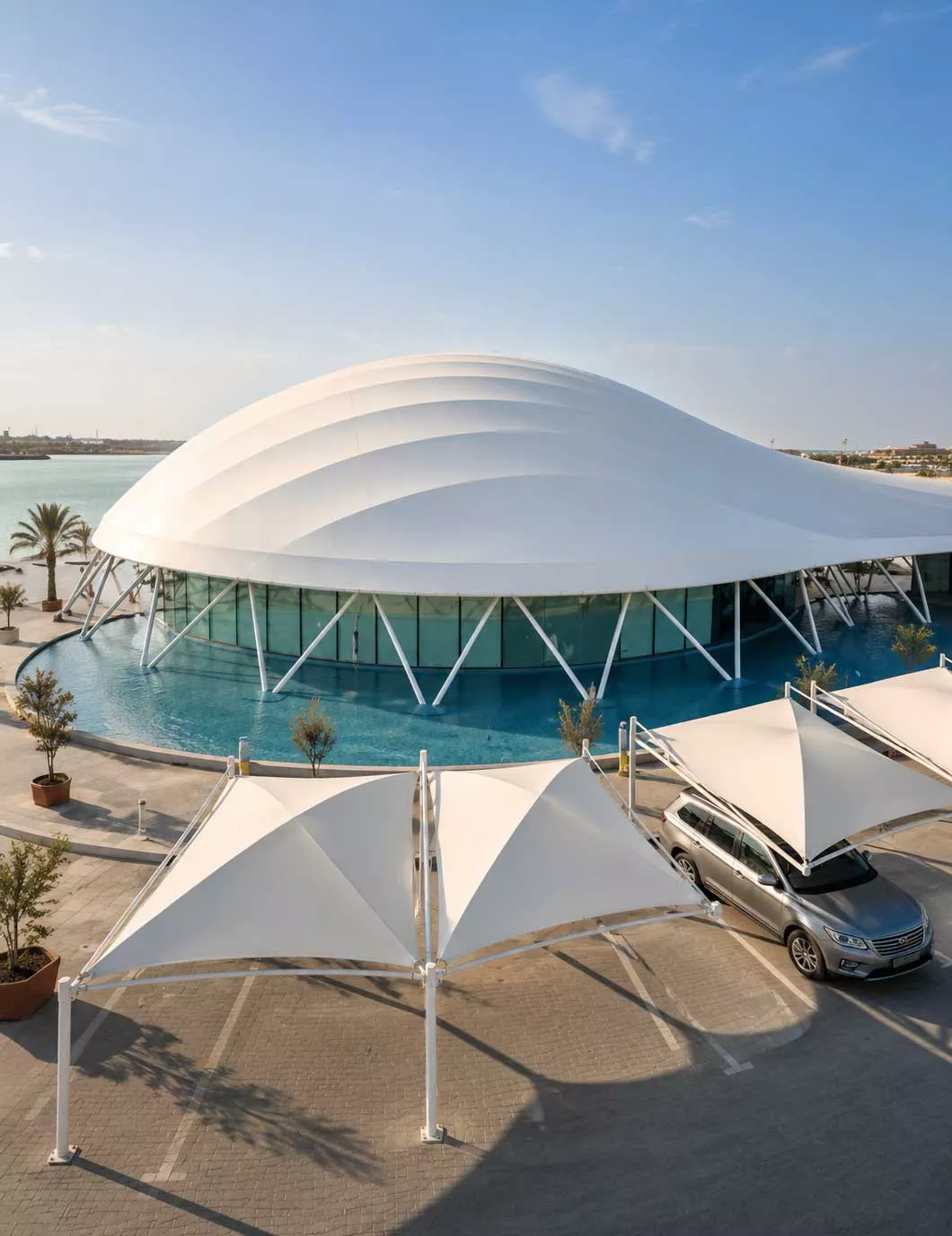
What Is a Tensile Dome Structure?
A tensile dome structure is a type of lightweight roofing system that uses a combination of high-tension fabric membranes and a structural support framework — typically steel — to create a dome-shaped enclosure or shade cover. Unlike traditional RCC or solid roof construction, the dome shape here is achieved through tension in the fabric rather than rigid mass.
The basic components of a tensile dome structure include:
- Fabric membrane – the primary covering, usually made from HDPE, PTFE-coated fibreglass, or PVC-coated polyester.
- Steel ring beam or hub – the central structural element at the top of the dome.
- Radial cables or struts – these carry the tension forces from the hub outward to the perimeter.
- Perimeter anchoring – either ground anchors, concrete footings, or an external ring beam depending on site requirements.
The dome gets its structural rigidity from pre-tensioned cables and fabric. When properly engineered, this pre-tension distributes load uniformly across the surface, allowing the structure to carry wind, rain, and even light snow loads without the need for heavy internal columns.
Tensile dome structures are fundamentally different from conventional fabric awnings or simple sail shades. They are engineered systems that go through structural analysis, computer-aided design, and load testing before fabrication.
Types of Tensile Dome Structures
Not all tensile domes look or function the same. The right type depends on span requirements, site conditions, and end use:
Point-Supported Dome
The fabric is lifted at multiple high points, creating a dome-like profile. Suitable for mid-span coverage where internal columns are acceptable.
Ring Beam Dome
A circular steel ring sits at the perimeter, and cables radiate inward to a central hub. This design allows completely column-free interiors — useful for sports arenas, amphitheatres, and event spaces.
Hybrid Tensile Dome
Combines rigid steel frames with tensioned fabric infill panels. Common in projects where partial transparency or a mixed material look is required.
Geodesic-Influenced Tensile Dome
Uses a triangulated cable network beneath the membrane, distributing loads across many small panels. Suitable for very large spans.
The type we recommend depends entirely on your site dimensions, soil conditions, load requirements, and aesthetic preferences.
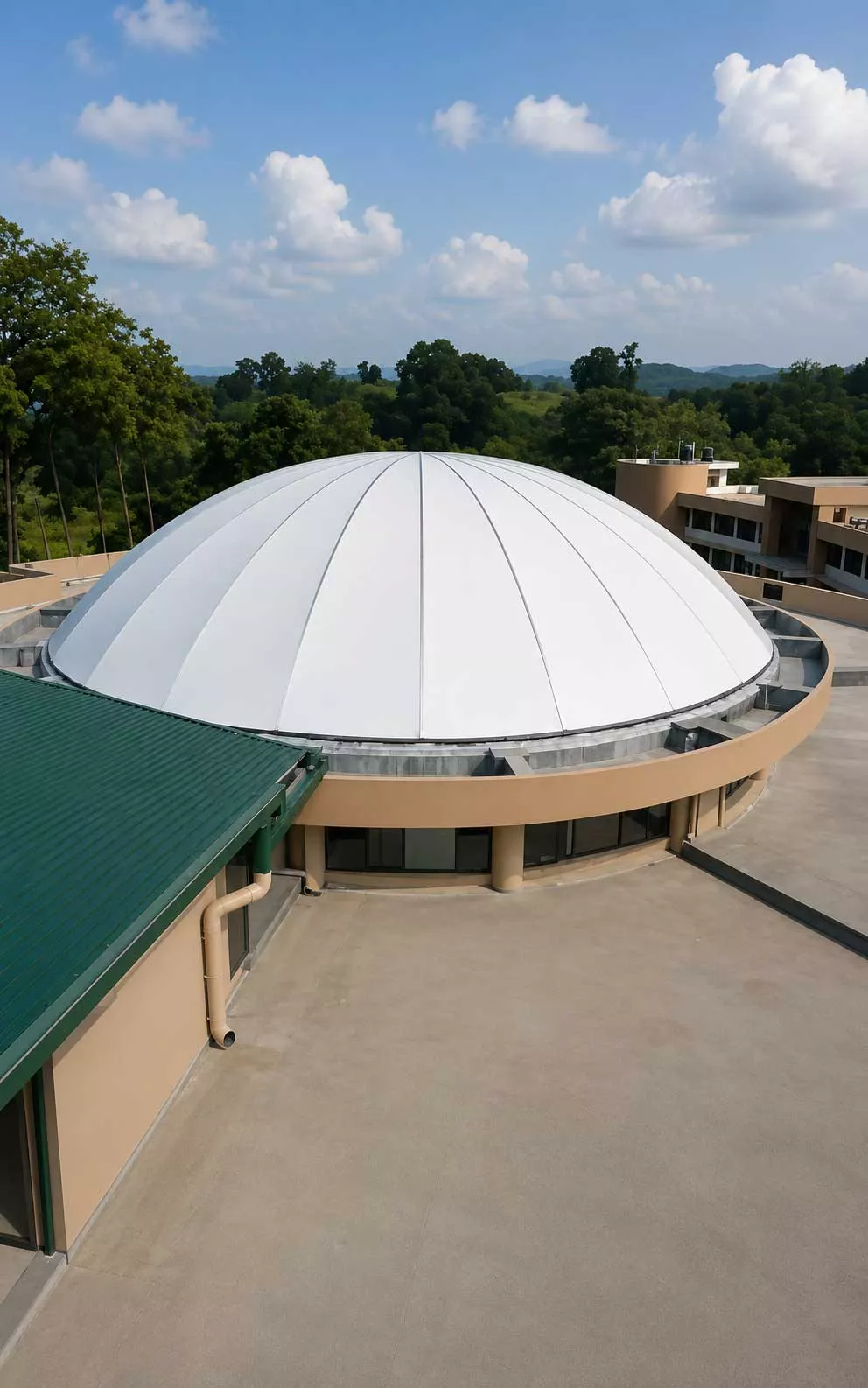
Key Features of Tensile Dome Structures
- Weather Resistance – The fabric membranes used in tensile dome structures are tested for wind resistance, rain-load bearing, and temperature fluctuation. PVC-coated polyester is well-suited to most Indian weather conditions, while PTFE-coated fibreglass offers superior performance in coastal or high-UV environments.
- UV Protection – High-quality tensile fabrics block a significant portion of UV radiation, which makes these structures effective for outdoor areas where occupant comfort matters — parks, poolside areas, temple courtyards, and pedestrian zones.
- Long Service Life – A well-installed tensile dome structure typically lasts 15 to 25 years depending on the fabric grade, maintenance practices, and local climate. Steel components, when properly galvanized or powder-coated, add to this durability.
- Low Maintenance – The smooth surface of tensile fabric resists dust accumulation and is easy to clean with water. Unlike metal sheets, tensile membranes do not rust. Periodic inspection of cables and anchor points is recommended, but the maintenance burden is significantly lower than conventional roofing.
- Lightweight Construction – The structural weight of a tensile dome is far lower than equivalent RCC or metal sheet roofing of the same span. This reduces foundation requirements and makes it viable for sites with soft soil or temporary use conditions.
- Custom Design Options – Tensile dome structures are not one-size-fits-all. Shape, span, height, fabric colour, translucency level, and structural configuration can all be specified based on project requirements.
Benefits of Choosing a Tensile Dome Structure in India
Large-Span Coverage Without Internal Columns A well-designed tensile dome can span tens of metres without a single internal support column. This is difficult and expensive to achieve with conventional construction and is one of the primary reasons these structures are chosen for stadiums, event grounds, and industrial yards.
- Cost-Effective for Open Areas – When the area to be covered is large and relatively flat, tensile dome structures offer a lower cost per square foot compared to equivalent RCC or steel-frame roofing, especially when installation speed and foundation requirements are factored in.
- Fast Fabrication and Installation – Components are fabricated off-site and assembled on location, which reduces the time spent on-site. Depending on the size, many medium-scale tensile dome installations can be completed in a few weeks, minimising disruption to ongoing site operations.
- Aesthetic Versatility – Tensile dome structures have a clean, modern appearance that fits a range of settings — from religious and cultural spaces to commercial and industrial facilities. They can be made to look formal or informal depending on configuration.
- Energy Efficiency – Translucent membranes allow natural daylight to pass through, which can reduce the need for artificial lighting during daytime. Certain fabrics also have heat-reflective properties that help moderate the temperature beneath the structure.
- Suited to Indian Climates – Whether you are building in the humid coastal zones of Andhra Pradesh, the arid plains of Rajasthan and Haryana, or the temperate hill towns of Uttarakhand and Himachal Pradesh, tensile dome structures can be specified to match the dominant weather conditions.
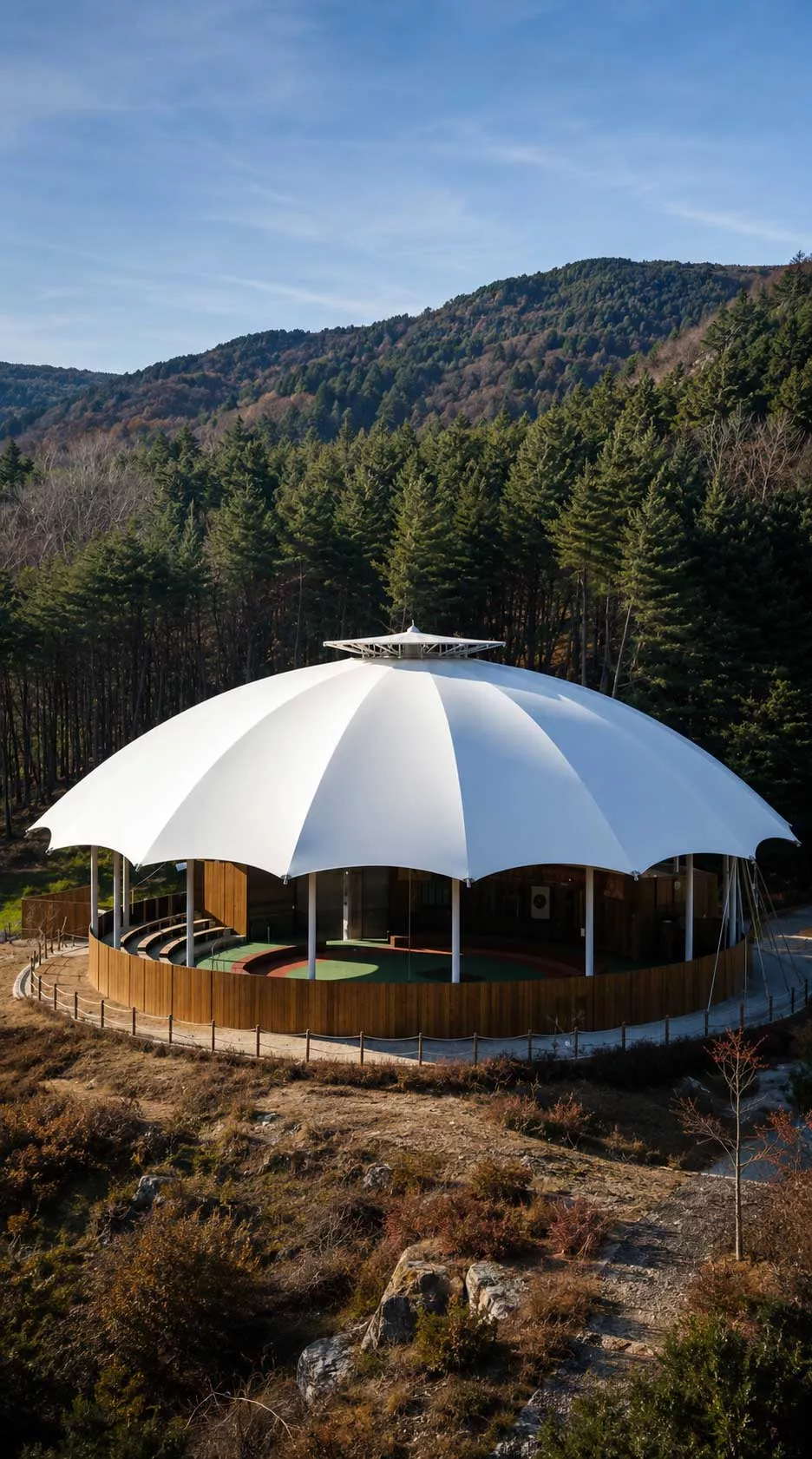
Applications of Tensile Dome Structures Across Industries
Tensile dome structures serve a wide variety of sectors. Here is how they are applied in practice:
- Commercial Complexes – Open-air shopping zones, food courts, hotel pools, and resort common areas in cities like Gurgaon, Noida, Jaipur, and Pune regularly use tensile dome roofing to extend usable space without full enclosure.
- Industrial Facilities – Warehouses, loading bays, and equipment storage yards in industrial hubs such as Baddi, Bhiwadi, Panipat, Rudrapur, Pithoragarh (logistic yards), Sonipat, and Karnal use tensile dome structures to cover large areas without heavy civil works.
- Educational Institutions – Open assembly grounds, gymnasiums, and covered walkways in schools and colleges across Indore, Bhopal, Lucknow, Kanpur, and Jabalpur have benefitted from tensile dome installations.
- Hotels and Resorts – Tourism destinations like Manali, Mussoorie, Nainital, Rishikesh, Dalhousie, Kasauli, Pahalgam, and Katra frequently use tensile domes to create covered outdoor experiences that complement the landscape.
- Hospitals – Outdoor waiting areas, ambulance bays, and rehabilitation terraces at hospitals in Dehradun, Meerut, Agra, Varanasi, and Vijayawada are increasingly covered using tensile membrane structures.
- Shopping Centres – Atrium covers, entrance canopies, and car park shading at malls in Mumbai, Thane, Vasai, Panvel, Nashik, Nagpur, and Aurangabad use dome-form tensile structures for visual impact and functional shade.
- Public Infrastructure – Bus terminals, metro station forecourts, public parks, and ghats along rivers in Haridwar, Prayagraj, Ayodhya, Varanasi, Pushkar, and Tirupati use tensile dome structures to provide shelter at scale.
- Sports Facilities – Indoor-outdoor sports arenas, swimming pool enclosures, and cricket practice nets in Visakhapatnam, Vijayawada, Guntur, Hyderabad, Bengaluru, and Kolkata often incorporate dome-shaped tensile systems.
- Residential Projects – Clubhouses, rooftop lounge areas, terrace gardens, and parking decks in residential complexes across Greater Noida, Ghaziabad, Faridabad, Rohini, Dwarka, and Saket use tensile dome structures for aesthetic and practical coverage.
- Government Projects – Civic grounds, exhibition halls, heritage site visitor areas, and military facility shade structures in locations like Srinagar, Jammu, Shimla, Chandigarh, Panchkula, and Bhubaneswar have used tensile domes for permanent or semi-permanent coverage.
Design and Customization Options for Tensile Dome Structures
Every tensile dome structure project starts with a blank sheet. RS Tensile works with clients to understand the scope before proposing a design.
- Span and Height Tensile dome structures can be designed for spans ranging from small private courtyards to large public grounds exceeding 50 metres. The rise-to-span ratio (how high the dome peaks relative to its width) is adjustable based on aesthetic and structural preferences.
- PVC-coated polyester – Durable, cost-effective, available in multiple colours and translucency levels. Suits most general applications.
- HDPE shade netting – Breathable, ideal for hot-dry climates or areas where full waterproofing is not required.
- PTFE-coated fibreglass – Premium option. Offers exceptional UV resistance, fire resistance, and longevity. Common in airports, stadiums, and permanent civic structures.
- Colour and Translucency Standard offerings include white, off-white, grey, cream, and green. Custom colour matching is possible. Translucency levels from fully opaque to 35% light-transmitting are available.
- Hot-dip galvanized steel – Suitable for most applications and climates.
- Powder-coated mild steel – Aesthetics-focused option with good corrosion resistance.
- Stainless steel cable systems – Used where corrosion from humidity or salt air is a concern.
- Anchoring and Foundation We specify foundation depth and type (isolated footings, plinth beams, rock anchors) based on site soil reports, seismic zone, and wind load classification.
Fabric Selection
Steel Structure Options
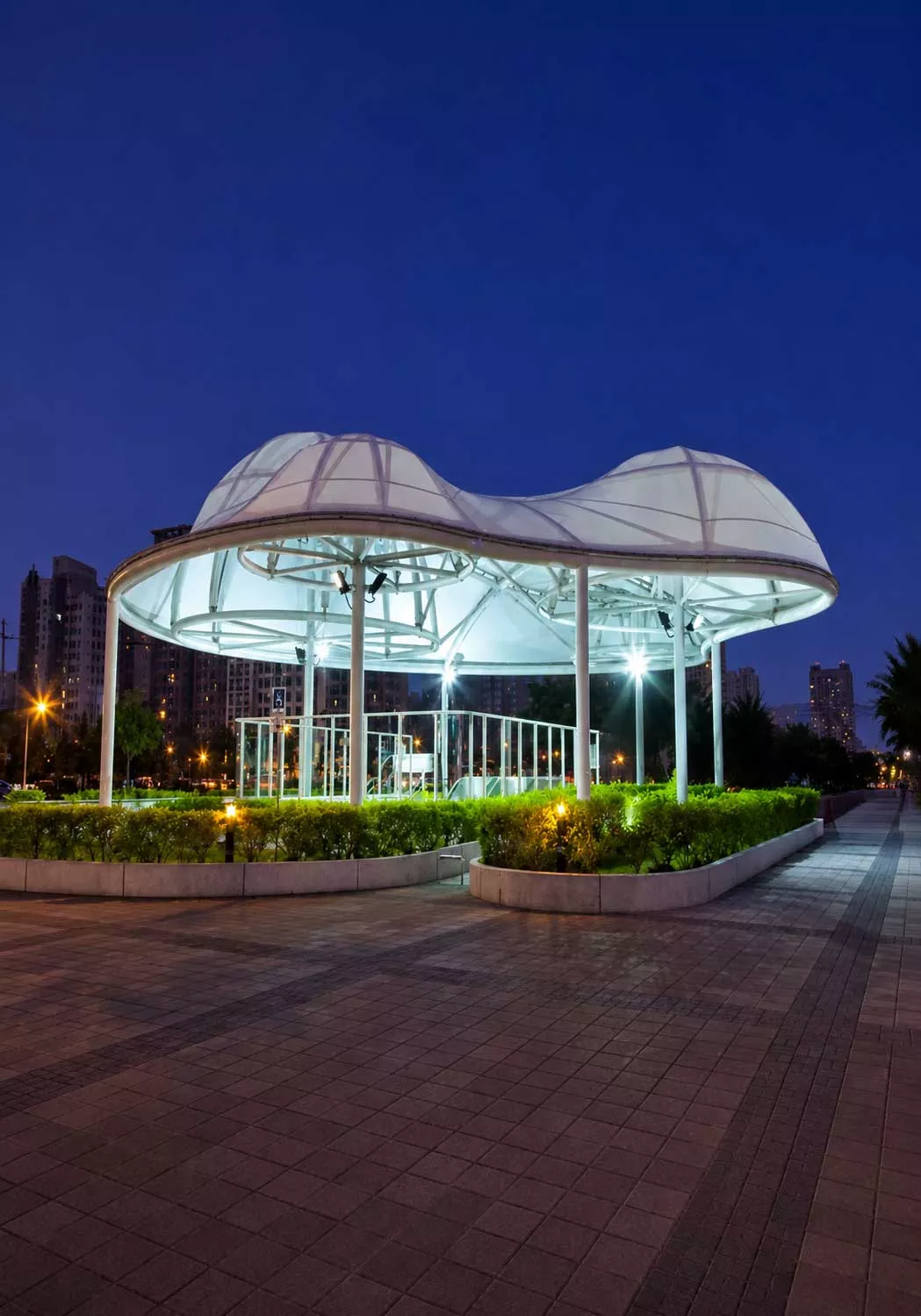
Installation Process for Tensile Dome Structures
A tensile dome structure installation follows a defined sequence:
- Site Assessment – Our team visits the site to measure the area, assess soil type, note access constraints, and record any underground utilities or overhead obstacles. In remote areas such as Chakrata, Lansdowne, Devprayag, or Rudraprayag, we factor in logistics and material access.
- Design and Engineering – Based on site data and client requirements, our design team prepares structural drawings, cable tension calculations, and fabric pattern files. For larger spans, this includes load analysis for wind, rain, and seismic conditions as per Indian Standards (IS 875 for wind and IS 1893 for seismic).
- Fabrication – Steel components are fabricated at our facility. Fabric panels are precision-cut using computer-aided cutting tables to ensure accurate panel shapes before they are sewn together with high-strength seam technology.
- Structural Assembly – Steel masts, ring beams, and perimeter supports are installed on-site first. Cables are threaded through their designed paths and left slack initially.
- Fabric Installation – The membrane panels are laid over the structure and connected to edge cables. Pre-tensioning is then applied progressively using tensioning equipment, pulling the fabric taut until design tension is reached.
- Final Inspection – Once fully tensioned, the structure is inspected for even tension distribution, correct geometry, secure anchor connections, and any fabric damage. Client handover includes maintenance guidelines.
How to Choose a Reliable Tensile Dome Structure Manufacturer in India?
If you are evaluating suppliers, here are factors worth assessing:
- Do they manufacture in-house or resell? – RS Tensile Pvt. Ltd. is a manufacturer. We fabricate steel components and cut fabric in-house. This gives us direct quality control over every element.
- Can they handle structural engineering? – A tensile dome is a structural system, not just a shade product. Ask for structural drawings, IS code compliance, and load calculation documentation before committing.
- Do they have pan-India project experience? – Installation requirements differ between a flat commercial plot in Hisar and a sloped hillside site in Almora. Check whether the supplier has worked in conditions comparable to your site.
- What fabric brands and grades do they use? – Ask specifically about the fabric source, coating type, tensile strength, and warranty. Lower-cost alternatives often fail within a few years.
- Do they provide post-installation support? – A manufacturer that will not come back for a warranty issue or periodic inspection is not a good long-term partner. Ask directly.
- Are they working in your region? – RS Tensile has worked across Uttar Pradesh, Haryana, Rajasthan, Odisha, Andhra Pradesh, Maharashtra, Himachal Pradesh, Jammu & Kashmir, Uttarakhand, and Madhya Pradesh. We understand regional site and logistics requirements.
Why Choose RS Tensile Pvt. Ltd. for Tensile Dome Structures in India?
RS Tensile Pvt. Ltd. is a manufacturer based in India, focused on engineering-backed tensile structure products. Here is what we bring to each project:
In-House Manufacturing
We fabricate both steel structures and fabric membranes ourselves. This means faster turnaround, accurate quality checks, and no dependency on third-party fabricators.
Engineering Support
Our team prepares structural drawings and load calculations for each project. We do not sell standard products; we design to site conditions.
Nationwide Reach
We supply and install tensile dome structures across all major states — including Madhya Pradesh, Maharashtra, Rajasthan, Odisha, Andhra Pradesh, Uttar Pradesh, Haryana, Delhi NCR, Uttarakhand, and Himachal Pradesh. Our teams can mobilise to tier-2 and tier-3 cities, not just metro areas.
Fabric Quality
We use established fabric brands and do not compromise on coating grades. Each fabric grade is matched to the site's UV exposure, wind conditions, and expected lifespan.
Transparent Project Handling
From site visit to final handover, we keep the client informed at every stage. Our project managers coordinate logistics, labour, and material procurement without burdening the client with unnecessary follow-ups.
Experienced Site Teams
Our installation teams have worked in demanding environments — high-altitude sites in Himachal and Uttarakhand, coastal sites in Odisha and Andhra Pradesh, and dense urban environments where access is limited.
Conclusion
A tensile dome structure in India offers a practical, visually appealing, and cost-effective solution for large-span coverage — whether for commercial, industrial, public, or recreational use. These structures perform reliably across the full range of Indian climatic conditions, from the high heat and dust of Rajasthan and Haryana to the monsoon-heavy coasts of Odisha and Andhra Pradesh, and the cold winters of Himachal Pradesh and Uttarakhand.
RS Tensile Pvt. Ltd. manufactures and installs tensile dome structures across India. Under the leadership of CEO Radhey Shayam, our team has developed project experience across multiple states — including Uttar Pradesh, Madhya Pradesh, Rajasthan, Maharashtra, Andhra Pradesh, Odisha, Haryana, Delhi NCR, Himachal Pradesh, Jammu & Kashmir, and Uttarakhand — working with commercial, industrial, institutional, and government clients.
If you have a project in mind — large or small, city or remote — we can evaluate the site, prepare a design, and provide a transparent quote. Contact RS Tensile Pvt. Ltd. to discuss your tensile dome structure requirement.
FAQs About Tensile Dome Structures
1. What is the typical lifespan of a tensile dome structure?
A properly installed tensile dome structure with a quality fabric membrane lasts between 15 and 25 years. PVC-coated polyester typically carries a 10-year fabric warranty; PTFE-coated fibreglass can last longer. Steel components last the full project life if galvanized or properly maintained.
2. Can a tensile dome structure withstand heavy rainfall?
Yes. Tensile dome structures are designed to drain water efficiently. The curved dome geometry naturally channels rainwater to the perimeter. We design for the local rainfall intensity as per IS 875 standards.
3. How do tensile dome structures perform in high-wind areas?
Wind load is one of the primary design parameters for a tensile dome structure. For coastal areas of Andhra Pradesh and Odisha, high-altitude locations in Himachal Pradesh and Jammu & Kashmir, and windswept plains in Rajasthan and Haryana, we factor in higher wind speeds during the structural analysis phase.
4. Can a tensile dome structure be customised in size and shape?
Yes. We design to client requirements. Whether you need a compact 10-metre dome for a private pool area or a 60-metre span for an industrial yard, the design is adjusted accordingly.
5. Is a tensile dome structure suitable for permanent installation?
Yes. With the right fabric grade and anchoring system, tensile dome structures are suitable for permanent, long-term installation. Many civic and industrial structures across India have been in place for over a decade.
6. How does the cost of a tensile dome structure compare to conventional roofing?
For large spans, a tensile dome structure is generally more cost-effective than RCC or metal sheet roofing because it requires fewer internal columns and lighter foundations. For smaller areas, conventional roofing may be comparable or cheaper. We recommend getting a project-specific quote for an accurate comparison.
7. What maintenance does a tensile dome structure require?
Annual inspection of cable tension, anchor points, and fabric integrity is recommended. The fabric surface can be cleaned with water and a soft brush. Avoid abrasive or chemical cleaning agents. We provide a maintenance guide at handover.
8. Do you supply tensile dome structures across all states in India?
Yes. RS Tensile Pvt. Ltd. handles projects across all major states and union territories — including remote locations. We have supplied and installed structures in places like Yanam, Kokernag, Handwara, Dhenkanal, Nabarangpur, Bhawanipatna, and Sundargarh, in addition to major cities.
9. Can a tensile dome structure handle snow loads?
For hill areas such as Manali, Dalhousie, Shimla, Pahalgam, and Gulmarg in Jammu & Kashmir, we design with snow load considerations as per IS 875 Part 4. The dome geometry sheds snow effectively, but the fabric grade and cable sizing are adjusted for higher loads in these regions.
10. How long does it take to complete a tensile dome structure project?
Timelines vary with project size. A medium-scale installation (15–25 metres span) typically takes 4–8 weeks from design approval to handover, including fabrication. Larger or more complex projects take longer. We provide a detailed project schedule before work begins.
