Tensile Fabric or Membrane Architecture in India
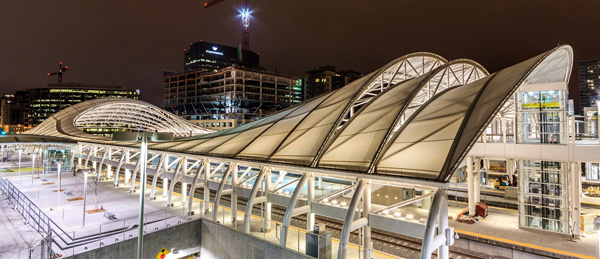
| Product Description | Combine functionality with contemporary design to create versatile and visually stunning spaces. Order your Tensile Fabric Architecture Structure today for a blend of innovation and practicality! |
| Membrane Material | PVC / PTFE / HDPE |
| Fabric Color | White or Customized |
| Shape & Size | Customized |
| Certification | ISO 45001:2018(OHSAS), ISO 45001:2015, ISO 9001:2015 |
| Place of Origin | India |
Order Now
ENQUIRE NOW
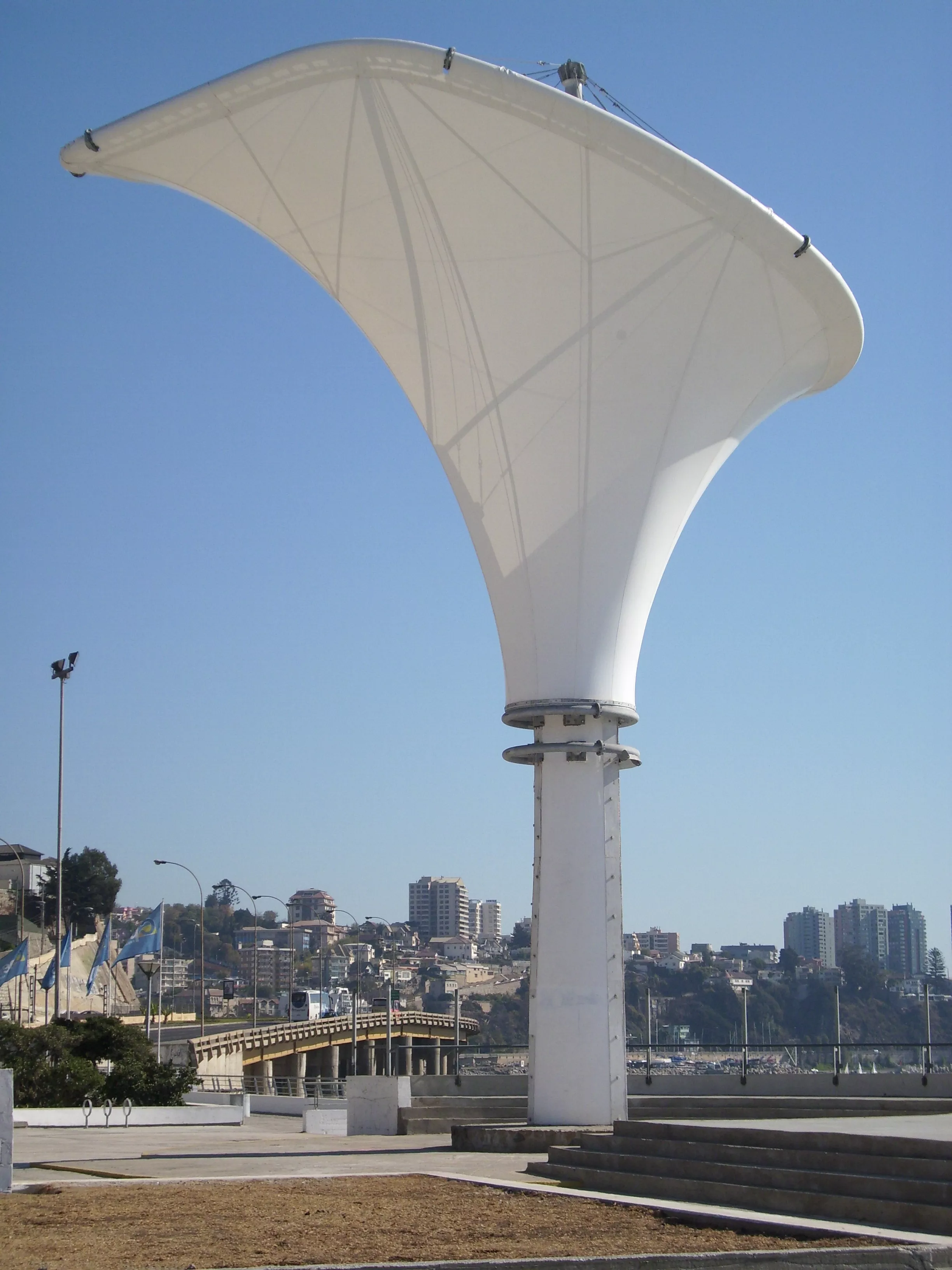
Tensile fabric or membrane architecture in India has steadily grown from niche applications in airports and stadiums to everyday use across commercial, industrial, and public spaces. The principle is straightforward: instead of heavy concrete or steel sheet roofing, a high-performance fabric membrane is pulled taut between anchor points to create a lightweight, load-bearing cover. The structure carries load through tension rather than compression, which is why it needs far less material than conventional roofing.
India's climate demands a lot from any outdoor structure. From the wet coastal humidity of Visakhapatnam and Panvel, to the dry desert heat of Jaisalmer and Barmer, to the heavy snowfall in Manali and Shimla, a roofing solution must handle wide extremes. Membrane structures, when designed and installed correctly, do exactly that. They resist UV degradation, shed rainwater efficiently, allow controlled light transmission, and remain structurally stable under wind and snow loads.
RS Tensile Pvt. Ltd., led by CEO Radhey Shayam, designs and manufactures tensile fabric structures for clients across the country, from Srinagar in the north to Tirupati in the south, and from Virar and Mumbai on the west coast to Bhubaneswar and Cuttack on the east. Every project is handled in-house, from structural engineering to final installation.
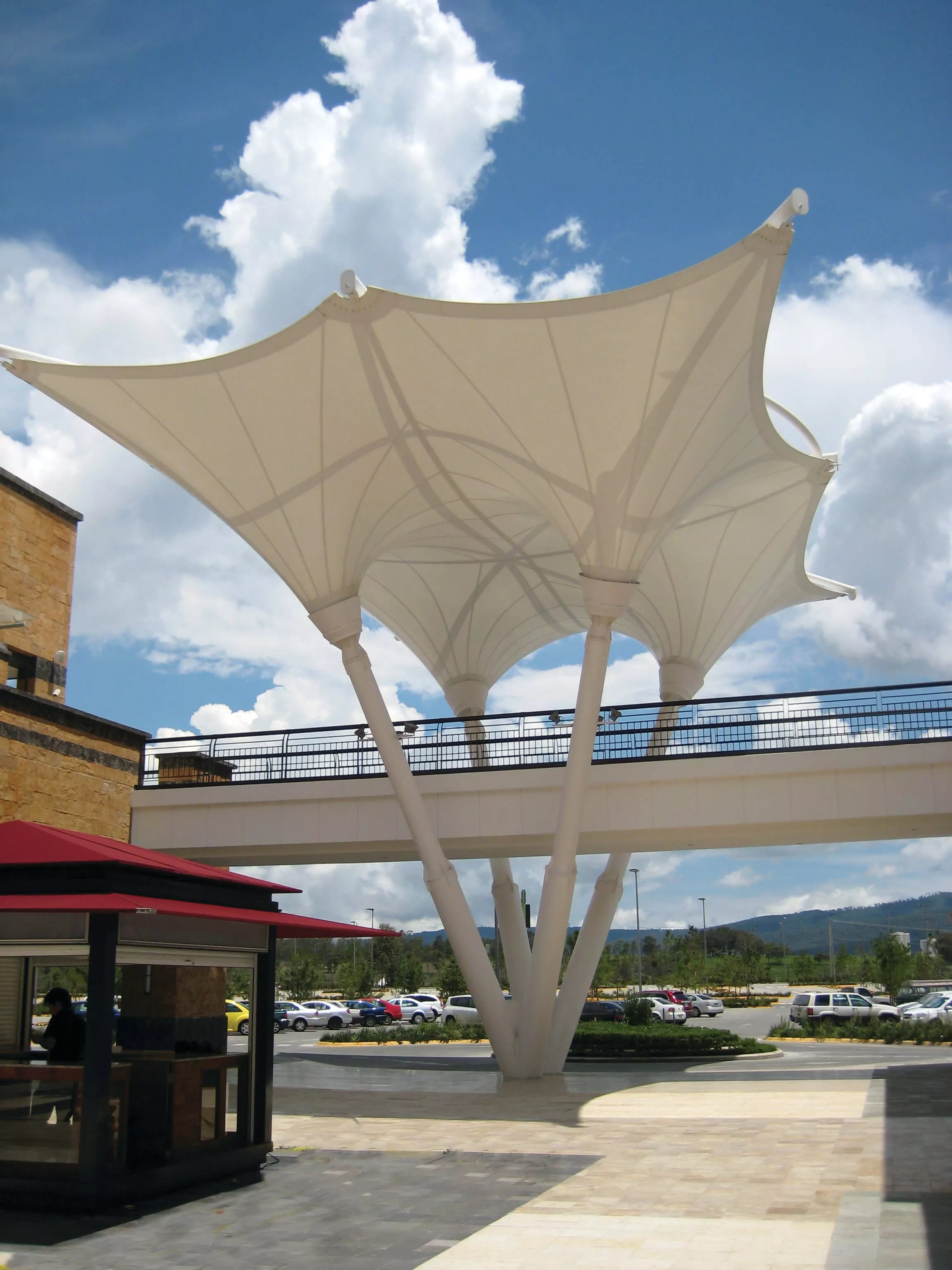
What Is Tensile Fabric or Membrane Architecture?
A Tensile fabric or membrane architecture refers to structures where a flexible, high-strength fabric membrane is stretched between a rigid steel or aluminium frame to form a stable roof or enclosure. The fabric is held under consistent pre-stress, which is what gives the structure its shape and structural integrity.
The key components of any tensile membrane structure are:
- Fabric membrane: typically PVC-coated polyester, PTFE-coated fibreglass, or HDPE knitted fabric, depending on the application
- Steel substructure: tubes, masts, columns, or ring beams that serve as the primary load-transfer system
- Edge cables and clamps: stainless steel or galvanised cables that run along the fabric perimeter to transfer tension to the frame
- Foundations and anchor points: concrete footings or steel base plates that absorb the tensile loads from the entire structure
The working principle relies on anticlastic or synclastic curvature. A saddle-shaped (anticlastic) membrane curves in opposite directions in two planes, which stabilises it against uplift and downward loads simultaneously. This is why tensile structures look visually distinctive and perform better than flat sheets under wind.
Types of Tensile Membrane Structures
Several structural forms are used in membrane architecture, each suited to different site conditions and span requirements:
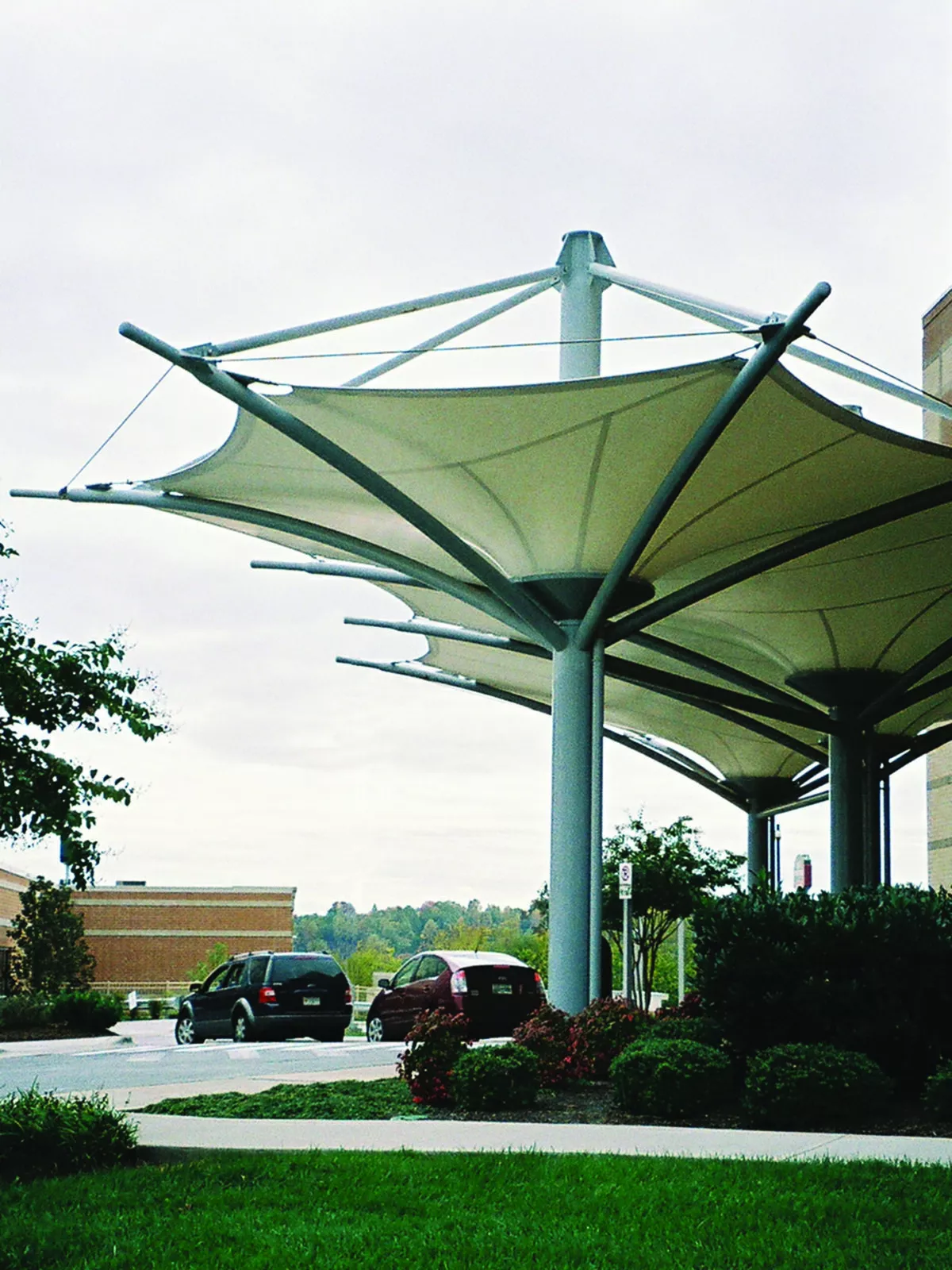
Hypar (hyperbolic paraboloid) structures
saddle-shaped canopies commonly used for parking, walkways, and entrance canopies in cities like Gurgaon, Noida, Faridabad, and Pune
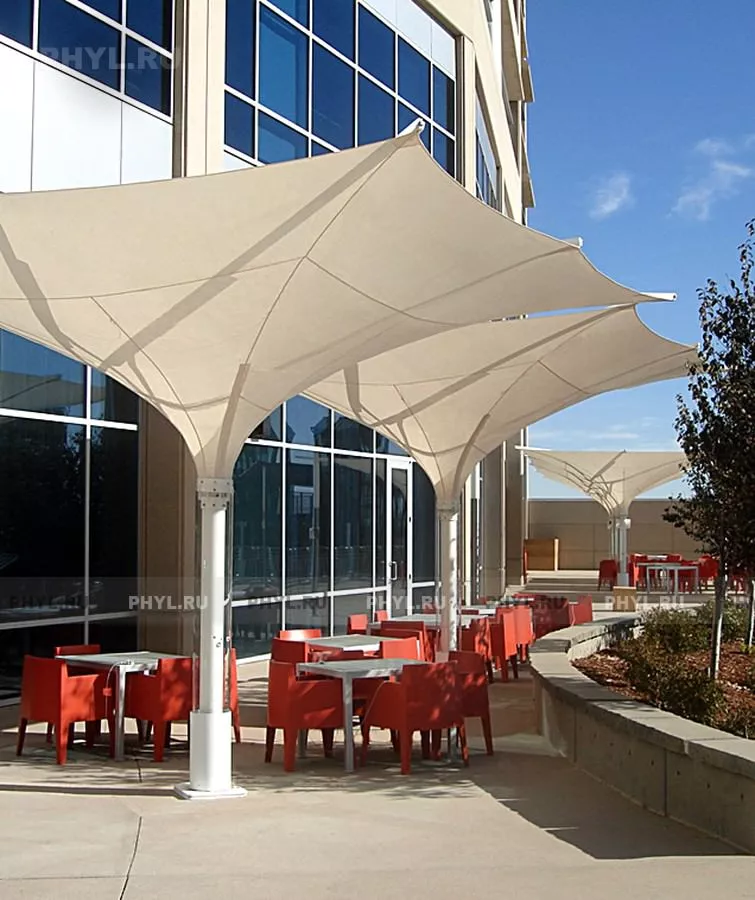
Cone or umbrella structures
single-point mast designs suitable for open plazas, food courts, and outdoor seating areas in Jaipur, Udaipur, and Ajmer
Barrel vault structures
cylindrical forms often used for walkway covers and entrance tunnels in institutional campuses and industrial parks around Indore, Bhopal, and Nagpur
Ridge and valley forms
undulating multi-bay canopies ideal for large-span coverage in malls, stadiums, and transit hubs across Delhi, Mumbai, and Hyderabad
Air-inflated (pneumatic) structures
pressure-supported enclosures for sports domes and event halls, deployed in select projects across Maharashtra and Uttar Pradesh
Key Features of Tensile Fabric and Membrane Architecture
- Weather resistancequality PVC and PTFE membranes handle monsoon rainfall, strong winds, and intense sun without degrading. This matters for projects in Gorakhpur, Varanasi, Prayagraj, and other high-rainfall zones
- UV resistance: the coatings on tensile membranes block UV radiation, protecting people and assets underneath, particularly relevant for hot, sun-intensive locations like Jodhpur, Bikaner, and Pushkar in Rajasthan
- Low self-weight: a tensile membrane roof weighs a fraction of a conventional RCC or metal sheet roof, reducing foundation loads and enabling use on existing structures in cities like Rohtak, Panipat, and Karnal
- Long service life: high-grade PVC-coated polyester membranes typically last 15 to 25 years with proper maintenance, while PTFE-coated fibreglass membranes can last over 30 years
- Fire resistance: most commercial-grade tensile fabrics carry fire-retardant ratings as per relevant standards, making them suitable for public and institutional buildings
- Low maintenance: the coated surface resists dirt adhesion. Rain naturally cleans most of the membrane surface, reducing upkeep costs over the structure's lifetime
- Design flexibility: membranes can be fabricated in virtually any colour, translucency level, and custom shape, giving architects and clients broad aesthetic latitude
Our Tensile Fabric or Membrane Architecture Cost in India
RS Tensile price of Tensile Fabric or Membrane Architecture in India typically ranges from ₹320 to ₹600 per square foot. The total installed cost will depend on the fabric GSM, structural framing, and the complexity of the design.
Key Price Breakdown
- Standard PVC Coated Structures (750-900 GSM): ₹320 – ₹450 per sq. ft. (Ideal for car parkings, walkways, and entrance canopies)
- Premium Architectures (Serge Ferrari / PVDF): ₹380 – ₹650 per sq. ft. (Ideal for restaurants, banquet halls, and stadiums)
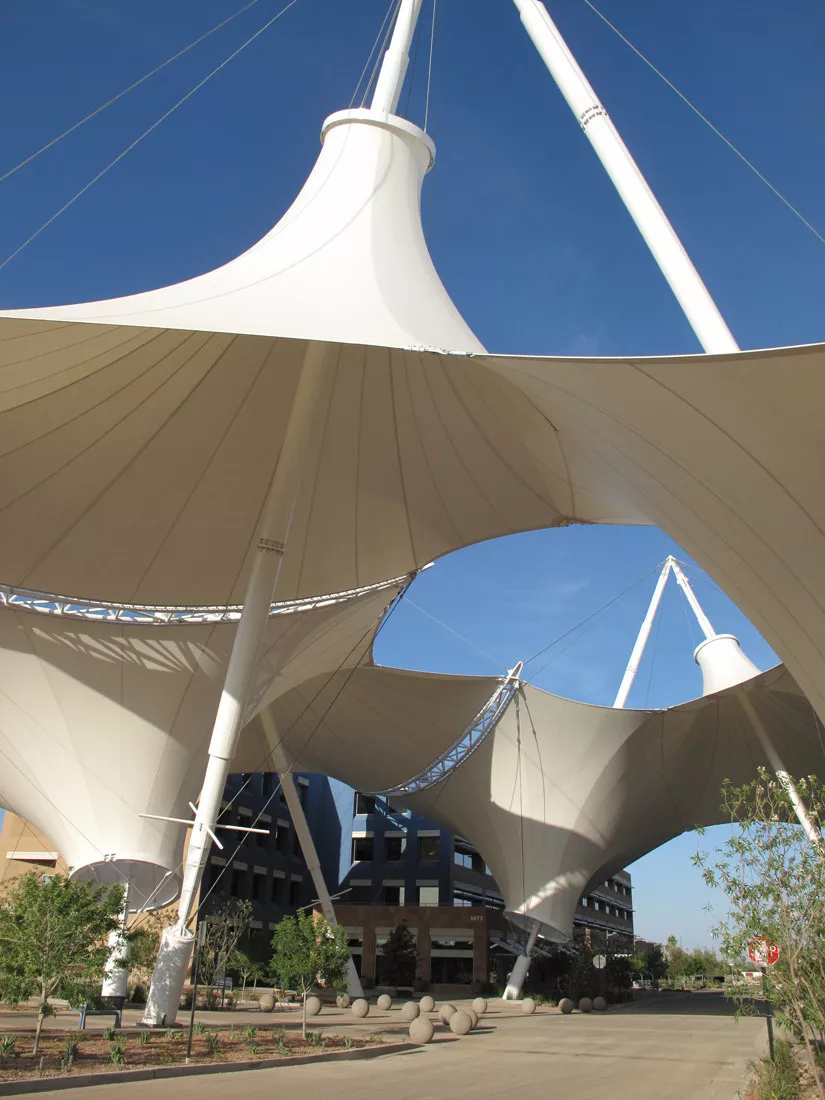
Benefits of Tensile Fabric or Membrane Architecture for Indian Projects
Cost effectiveness compared to conventional roofing is one of the most practical advantages. A tensile membrane system covering large open spans often costs less per square foot than an equivalent RCC structure because of the lighter substructure, faster installation, and lower foundation requirements. For a facility in Meerut, Aligarh, or Moradabad comparing tensile versus polycarbonate sheet roofing, the tensile option typically offers better long-term value when accounting for UV resistance and service life.
Fast installation is particularly valuable for time-sensitive projects. Since fabrication happens off-site and site work involves assembly rather than pouring concrete or laying bricks, a mid-sized tensile canopy project can be completed in weeks rather than months. This has been a deciding factor for clients in Dehradun, Haridwar, Rishikesh, and Roorkee with project completion deadlines.
Large span coverage without internal columns is another functional advantage. Tensile structures routinely achieve clear spans of 15 to 50 metres or more, which makes them ideal for aircraft hangars, sports arenas, bus depots, and open market shelters in cities including Kanpur, Lucknow, Agra, and Gwalior.
Natural light transmission is a practical benefit that reduces daytime electricity consumption. Translucent membrane grades allow 10 to 40 percent of natural light to pass through, which cuts lighting costs for warehouses and commercial spaces in Pune, Nashik, Aurangabad, and Nagpur.
Tensile versus polycarbonate roofing is a common comparison. Polycarbonate sheets offer clarity but yellow and degrade under sustained UV exposure in Indian conditions, often within 5 to 8 years. Tensile fabrics, when properly selected and installed, maintain performance significantly longer and carry better wind load ratings for exposed coastal or hillside sites.
Applications of Tensile Fabric or Membrane Architecture Across Industries
Tensile membrane structures serve a wide range of sectors across India:
- Commercial complexes: entrance canopies, atrium covers, outdoor dining shade structures, and retail frontage in Ghaziabad, Greater Noida, Saket, and Dwarka
- Industrial facilities: loading bay covers, machine protection canopies, and walkway connectors for manufacturing plants in Baddi, Nalagarh, Bhiwadi, Samalkha, and Paonta Sahib
- Educational institutions: outdoor gathering shade, sports court covers, corridor linkways, and campus amphitheatres in Chandigarh, Panchkula, Ambala, Kurukshetra, and Rohini
- Hotels and resorts: poolside shade, terrace covers, banquet lawn canopies, and garden pavilions at properties in Kasauli, Mussoorie, Dalhousie, Manali, and Nainital
- Hospitals: ambulance bay covers, outdoor waiting shelters, connecting corridor canopies, and car parking shades at facilities in Bhubaneswar, Rourkela, Cuttack, and Balasore
- Shopping centres and malls: large-span atrium roofs, entrance portico canopies, and food court shade covers in Thane, Vasai, Virar, Ulhasnagar, Bhiwandi, and Panvel
- Public infrastructure: bus shelters, railway station platform covers, metro station shade, and public park gazebos in Jaipur, Jodhpur, Bikaner, Ajmer, and Kota
- Sports facilities: cricket ground net enclosures, swimming pool canopies, tennis court covers, and stadium shade in Mandi, Kullu, Dharamsala, Chamba, and Shimla
- Religious and pilgrimage sites: crowd shade structures at mandirs, ghats, and pilgrimage routes in Haridwar, Rishikesh, Varanasi, Puri, Sarnath, Ayodhya, Pushkar, Katra, and Devprayag
- Government projects: civic shade structures, parade ground canopies, government office entrance covers, and agricultural market covers in regions including Haryana, Uttar Pradesh, Odisha, Himachal Pradesh, and Andhra Pradesh
Design and Customization Options for Tensile Fabric or Membrane Architecture
Every tensile membrane project starts with site-specific requirements, not a catalogue. The range of customisation available in membrane architecture is one reason the technology is used from small residential shade canopies in Alipur and Mahipalpur to large public infrastructure projects in Vijayawada, Visakhapatnam, and Guntur.
- Sizes: from compact 20 to 30 sq. m. shade canopies to large covered areas exceeding 2,000 sq. m. in single or multi-bay configurations
- Shapes: hypar saddles, cones, arches, waves, funnels, or bespoke architectural forms based on design drawings or site conditions
- Fabric options: PVC-coated polyester (most common for standard projects), PTFE-coated fibreglass (high durability for permanent structures), HDPE knitted shade cloth (for agricultural or partial-shade applications), and ETFE foil (for high-transparency architectural applications)
- Structural configurations: single mast, multi-mast, portal frame, arch-supported, ring beam, or hybrid frame depending on span, load, and site constraints
- Colour and translucency: membrane fabric is available in a wide range of standard and custom colours. Translucency ratings from near-opaque to 40 percent light transmission allow control over the light and heat environment below the canopy
- Drainage integration: custom gutter systems, downpipes, and slope configurations ensure proper rainwater management for sites in high-rainfall areas such as Brahmapur, Sambalpur, Nabarangpur, Dhenkanal, and Sundargarh in Odisha
Installation Process for Tensile Fabric or Membrane Architecture
Understanding the installation sequence helps clients plan their project timeline and site access requirements. Here is how RS Tensile approaches a typical membrane structure project:
Site Assessment
a site visit or detailed survey to record dimensions, ground conditions, existing structure loads, drainage slopes, and wind exposure. For remote sites in Pithoragarh, Almora, Rudraprayag, Chakrata, or Lansdowne, this step may involve remote data collection before a physical visit.
Design & Engineering
structural calculations using finite element analysis software to determine membrane pre-stress, cable forces, and foundation reactions. Working drawings are produced and reviewed before fabrication begins.
Material Procurement and Fabrication
steel substructure elements are fabricated and hot-dip galvanised or painted. Fabric panels are cut and welded using high-frequency welding to ensure seam strength. All components are inspected before dispatch.
Foundation and Substructure
on-site concrete works for footings, followed by erection of the steel frame. Anchor bolts, base plates, and mast positions are set to the engineering specification.
Membrane Installation
the fabricated fabric panels are laid out, connected along their seams, and laced to the edge cables. The assembly is then hoisted and tensioned using mechanical tensioning devices to achieve the designed pre-stress level.
Final Inspection and Handover
a post-installation inspection checks membrane tension, cable terminations, gutter alignment, and structural connections. The client is given maintenance guidance and warranty documentation.
This six-step process is followed for projects across all locations, whether a compact car park shade in Nuh, Palwal, or Rewari, or a large public canopy in Varanasi, Prayagraj, or Kanpur.
How to Choose a Reliable Tensile Fabric or Membrane Architecture Manufacturer in India?
The membrane architecture market in India includes a wide range of suppliers, from established manufacturers to local fabricators with limited engineering capability. Here are the factors that matter most when selecting a manufacturer:
Engineering capability
the supplier should have in-house structural engineers or a reliable engineering partner who can provide load calculations, foundation designs, and wind-load analysis specific to the project location. This is critical for exposed sites in Jaisalmer, Barmer, Sri Ganganagar, Hanumangarh, and coastal Andhra Pradesh
Fabric quality and sourcing:
ask for the brand and grade of fabric being used. Reputable manufacturers use imported or domestically certified PVC or PTFE fabrics with documented UV resistance and tensile strength data
Project portfolio
request references and project photographs from completed work across different climate zones. A manufacturer serving Jammu and Kashmir, Himachal Pradesh, Uttarakhand, and also Andhra Pradesh and Maharashtra has demonstrated range and adaptability
Post-installation support
confirm whether the company provides a warranty on both materials and workmanship, and whether they have service capability in your region. Projects in Jaunpur, Faizabad, Pratapgarh, Amethi, or Bhind may require a supplier with documented site-visit capability across Uttar Pradesh and Madhya Pradesh
Tensile structure price transparency
a reliable manufacturer provides an itemised quotation covering fabric, steel substructure, fabrication, installation, and freight. Vague lump-sum quotes are a warning sign
Tensile shade cost per sqft should be discussed in context
the cost varies with fabric grade, structural complexity, site access, and span. A responsible manufacturer explains these variables rather than giving a flat per-sqft price without qualification
Why Choose RS Tensile for Tensile Fabric or Membrane Architecture in India?
RS Tensile Pvt. Ltd. operates as a manufacturer, which means the company controls the fabrication process directly. There is no middleman between the structural engineering, fabric welding, and installation teams. Projects are handled from design through to handover under a single point of accountability.
- In-house manufacturing: the company fabricates steel structures and fabric panels internally, which controls quality at each stage and reduces lead times compared to outsourced assembly
- Nationwide project capability: RS Tensile has supplied and installed tensile structures across North, South, East, and West India, including projects in Odisha, Jammu and Kashmir, Himachal Pradesh, Andhra Pradesh, Maharashtra, Rajasthan, and major cities like Delhi, Mumbai, Pune, Nagpur, Indore, Bhopal, Lucknow, Jaipur, and Hyderabad
- Climate-adapted engineering: the company's design process accounts for local wind zones, rainfall intensity, snow load requirements (for Himalayan projects in Kullu, Pahalgam, Anantnag, and Katra), and seismic considerations for relevant zones
- Custom engineering solutions: no standard product is pushed onto a client if the site requires something different. Projects in urban settings like Saket, Rohini, Alipur, Mahipalpur, Dwarka, and Vasai have different access and load constraints from rural or semi-urban projects in Hindaun, Dausa, Dholpur, or Morena
- Transparent project support: clients receive regular updates during fabrication and installation. Site teams communicate clearly about timelines, access requirements, and any site-specific challenges
- Documented quality standards: the company uses fabric and steel materials that meet relevant IS and international standards, and maintains records for each project
Conclusion
Tensile fabric or membrane architecture in India addresses a genuine need: structurally reliable, visually considered, and weather-appropriate roofing for spaces that conventional construction cannot cover efficiently. Whether the application is a pilgrimage shade structure in Puri or Ayodhya, a commercial canopy in Indore or Satna, a sports facility cover in Bilaspur or Jabalpur, or an industrial walkway in Itarsi or Hansi, membrane architecture delivers a functional and durable outcome.
The key considerations for any project are fabric grade, structural engineering quality, climate-specific design, and post-installation support. RS Tensile Pvt. Ltd. addresses all four as a direct manufacturer with nationwide project capability. Projects across Rajasthan, Uttarakhand, Jammu and Kashmir, Andhra Pradesh, Maharashtra, Odisha, Haryana, Himachal Pradesh, Madhya Pradesh, and Uttar Pradesh have been completed with consistent attention to engineering standards and client requirements.
If you are evaluating tensile fabric or membrane architecture for a project in any Indian city or state, reach out to RS Tensile for a site-specific consultation and quotation. The team is accessible for projects of all scales, from a garden pavilion in Narwana or Jind to a large infrastructure canopy in Vijayawada, Kurnool, or Nellore.
FAQs About Tensile Fabric or Membrane Architecture
1. What is the expected lifespan of a tensile fabric or membrane architecture structure?
PVC-coated polyester membranes typically last 15 to 20 years in standard Indian conditions. PTFE-coated fibreglass membranes can exceed 30 years. The structural steel frame, when properly galvanised, has a similar or longer service life. Regular inspections every two to three years extend the functional life of any installation.
2. What is the tensile structure cost in India per square foot?
Tensile structure cost in India varies widely based on fabric grade, structural complexity, span, and site location. A basic car parking shade may cost differently from a large-span public canopy or an architectural feature at a hotel or resort. RS Tensile provides itemised quotations after reviewing the specific project requirements. Ballpark tensile shade cost per sqft figures are shared after a site assessment rather than quoted blindly.
3. Can tensile fabric or membrane architecture structures withstand heavy rainfall and strong winds?
Yes. Membrane structures are engineered for specific wind and rainfall loads based on the project location and IS 875 wind zone classifications. The anticlastic curvature of the membrane actually performs better under wind uplift than flat sheet roofing. Drainage slopes are designed to prevent ponding. Projects in coastal Andhra Pradesh, Odisha, and the Western Ghats areas of Maharashtra are engineered for heavy monsoon and cyclonic wind conditions.
4. How does tensile fabric or membrane architecture perform in cold, high-altitude locations?
For installations in hill stations and Himalayan towns like Manali, Shimla, Dalhousie, Dharamsala, Mussoorie, Chakrata, and Nainital, snow load calculations are included in the structural design. Membrane slope and drainage are configured to shed snow before accumulation reaches critical levels. Fabric selection also accounts for cold-temperature flexibility.
5. Is tensile fabric or membrane architecture suitable for permanent outdoor installation in desert climates?
Yes. For dry, sun-intense locations like Jaisalmer, Barmer, Bikaner, Pushkar, and Sikar in Rajasthan, high UV-resistant fabric grades are specified. The membrane coating prevents UV degradation that would affect cheaper shade materials. The structure's self-cleaning surface also reduces the impact of dust accumulation common in arid environments.
6. What maintenance does a tensile fabric or membrane architecture structure require?
Maintenance is minimal compared to conventional roofing. Annual checks on cable tension, structural connections, and fabric surface condition are recommended. Light washing with mild soap and water removes surface dirt. Gutters and drainage outlets should be cleared seasonally. RS Tensile provides a maintenance checklist with every project handover.
7. Can tensile membrane architecture structures be customised for specific architectural requirements?
Yes. The structural form, fabric colour, translucency level, edge detailing, and gutter arrangement are all adjustable. Projects at high-profile hospitality properties in Satara, Kolhapur, Amravati, Solapur, and Latur have included custom colour matching and architectural shaping to meet the client's design brief.
8. Does RS Tensile serve projects across all Indian states?
RS Tensile Pvt. Ltd. has supplied and installed tensile fabric or membrane architecture projects across India, including Rajasthan, Uttar Pradesh, Haryana, Himachal Pradesh, Uttarakhand, Jammu and Kashmir, Madhya Pradesh, Maharashtra, Odisha, Andhra Pradesh, Delhi NCR, and other regions. The company manages logistics for distant sites including Rourkela, Brahmapur, Khordha, Bhawanipatna, Vizianagaram, Rajamahendravaram, Kakinada, and Hindupuram.
9. How does tensile fabric compare to polycarbonate sheet roofing?
Tensile versus polycarbonate sheet is a common project decision point. Polycarbonate offers high initial clarity but yellows and degrades under UV within 5 to 8 years in Indian conditions. Tensile membranes with UV-stable coatings hold their performance significantly longer. Tensile systems also offer better wind load ratings and can span greater distances without intermediate supports, which reduces obstruction in car parks, walkways, and open plazas.
10. How do I get a quotation for a tensile fabric or membrane architecture project?
Contact RS Tensile Pvt. Ltd. with your project location, area to be covered, intended use, and any design preferences. The team will arrange a site assessment or remote consultation and provide a detailed proposal covering design, material specifications, and cost. Clients from Yanam, Nabarangpur, Bhawanipatna, Udhampur, Kathua, Rudraprayag, Achalpur, and other locations can initiate the process remotely.
