Tensile Structure Manufacturer in Dewas - Car Parking, Auditorium & Roofing Solutions
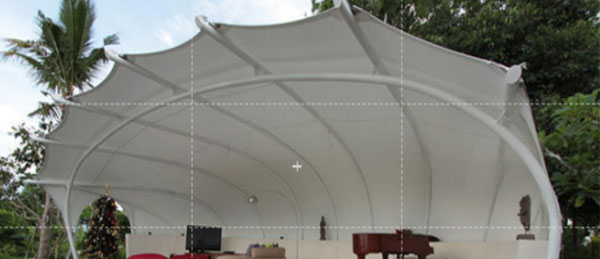
| Product Description | Transform your outdoor spaces in Dewas with our premium Tensile Structures, crafted to deliver both functional and stylish solutions. The current structures are manufactured with high quality materials such as PVC, PTFE or HDPE that provide high strength and durability, especially in terms of weathering and low maintenance requirements. The tensile structures can be used for residential, commercial or event spaces and blend in nicely, bringing a modern and sophisticated touch to your environment. |
| Membrane Material | PVC / PTFE / HDPE |
| Fabric Color | White or Customized |
| Shape & Size | Customized |
| Certification | ISO 45001:2018(OHSAS), ISO 45001:2015, ISO 9001:2015 |
| Place of Origin | India |
Order Now
Introduction
Tensile structures in Dewas are prefabricated fabric-and-steel roofing systems used for car parking sheds, auditoriums, food courts, walkways, and industrial shed roofing across the city's residential, commercial, and manufacturing zones. They combine a tensioned PVC, PTFE, or HDPE membrane with a steel or cable frame to span large open areas without internal columns.
With Dewas district's summer temperatures regularly crossing 40°C and monsoon rainfall of roughly 900-1000 mm concentrated between July and September, property owners across Dewas Industrial Area, Indore Road, and Ujjain Road are replacing ageing RCC and asbestos sheet roofing with tensile canopies for faster installation, lower dead load, and reduced long-term maintenance.
RS Tensile Pvt. Ltd. manufactures and installs tensile structures for residential societies, factories, schools, hospitals, hotels, and event venues in Dewas. Pricing depends on span, fabric grade, and site conditions. For a Dewas-specific estimate, share your site dimensions and location with our team for a callback within 48 hours.
Buyers evaluating vendors typically compare four things before signing a contract: fabric grade and expected life, wind and load engineering for the specific site, installation turnaround, and warranty terms on fabric versus steel framework. This page covers each of these in the context of Dewas conditions, along with realistic applications, service coverage, and a straightforward path to requesting a quote.
ENQUIRE NOW
Types of Tensile Structures Explained for Dewas
Buyers in Dewas typically choose from a few structural formats depending on the application and available span.
Cable-net or cable-tension structures use a grid of steel cables under tension to support the membrane, suited to wide-span auditoriums and stadium-style seating areas where uninterrupted sightlines matter.
Conical and hypar (saddle-shaped) structures are common for car parking sheds and entrance canopies in Dewas because they shed rainwater efficiently during the monsoon and require fewer support columns per bay.
Barrel vault structures work well for walkways and covered corridors connecting factory blocks or hospital wings, offering continuous coverage along a linear path.
Umbrella and gazebo structures are used for garden seating, food courts, and smaller commercial frontages where a modular, repeatable unit is preferred over a single large span.
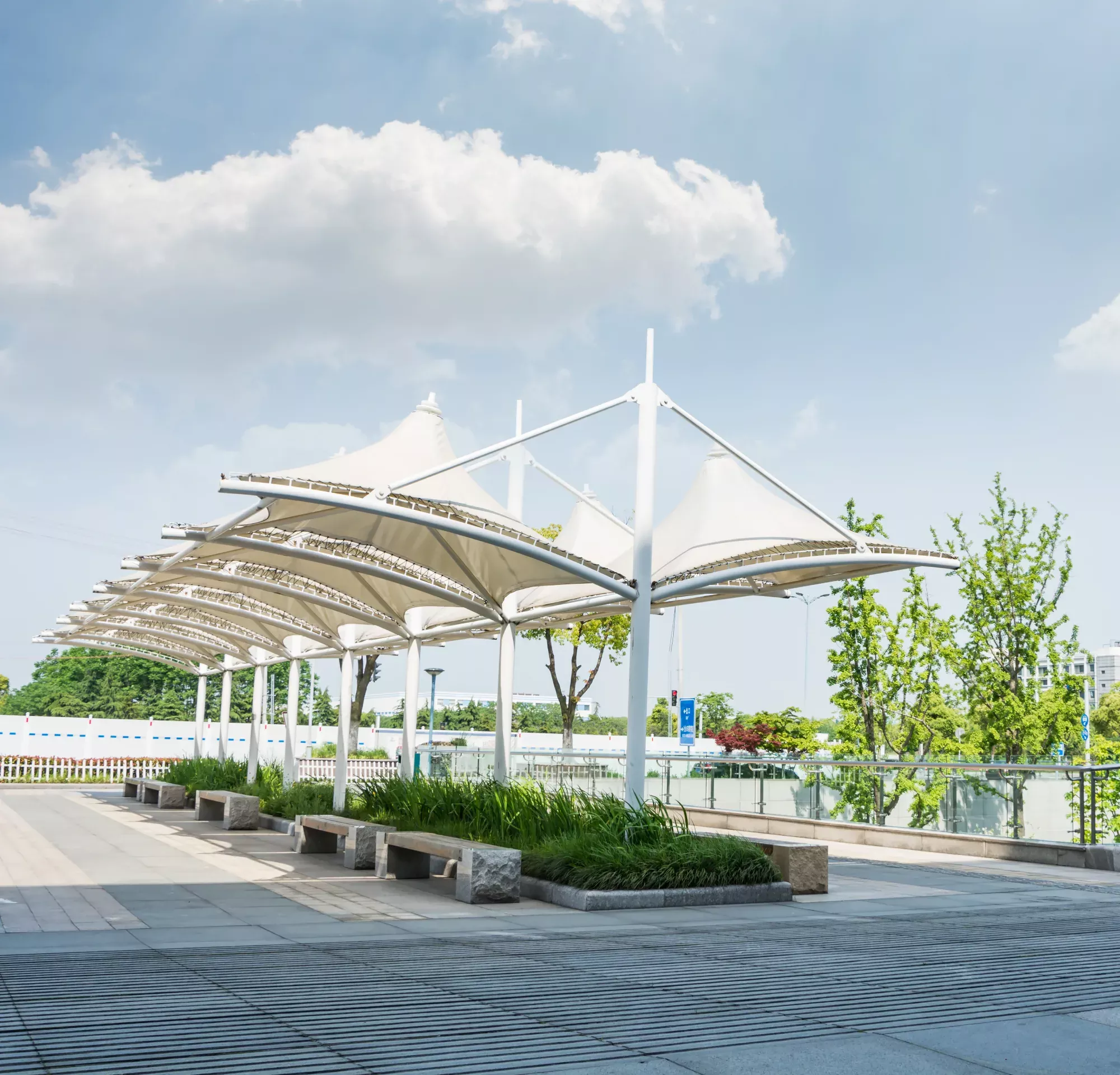
Frame-supported membrane structures, using rigid steel arches instead of a tensioned cable grid, are often specified for entrance canopies and smaller car parking bays where the plot width is limited and a simpler, lower-cost frame is sufficient.
Each format has a different cost per square foot and installation timeline, so the right choice for a Dewas property depends on the intended span, budget, and whether the structure needs to integrate with an existing building facade or stand independently.
Why Tensile Structures in Dewas?
Dewas sits on the Malwa plateau along the Indore-Ujjain industrial corridor, and its climate and industrial density directly influence roofing decisions for property owners.
Peak summer temperatures near 40°C, combined with an average annual rainfall of around 900-1000 mm concentrated in the monsoon months, mean roofing materials in Dewas need to handle both intense solar load and heavy, sudden rainfall without cracking, leaking, or degrading.
Dewas Industrial Area alone houses several hundred manufacturing units across its industrial zones on Indore Road and Ujjain Road, and many of these facilities need shed-type roofing for loading bays, parking, and outdoor storage that can be installed without halting production.
For these reasons, tensile fabric roofing is increasingly specified over RCC and asbestos sheeting for car parking, factory shed extensions, and public seating areas in and around Dewas. Request a site survey to confirm which structure type fits your plot and usage pattern.
Dewas is well connected by the Agra-Bombay national highway and a broad-gauge Western Railway line through Dewas Junction, which keeps fabricated steel and fabric components moving in and out of the city on predictable schedules — a practical factor when planning installation timelines around production or event calendars.
Property owners near Dewas Industrial Area's No. 1, No. 2, and No. 3 zones also cite dust and pollution load from nearby manufacturing activity as a reason to choose coated fabrics that resist staining and are easier to clean than painted metal sheeting.
How to Choose a Reliable Tensile Structure Manufacturer in Dewas?
Before hiring a vendor for a tensile structure in Dewas, it helps to check a few things that affect long-term performance and cost.
Confirm the fabric grade being quoted — PVC-coated polyester, PTFE (Teflon-coated fiberglass), or HDPE knitted shade fabric each have different price points, UV resistance, and expected service life, typically ranging from 10 to 25 years depending on grade.
Ask for the wind and load rating the design is engineered for, since Dewas experiences pre-monsoon squalls and occasional heavy showers. A structure engineered without a documented wind-load calculation is a risk during the monsoon season.
Check whether the manufacturer fabricates in-house or subcontracts, what warranty is offered on the fabric and the steel frame separately, and whether the quote includes site survey, design, fabrication, and installation as a turnkey package or as separate line items.
It also helps to ask for examples of prior installations in similar climate zones, since a manufacturer with experience designing for high-UV, monsoon-heavy regions will typically flag drainage and anchor spacing issues that a generic quote might miss. A vendor willing to do a site visit before quoting, rather than pricing off a floor plan alone, is generally a better sign for a Dewas project than one offering a fixed package price sight unseen.
About RS Tensile Pvt. Ltd. for Dewas
RS Tensile Pvt. Ltd. is a New Delhi-based tensile structure manufacturer, incorporated in 2017 and led by CEO Radhey Shyam, who has spent his career working on fabric-structure design and fabrication before founding the company. The company is certified to ISO 9001:2015 for quality management, ISO 14001:2015 for environmental management, and ISO 45001:2018 for occupational health and safety.
RS Tensile designs, fabricates, and installs tensile structures for clients across North and Central India, including manufacturing units, hospitality projects, educational institutions, and residential developments. For Dewas-based projects, the team conducts a site visit or remote site assessment before finalizing design and material specification, so the structure matches local wind, rainfall, and usage conditions rather than being a generic template.
Local Infrastructure Growth in Dewas
Dewas Industrial Area has expanded steadily, with a dedicated water supply project now serving over 300 manufacturing units across its industrial zones, supporting continued growth of factories, warehousing, and ancillary commercial development along Indore Road and Ujjain Road.
This ongoing industrial expansion, combined with residential growth around the city, is driving demand for outdoor roofing that can be installed quickly without disrupting operating facilities — a key reason tensile canopies are being specified over conventional RCC construction for new car parks, loading areas, and staff amenity spaces in Dewas.
Dewas is also home to established manufacturing operations and a government Bank Note Press, both of which require reliable, low-disruption infrastructure upgrades. For factory owners adding car parking or staff amenity coverage without pausing production lines, tensile installation avoids the extended curing and construction time associated with RCC work.
Tensile Applications in Dewas
Car Parking Structures in Dewas
A Tensile car parking shed in in Dewas protect vehicles from direct summer heat and monsoon rain while keeping installation columns to a minimum, which matters for factories and residential societies with tight plot layouts. Spans are typically engineered per bay, with cost depending on the number of car slots and total covered area.
Walkways in Dewas
A Tensile walkway structure connect factory blocks, hospital buildings, school campuses, and residential society entrances with continuous shaded, rain-protected covering. In Dewas, this is particularly useful during the July-September monsoon when uncovered walkways become a slip hazard.
Swimming Pool Structures in Dewas
A Swimming pool tensile structureprovide partial or full shade over pool decks in hotels, clubs, and residential complexes, reducing water evaporation and surface heating during Dewas summers while remaining open enough for ventilation.
Auditorium Structures in Dewas
Auditorium tensile structure iare used for schools, community halls, and event venues that need large column-free covered seating. Cable-net designs are typically specified here for their wider span capability and cleaner sightlines.
Materials Used for Tensile Canopies in Dewas
The fabric specification matters more in Dewas than in milder climates because of the combination of high UV exposure and concentrated monsoon rainfall.
PVC-coated polyester is the most commonly used and most cost-effective fabric, suitable for car parking sheds, walkways, and umbrella structures with a typical service life of 10-15 years.
PTFE (Teflon-coated fiberglass) offers higher UV resistance and a longer service life of up to 25 years, and is generally recommended for auditoriums, larger public structures, and installations where long-term low maintenance is a priority.
HDPE knitted shade fabric is a lighter-weight, lower-cost option suited to garden shading and smaller gazebo structures where full waterproofing is not the primary requirement.
Steel components are hot-dip galvanized to resist corrosion during the monsoon months, and cable anchors are rated per the site's specific wind-load engineering.
Fabric coating also affects heat transmission into the covered area below. PTFE and heavier PVC coatings block more solar radiation than lighter shade fabrics, which is a relevant factor for car parking structures in Dewas where reducing cabin temperature is often the primary goal for vehicle owners. Ask our team which grade suits your specific application before finalizing a quote.
Tensile Structure Installation Steps/Process in Dewas?
A typical installation for a Dewas project follows a defined sequence: site survey and measurement, structural design and wind-load calculation, fabric and steel fabrication at the manufacturing unit, foundation and anchor point preparation on site, steel frame erection, membrane tensioning and fixing, and final quality inspection.
Installation timelines depend on structure size and complexity, but most car parking and walkway projects in Dewas are completed within 3-6 weeks from design approval, with foundation work scheduled around the monsoon calendar where relevant. A site survey can typically be scheduled within 48 hours of enquiry.
For larger auditorium or cable-net structures, timelines extend depending on span and the number of anchor points required. Our team provides a written schedule at the quote stage so Dewas clients can plan around production shutdowns, event dates, or society approval timelines.
Property Value Advantages of Dewas
A well-installed tensile structure can add functional value to a Dewas property by converting unused open space — parking areas, terraces, courtyards — into usable, weather-protected area without the cost and construction time of a permanent RCC extension. For commercial and hospitality properties, covered outdoor seating or event space can also support additional revenue-generating use of the site.
For residential societies, a covered car parking structure is a tangible amenity that factors into resale and rental value, particularly for buyers comparing properties along the Indore Road and Ujjain Road corridors where covered parking is not yet standard across all developments. For factories, a tensile-covered loading or staff area supports compliance with worker safety and shading requirements without a lengthy civil works project.
Manufacturing Process for Dewas?
RS Tensile fabricates the steel framework and cuts and welds the fabric membrane panels at its manufacturing facility before transporting components to the Dewas site for assembly. This factory-controlled fabrication process allows quality checks on weld joints, fabric seam strength, and coating consistency before the structure ever reaches site, reducing on-site rework.
How Tensile Structures Withstand Dewas Weather?
Tensile membranes are engineered to flex under wind load rather than resist it rigidly, which is an advantage during Dewas's pre-monsoon squalls and monsoon downpours. The curved, tensioned geometry sheds rainwater quickly instead of allowing pooling, which is a common failure point for flat RCC or metal sheet roofs during heavy rainfall events.
For summer heat, PVC and PTFE fabrics reflect a significant portion of solar radiation compared to metal roofing, which helps reduce surface and under-structure temperatures in car parking and seating areas during Dewas's peak summer months of April to June.
Dewas winters are comparatively mild, with temperatures typically ranging between 10°C and 25°C, so cold-weather contraction of steel and fabric is a minor design factor here compared to the summer heat and monsoon load calculations, which is where most of the structural engineering attention goes for local projects.
Our Service Areas in Dewas
RS Tensile provides site survey, design, and installation services across the following Dewas coverage areas:
North Dewas
including areas along the Ujjain Road industrial belt
South Dewas
residential and institutional zones toward the Narmada valley side
East Dewas
areas bordering Sonkatch and the eastern industrial pockets
West Dewas
zones closer to the Indore Road corridor
Central Dewas
the main city and administrative area around Dewas Junction
Greater Dewas
the wider municipal and peri-urban belt
Dewas Metropolitan Area
the core urban and industrial cluster
Dewas Suburbs
emerging residential developments on the city's edges
Dewas Outskirts
rural-urban fringe areas with new factory and warehousing development
Near Dewas
adjoining industrial and residential pockets just outside city limits
Why Choose RS Tensile Pvt. Ltd. for Dewas?
RS Tensile is ISO 9001:2015, ISO 14001:2015, and ISO 45001:2018 certified, and CEO Radhey Shyam brings hands-on experience in tensile fabric design and fabrication to every project specification. The company handles design, fabrication, and installation in-house, which keeps a single point of accountability for warranty and after-sales service on Dewas projects. Quotes are based on actual site dimensions and load requirements rather than fixed packages, so Dewas property owners pay for the structure their site actually needs.
Frequently Asked Questions
How much does a tensile structure cost in Dewas?
Cost in Dewas depends on span, fabric grade (PVC, PTFE, or HDPE), steel frame design, and site accessibility. Share your plot dimensions with our team for a specific estimate.
How long does tensile structure installation take in Dewas?
Most car parking and walkway projects in Dewas are completed within 3-6 weeks of design approval, with a site survey typically scheduled within 48 hours of enquiry.
Which fabric is best suited for Dewas's climate?
PTFE offers the longest service life and highest UV resistance for Dewas's summer heat, while PVC-coated polyester is a cost-effective option for car parking and walkway structures with a 10-15 year service life.
Do tensile structures in Dewas need maintenance during the monsoon?
Periodic inspection of membrane tension, drainage points, and steel joints is recommended before and after the monsoon season to catch any wear early, though tensile fabric requires less maintenance than RCC or metal sheet roofing.
Can RS Tensile handle industrial shed roofing for Dewas Industrial Area units?
Yes, RS Tensile designs tensile roofing for factory sheds, loading bays, and outdoor storage areas within Dewas Industrial Area zones, engineered around each unit's specific span and load requirements.
What warranty does RS Tensile offer on structures installed in Dewas?
Warranty terms are specified per project based on fabric grade and structure type; ask our team for the exact warranty coverage on fabric and steel components before finalizing your order.Request a Quote for Your Dewas Project
If you are evaluating tensile structure manufacturers in Dewas for a car park, auditorium, walkway, or factory shed, share your site dimensions and location with RS Tensile Pvt. Ltd. for a custom estimate and a site survey scheduled within 48 hours.
Important Keywords & Tags for tensile structure in Dewas
Popular Search Terms: People searching for tensile structure manufacturer in Dewas also look for these related keywords and services.
