Tensile Structure Manufacturer in Nainital
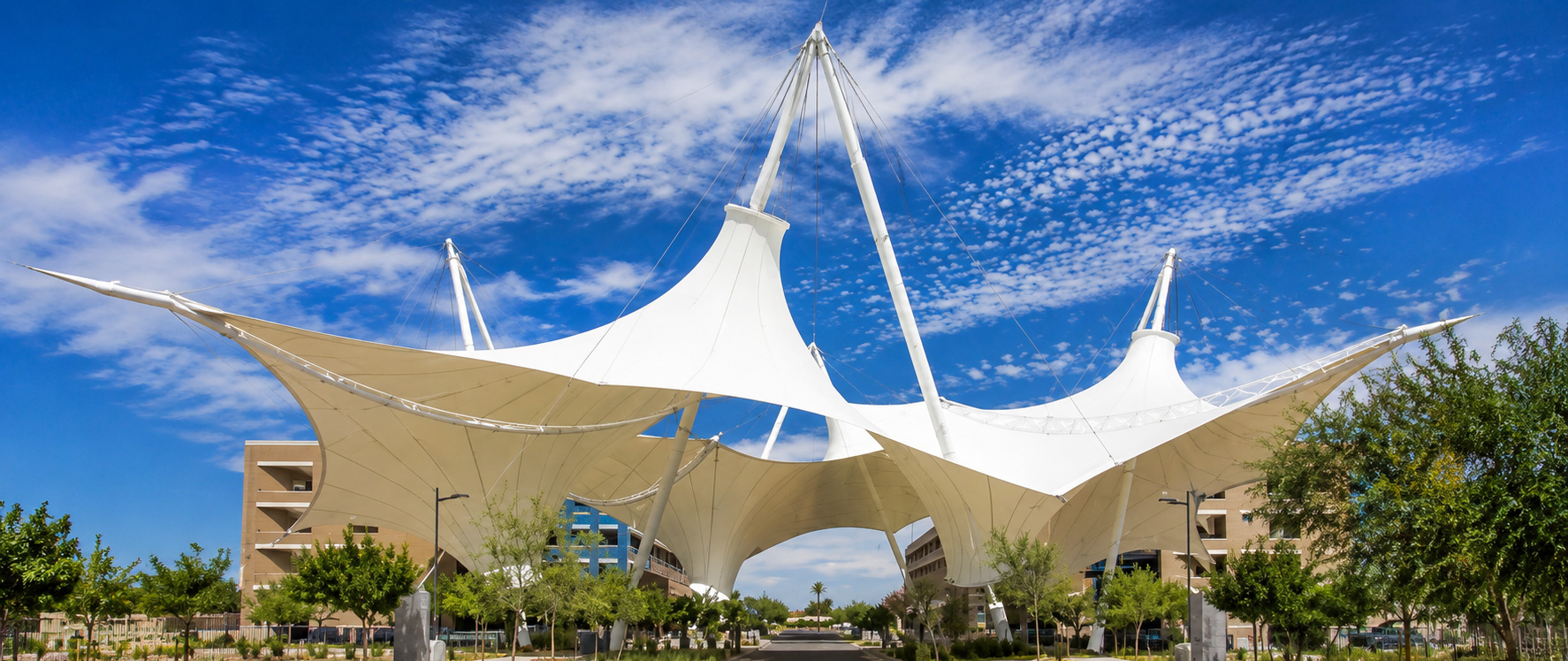
| Product Description | Transform your outdoor spaces in Nainital with our premium Tensile Structures, crafted to deliver both functional and stylish solutions. The current structures are manufactured with high quality materials such as PVC, PTFE or HDPE that provide high strength and durability, especially in terms of weathering and low maintenance requirements. The tensile structures can be used for residential, commercial or event spaces and blend in nicely, bringing a modern and sophisticated touch to your environment. |
| Membrane Material | PVC / PTFE / HDPE |
| Fabric Color | White or Customized |
| Shape & Size | Customized |
| Certification | ISO 45001:2018(OHSAS), ISO 45001:2015, ISO 9001:2015 |
| Place of Origin | India |
Order Now
Introduction
Nainital sits at roughly 2,000 metres in the Kumaon Himalaya, and that altitude shapes almost every construction decision made here. Builders in this lake town deal with narrow terraced plots, heavy monsoon rain, and long spells of fog and direct mountain sun within the same year.
A tensile structure in Nainital works with these conditions rather than against them. Its lightweight fabric membrane sheds rain quickly, needs a fraction of the foundation load a concrete roof demands on sloped ground, and can be shaped to fit the odd-angled plots common around Mallital, Tallital, and the newer developments spreading toward Bhowali and Bhimtal.
RS Tensile Pvt. Ltd. , led by CEO Radhey Shayam, manufactures tensile structures for hotels, institutions, and residential properties across hill and plain regions of India, including this growing Kumaon tourist belt.
This page walks through the practical side of that decision — where tensile architecture design in Nainital makes sense, what materials hold up to the local climate, and how the installation process actually works on hillside plots. It is meant as a reference for property owners, architects, and builders evaluating options for a specific site in the town, not a generic overview copied across every location RS Tensile serves.
ENQUIRE NOW
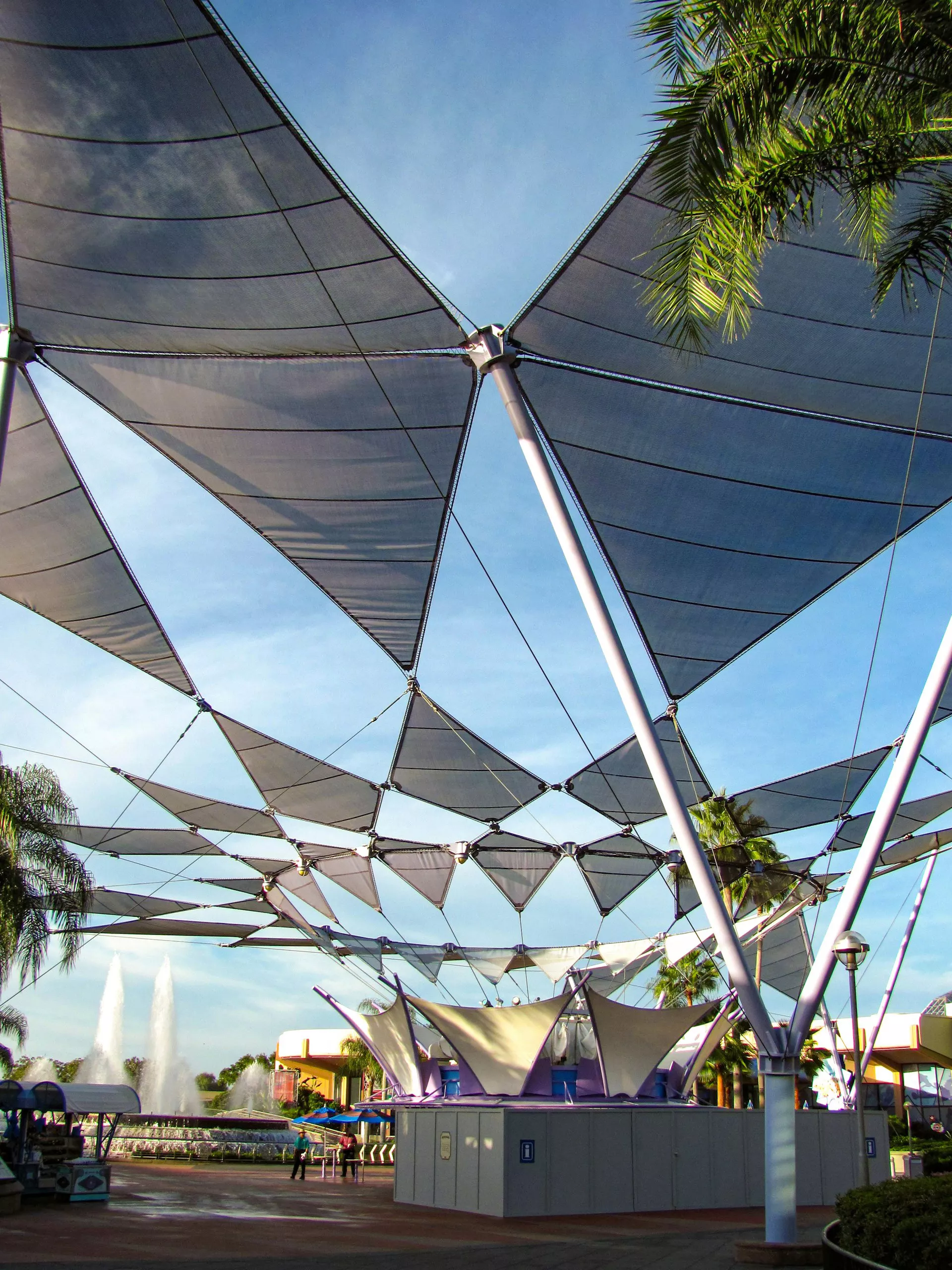
Types of Tensile Structures Explained for Nainital
Not every property in Nainital needs the same kind of structure, and the terrain usually decides the shape.
- Conic and dome-based tensile roof structures work well over reception courtyards and viewpoints, since their curved profile sheds the region's heavy July rainfall without pooling.
- Barrel vault structures suit long, narrow plots — a common shape in Nainital where properties are cut into hillside terraces rather than open squares.
- Cable-net and hypar (saddle) forms are used for tensile car parking structures and walkway canopies, where a flatter, tensioned membrane covers an irregular footprint efficiently.
- Modular umbrella and gazebo-style units are popular for smaller hotel gardens and café seating areas that need shade without a fixed roofline.
Each of these can be engineered as a tensile membrane structure in Nainital to handle wind loads that build up quickly across the ridge lines surrounding Naini Lake.
The choice between these forms usually comes down to the site's exposure and the client's use case. A hotel entrance canopy might call for a conic form with a strong visual identity, while a school corridor or a tensile structure for car parking simply needs efficient, low-maintenance coverage over a rectangular footprint. RS Tensile's design team reviews the plot survey before recommending a form, rather than defaulting to a single standard shape across every project.
Why Tensile Structures Make Sense in Nainital?
Three local realities push property owners toward fabric over conventional roofing.
Rainfall intensity - Nainital receives close to 1,800-1,900 mm of rain a year, with July alone averaging over 500 mm across roughly 16-28 rainy days. A properly tensioned PVDF or PTFE membrane, pitched at the correct angle, drains this volume without the ponding risk flat concrete roofs face.
Limited flat land - Hillside plots rarely offer large, level footprints. Tensile framing distributes load through cables and a handful of anchor points, so it adapts to slopes and terraced levels that would need expensive retaining work for a masonry structure.
UV exposure and fog cycles - Even with monsoon cloud cover, UV readings in the hills can run high during clear spells, while winter brings dense fog and near-freezing nights. Architectural fabric membranes are treated to resist UV degradation and handle this daily swing in temperature and moisture better than untreated metal sheeting.
How to Choose a Reliable Tensile Structure Manufacturer in Nainital?
Hill-station construction adds variables that flat-city checklists miss.
Ask whether the manufacturer has designed for wind and snow load specific to hill terrain, not just plains-based wind codes. Nainital's ridge topography can funnel gusts differently than open ground.
Check the fabric grade being quoted — PVC-coated polyester suits budget canopies, while PTFE or PVDF-coated membranes hold up better against years of monsoon moisture and UV cycling.
Confirm on-site installation experience in hilly access conditions, since material transport and crane access in Nainital's narrow lanes differ from installation on an open plains site.
Finally, ask for certifications and documented quality process. A manufacturer working to ISO 9001:2015 (quality management), ISO 14001:2015 (environmental management), and ISO 45001:2018 (occupational health and safety) standards is signalling a repeatable, audited process rather than one-off fabrication.
It also helps to ask how the manufacturer handles material transport to a hill destination. Fabric rolls and steel members need careful handling on the winding approach roads into Nainital, and a manufacturer with prior hill-region project experience will usually plan logistics and site staging differently than one working from a plains-only background.
About RS Tensile Pvt. Ltd. for Nainital
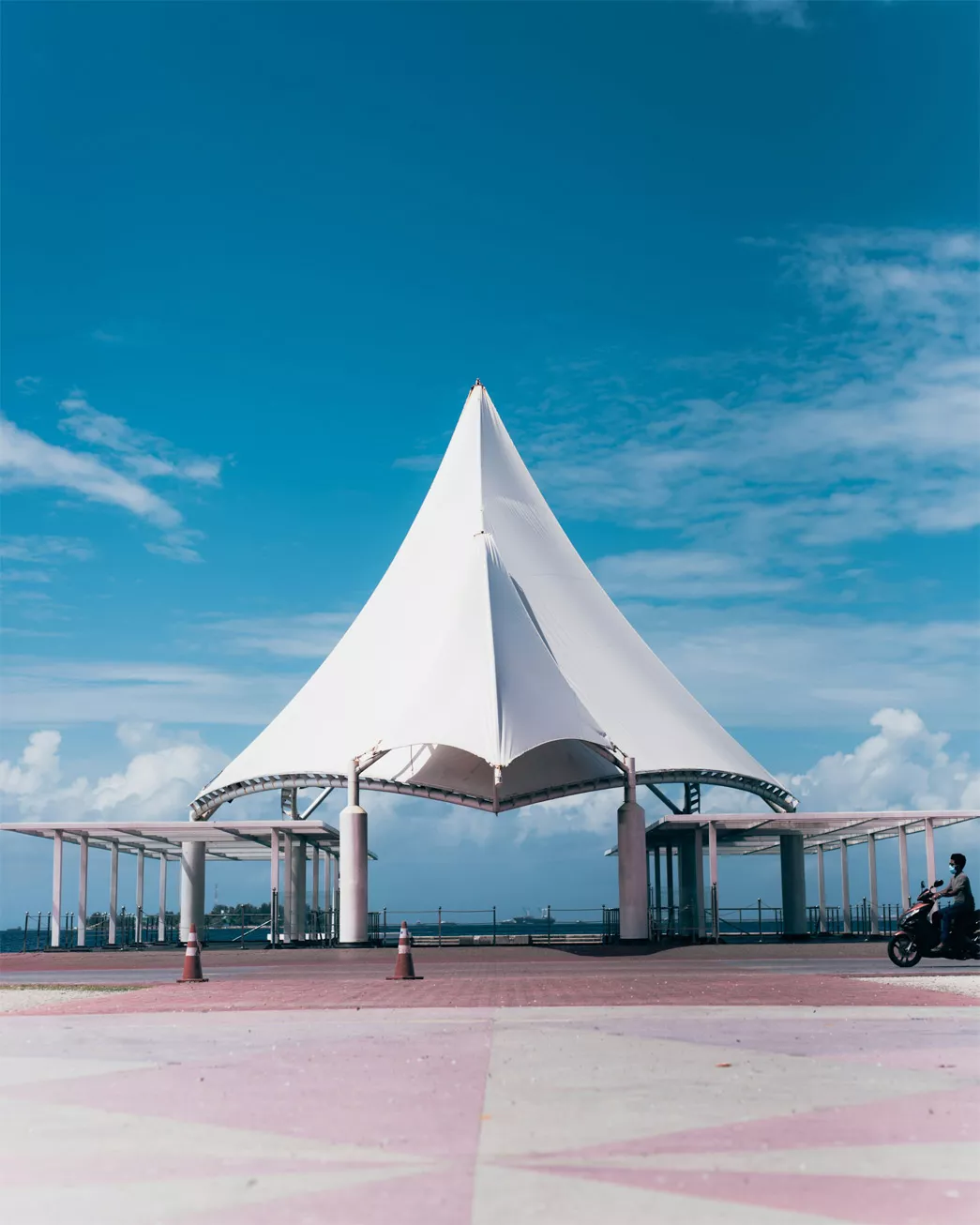
RS Tensile Pvt. Ltd. is a manufacturer of tensile fabric structures, engineering and producing membrane roofing, canopies, and shade systems for commercial, institutional, and residential clients across India.
The company is led by CEO Radhey Shayam and operates as a manufacturing unit rather than a trading or reselling business, meaning structures for Nainital projects are fabricated to order rather than assembled from generic stock parts.
RS Tensile holds ISO 9001:2015, ISO 14001:2015, and ISO 45001:2018 certifications, along with IEC and Udyam registration, and has supplied tensile architecture design work across hospitality, education, healthcare, and residential sectors.
For hill-station clients, the company factors in transport logistics, terrain-specific anchoring, and monsoon-grade waterproofing at the design stage — not as an afterthought once the structure reaches site.
Local Infrastructure Growth in Nainital
Nainital district has seen a steady run of public investment in recent years — multi-level parking projects, lakefront beautification around Sukha Tal, and road and connectivity upgrades aimed at easing the town's chronic congestion during peak tourist season.
State tourism policy is also pushing hotel and homestay growth across the wider Kumaon circuit, with tax incentives on room tariffs and a target to significantly increase visitor inflow over the coming years.
This combination — more visitors, more vehicles, and limited flat land — is exactly the scenario where tensile roof structures in Nainital solve a practical problem: covering parking, queuing, and outdoor seating areas quickly, without the longer construction timelines or heavier foundations that RCC structures require on hill sites.
Uttarakhand's broader push toward floriculture and "aroma valley" projects, including a cinnamon-focused initiative in the Nainital district, is also encouraging small-scale agri-tourism ventures and boutique stays in the surrounding valleys. These smaller properties typically operate on tighter budgets and shorter construction windows than large hotels, which is another segment where prefabricated tensile canopies fit better than a full masonry build-out.
Tensile Applications in Nainital
Tensile membrane structures now cover a wide range of uses across Faridabad's industrial, residential, and institutional properties. The sections below cover the applications that come up most often in client enquiries.
Car Parking Structures in Nainital
With new multi-level and surface parking projects underway across the town, private hotels and residential societies are following the same trend at smaller scale. A tensile car parking shed in Nainital protects vehicles from monsoon rain and hail without the cost of a full concrete parking deck, and can be built over existing gravel or paved surfaces with minimal excavation.
Walkways in Nainital
Covered walkways connect parking areas, entrances, and viewpoints across hotel and institutional campuses. A tensile walkway structure in Nainital keeps foot traffic dry through the monsoon stretch and shaded during the sharp midday sun that hits south-facing slopes around the lake.
Swimming Pool Structures in Nainital
Resort and hotel pools benefit from a swimming pool tensile structure in Nainital that reduces leaf and debris fall from surrounding pine cover, cuts evaporation from wind exposure on ridge-top properties, and keeps the pool usable across more of the year despite cooler evening temperatures.
Auditorium Structures in Nainital
Schools, colleges, and event venues use auditorium tensile structure in Nainital for assembly halls and open-air function spaces. The wide clear-span coverage avoids internal support columns, which matters on constrained hillside campuses where every square metre of usable floor counts.
Garden and Outdoor Seating Structures in Nainital
Hotels and homestays across Nainital increasingly rely on outdoor seating to make the most of lake and valley views. A garden tensile structure in Nainital shades guests from midday UV while still letting in the diffused light guests expect from a hill-station setting, and can be reconfigured more easily than a permanent gazebo if the property is redesigned later.
Food Court and Dining Structures in Nainital
Mall food courts and open dining areas near the Mall Road and lakefront commercial belt need shelter that handles both rain and crowd movement. A food court tensile structure in Nainital offers wide clear spans over seating clusters, so vendors and diners aren't boxed in by support columns the way a conventional roof would require.
Entrance and Gateway Structures in Nainital
Hotels, institutions, and gated residential societies often want a distinct arrival point. A tensile entrance structure in Nainital creates a covered drop-off or gateway canopy that also functions as a rain buffer for guests stepping out of vehicles during the monsoon months — a small but frequently requested addition on hospitality projects in the region.
Dome and Lightweight Roofing Structures in Nainital
Where a property wants a distinctive silhouette — over a reception, viewing deck, or lakeside pavilion — a tensile dome structure in Nainital achieves this without the weight a masonry dome would add to a hillside foundation. This kind of tensile lightweight structure in Nainital is chosen specifically because it reduces load on slopes where soil-bearing capacity is already a constraint for builders.
Materials Used for Tensile Structures in Nainital
RS Tensile specifies fabric membranes based on the specific exposure a Nainital site will face.
PVC-coated polyester - offers a cost-effective option for garden canopies and gazebo structures with moderate exposure.
PTFE-coated fiberglass suits larger installations - auditoriums, entrance canopies — where long-term UV and moisture resistance matters more than upfront cost.
PVDF-coated membranes - Sit between the two, commonly chosen for mid-size commercial and hospitality projects that need durability without the premium PTFE price point.
Supporting steel framework is hot-dip galvanized to resist the corrosion risk that comes with Nainital's high humidity and frequent rain.
Installation Process for Tensile Structures in Nainital
Installation on hill terrain follows a sequence adjusted for site access and slope.
Site survey and load assessment
checking gradient, drainage, and anchor point feasibility on the specific plot.
Foundation and anchor fabrication
smaller, deeper point foundations rather than a continuous slab, suited to terraced land.
Steel framework erection
galvanized members assembled with attention to crane or manual-lift access in narrow lanes.
Membrane tensioning
fabric stretched and cable-tensioned to the engineered profile, checked against local wind-load calculations.
Final waterproofing and seam sealing
critical given Nainital's rainfall volume, with particular attention to valley gutters and edge details.
Most mid-size structures — a parking shed or walkway canopy — are completed within two to four weeks once materials reach site, weather permitting.
Property Value Advantages of Tensile Structures in Nainital
A well-built tensile structure adds functional space — covered parking, an outdoor dining area, a shaded pool deck — without the permanence or cost of a masonry extension, which matters on hill plots where floor area is already limited by setback and slope rules. For hospitality properties, covered outdoor space extends usable areas across more weather conditions, directly supporting occupancy and guest experience during the shoulder seasons between peak tourist months.
For residential societies, a tensile gazebo structure in Nainital or covered common area is a visible amenity that supports resale and rental value without triggering the approval complexity of a permanent structure.
Institutions see a similar benefit on a different scale. A school or hospital that adds covered walkways or an open-air assembly space isn't just solving a weather problem — it's adding usable, presentable infrastructure that factors into how the campus is perceived by parents, patients, or visiting inspectors, at a fraction of the capital cost of enclosed construction.
Manufacturing Process at RS Tensile for Nainital Location?
Every structure begins with site-specific engineering — wind load, snow load where relevant, and span requirements are calculated before fabrication starts, not adjusted after.
Steel components are cut, welded, and hot-dip galvanized at the manufacturing facility, then quality-checked against ISO 9001:2015 process standards before dispatch.
Fabric membranes are cut and seam-welded to the exact engineered pattern, rather than stretched over a generic frame, which is what allows the finished structure to handle the tension loads correctly once installed on site in Nainital.
How Tensile Structures Withstand Nainital's Weather?
Nainital's climate swings between three distinct stresses across a year, and structural design has to account for all three.
Monsoon load (June-September): Steep membrane pitches and reinforced valley gutters move heavy rainfall off the structure quickly instead of letting it pool, which is where flat or poorly pitched roofing typically fails on hill sites.
Winter cold and fog (December-February): Temperatures can approach freezing, and occasional snowfall adds load. Structures are engineered with the local snow-load factor built into the cable tensioning, not just wind load.
Summer UV exposure (April-June): Clear-sky UV can be intense at this altitude even with a moderate air temperature. UV-stabilized fabric coatings prevent the brittleness and discolouration that untreated material develops within a few seasons.
Why Choose RS Tensile Pvt. Ltd. for Nainital Projects?
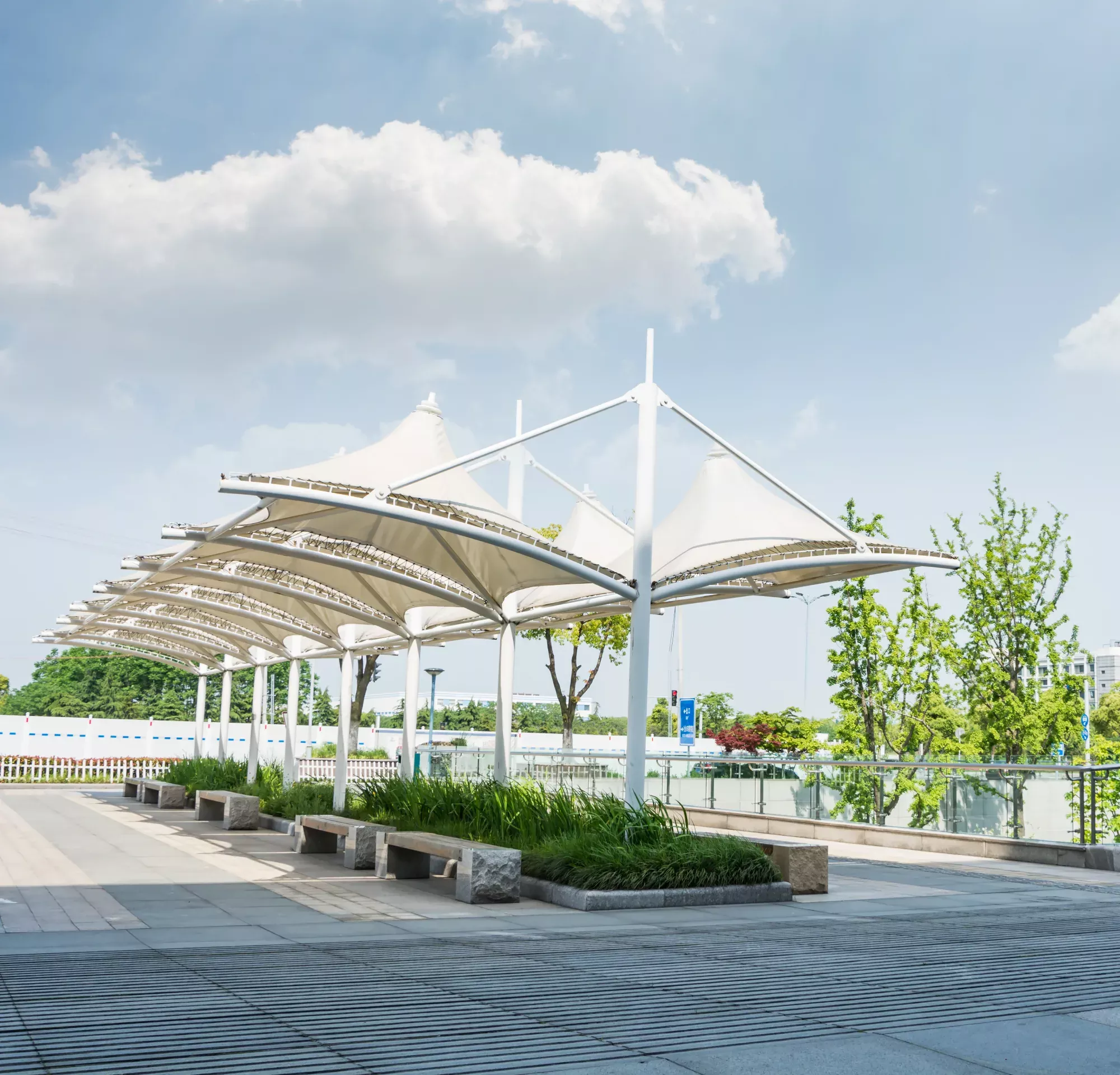
RS Tensile designs each structure around the specific plot, slope, and exposure of the Nainital site rather than adapting a plains-region template.
The company manufactures in-house under ISO 9001:2015, ISO 14001:2015, and ISO 45001:2018 certification, with IEC and Udyam registration, giving clients a documented quality and safety process to reference.
Structures are engineered for the region's monsoon intensity, winter cold, and UV exposure as standard practice, not as an added-cost option — which matters for hill-station clients who often only discover a gap in weather-readiness after the first monsoon.
If you're planning a parking shed, walkway canopy, pool cover, or auditorium roof for a property in Nainital, RS Tensile Pvt. Ltd. can assess your site and provide an engineered design suited to the local terrain and weather. Contact our team to discuss your project requirements and get a detailed quote.
FAQs
1. Is a tensile structure suitable for Nainital's hilly terrain?
Yes. Tensile framing uses point-load anchors rather than a continuous foundation, which adapts more easily to sloped and terraced plots than conventional RCC roofing.
2. How long does a tensile roof structure in Nainital typically last?
With PTFE or PVDF-coated membranes and galvanized steel framework, a well-maintained structure generally performs for 15-20 years, depending on exposure and maintenance.
3. Can tensile structures handle Nainital's monsoon rainfall?
Yes, when engineered with adequate pitch and reinforced drainage detailing. This is one of the primary reasons hotels and institutions in the region choose tensile roofing over flat concrete alternatives.
4. Do tensile car parking structures in Nainital need heavy foundations?
No. Parking canopies use smaller point foundations at each anchor location, which reduces excavation compared to a full concrete parking deck — useful on constrained hillside plots.
5. What maintenance does a tensile structure need in a hill climate?
Periodic inspection of membrane tension, cable fittings, and drainage points, along with cleaning to prevent pine needle or leaf build-up in valley gutters, particularly before the monsoon season.
Important Keywords & Tags for tensile structure in Nainital
Popular Search Terms: People searching for tensile structure manufacturer in Nainital also look for these related keywords and services.
