Tensile Structure Manufacturer in Sonipat

| Product Description | Transform your outdoor spaces in Sonipat with our premium Tensile Structures, crafted to deliver both functional and stylish solutions. The current structures are manufactured with high quality materials such as PVC, PTFE or HDPE that provide high strength and durability, especially in terms of weathering and low maintenance requirements. The tensile structures can be used for residential, commercial or event spaces and blend in nicely, bringing a modern and sophisticated touch to your environment. |
| Membrane Material | PVC / PTFE / HDPE |
| Fabric Color | White or Customized |
| Shape & Size | Customized |
| Certification | ISO 45001:2018(OHSAS), ISO 45001:2015, ISO 9001:2015 |
| Place of Origin | India |
Order Now
Introduction
Sonipat sits at the edge of the Delhi-NCR boundary, and that position has shaped how the town has grown over the last decade. It is no longer just an industrial satellite of Delhi built around hosiery and textile units. Today it hosts universities like Ashoka University and O.P. Jindal Global University, a growing residential base along the GT Karnal Road belt, and an expanding logistics and manufacturing corridor through Kundli and Rai. This mix of institutional campuses, industrial plots, and new housing societies has created a genuine, practical demand for tensile structure Sonipat solutions that can handle covered spaces without the cost and time of conventional construction.
A tensile membrane structure Sonipat installation works well precisely because the town's growth is happening fast, across multiple sectors, and property owners often need a covered area ready in weeks rather than months. Whether it's a factory owner in Kundli needing shaded parking for staff vehicles, a university needing an outdoor gathering space, or a housing society wanting a covered walkway, the requirement is the same: durable, weather-resistant covering that doesn't demand years of civil work.
This page explains how tensile architecture design Sonipat projects are planned, where they make the most sense locally, and why RS Tensile Pvt. Ltd. has become a manufacturer institutions and businesses in Sonipat rely on.
Types of Tensile Structures Explained for Sonipat
Not every covered structure suits every location, and Sonipat's mix of industrial, institutional and residential development means different structure types serve different purposes here.
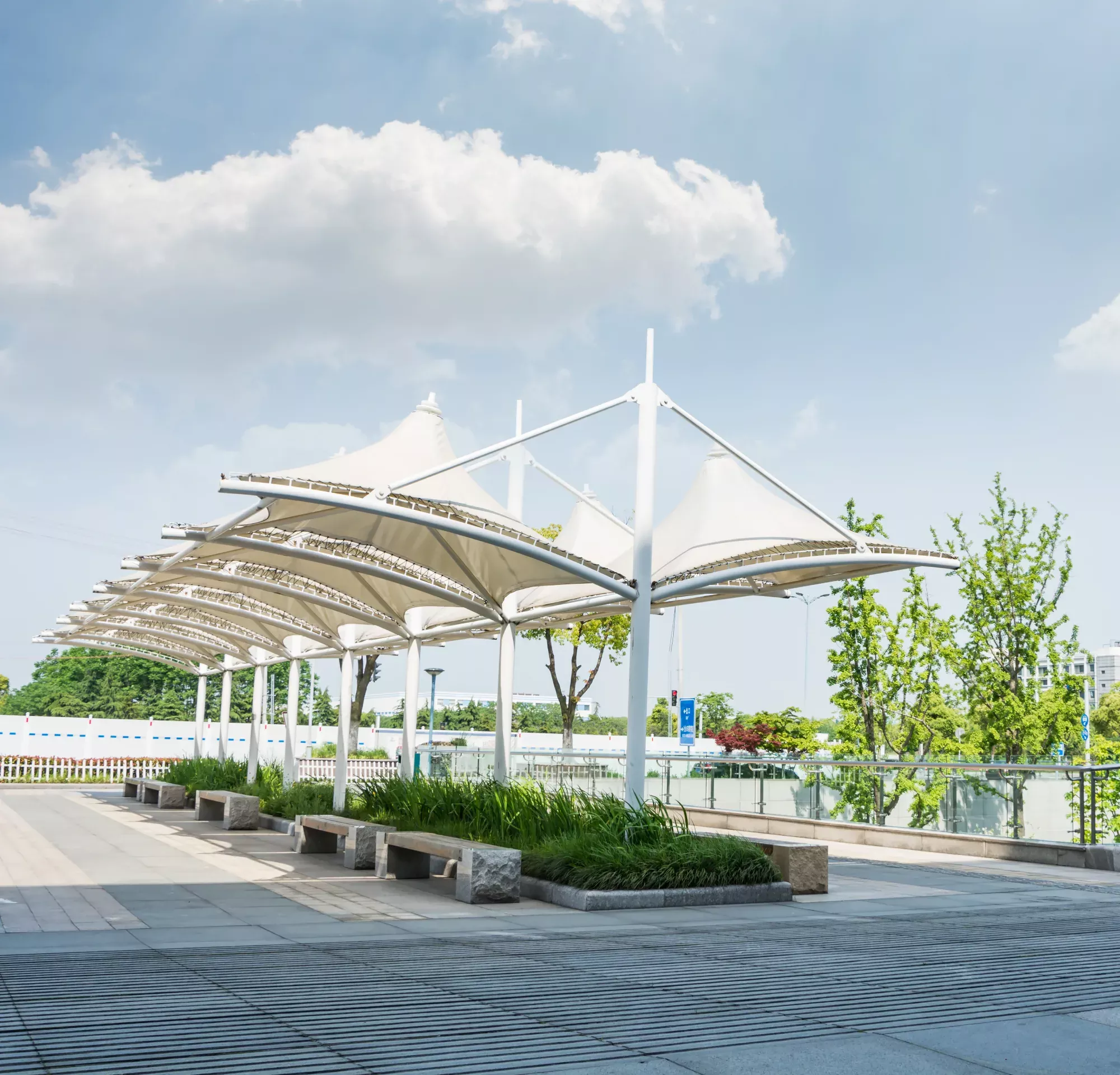
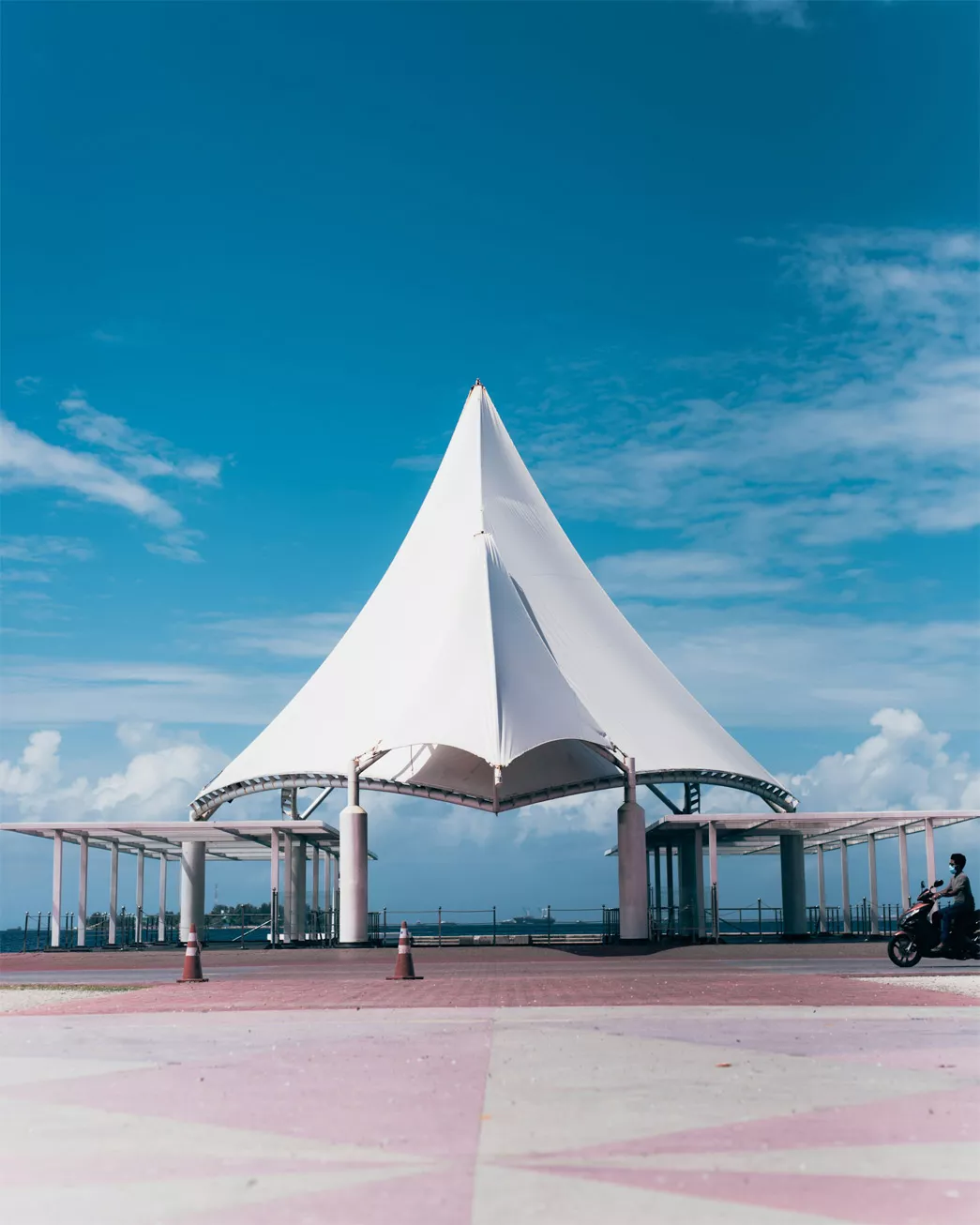
- Conical and hyperbolic membrane structures work well for entrance canopies at factories and educational campuses, giving a clean architectural look without heavy support columns that would obstruct vehicle or foot traffic.
- Barrel vault structures suit long walkways and connecting corridors — useful on university campuses like Ashoka's, where students move between buildings across open stretches that get harsh sun for much of the year.
- Cable-net and tensile dome structure Sonipat designs are chosen for larger public gathering spaces, including auditoriums and multipurpose halls, because they span wide areas without internal columns.
- Umbrella-style modular units are increasingly requested by restaurant owners and housing societies for smaller outdoor seating or recreation areas, since they can be installed individually and expanded later as needed.
- Each of these uses PVC or PTFE coated fabric membranes tensioned over a steel or aluminium frame, engineered to handle wind load and the temperature swings typical of this belt of Haryana.
- Sail-style tensile canopies are a simpler option often chosen for smaller commercial fronts — a shop entrance in the Sonipat Model Town market, for instance, or a standalone eatery near the university corridor — where a full barrel vault or dome would be excessive for the footprint involved.
Selecting between these types depends on span, expected footfall, and whether the structure needs to be column-free. A design consultation with an experienced manufacturer usually clarifies which type fits a given plot before any fabrication begins, which avoids costly redesigns later.
ENQUIRE NOW
Why Tensile Structures in Sonipat?
Sonipat's climate is a significant factor in why tensile roof structure Sonipat installations have gained traction here. Summers regularly push past 42°C between April and June, with strong direct sun and low humidity that makes any open parking area or outdoor space nearly unusable without shade.
Winters bring a different challenge — dense fog settles over the GT Road belt from late November through January, reducing visibility and adding moisture load on any structure left uncovered. Monsoon months from July to September bring moderate to heavy rainfall, and low-lying pockets near industrial zones can see waterlogging if drainage and shelter aren't planned together.
Add to this the dust generated by nearby construction activity, agricultural fields, and heavy vehicle movement along NH-44, and it becomes clear why a sealed, tensioned fabric roof performs better here than an open shed or a flat RCC slab that traps heat. Tensile fabric architecture Sonipat solutions are designed to shed water quickly, resist dust accumulation on their coated surface, and reflect a large share of solar radiation rather than absorbing it.
How to Choose a Reliable Tensile Structure Manufacturer in Sonipat?
Property owners in Sonipat are often comparing manufacturers based on price alone, which can be a costly mistake once monsoon or peak summer arrives. A few practical points matter more:
Ask whether the manufacturer fabricates the membrane and steel frame in-house or outsources it, since outsourced components often have inconsistent tensioning and shorter lifespans.
Check whether the fabric is genuinely UV-stabilised and fire-retardant, not just marketed as weatherproof, since ordinary fabric degrades quickly under Haryana's sun.
Confirm the manufacturer provides engineering calculations for wind and snow load specific to the region, rather than a generic template design.
Look at whether after-sales service and membrane replacement support are available locally, since a structure without maintenance backup becomes a liability within a few years.
About RS Tensile Pvt. Ltd. for Sonipat
RS Tensile Pvt. Ltd. is a New Delhi-based tensile structure manufacturer led by CEO Radhey Shyam, who has spent over two decades working directly in tensile fabrication and installation before founding the company in 2017. The company is registered under CIN U45309DL2017PTC316646 and holds ISO 9001:2015, ISO 14001:2015, and ISO 45001:2018 certifications, along with IEC and Udyam registration.
Being based in Delhi puts RS Tensile within easy reach of Sonipat, which sits roughly 45 kilometres away along NH-44. This proximity matters for a business like tensile structure fabrication, where site visits, measurement checks, and post-installation servicing are far more practical when the manufacturer isn't several states away.
The company manufactures its own membrane cutting, welding, and steel fabrication rather than subcontracting these stages, which keeps quality control consistent across factory sheds, campus canopies, and residential installations alike.
Local Infrastructure Growth in Sonipat
Sonipat's infrastructure has changed considerably with the development of the Kundli-Manesar-Palwal (KMP) Expressway and the Eastern Peripheral Expressway, both of which pass close to the town and have pulled in logistics parks, warehousing units, and manufacturing plants along the corridor.
The Rajiv Gandhi Sports University in Rai has also added a new category of demand — sports and training facilities that need covered practice areas, spectator shelters, and shaded walkways connecting hostel blocks to playing fields.
At the same time, residential development along GT Karnal Road and in sectors closer to the Delhi border has picked up pace, with builders developing group housing societies that increasingly specify covered common areas, car parks, and clubhouse canopies as standard amenities rather than optional extras.
The Sonipat Municipal Corporation's ongoing road-widening and drainage upgrade projects along key arterial stretches have also improved access for heavier transport, which matters directly for tensile structure fabrication since steel components and pre-cut membrane sections need to reach sites without delay. Better road connectivity has, in turn, made it more practical for factory owners and institutions further from the main GT Road to consider tensile covering for their premises, since transport and installation logistics are no longer a major constraint.
Educational infrastructure has expanded alongside this, with several private schools and coaching institutes opening campuses on the outskirts of the town. These campuses commonly need covered assembly areas, shaded walkways between classroom blocks, and parking shelters for staff and visiting parents, adding yet another steady source of demand for tensile installations across Sonipat.
Tensile Applications in Sonipat
Car Parking Structures in Sonipat
Car parking tensile structure Sonipat installations are among the most requested applications, largely because of the industrial and institutional base in the town. Factories in Kundli and Rai need shaded parking for employee two-wheelers and company vehicles, since bare asphalt surfaces can become uncomfortably hot by mid-morning in summer.
A tensile car parking shed Sonipat design also helps protect vehicle paint and interiors from dust generated by nearby construction and agricultural activity, which is a common complaint among vehicle owners in this belt.
Housing societies are following the same logic, with tensile structure for car parking Sonipat now appearing in newer residential layouts as a standard amenity rather than an afterthought.
Walkways in Sonipat
Tensile walkway structure Sonipat installations connect building blocks on university campuses and hospital premises, giving students, staff, and patients a shaded path during peak summer heat and a dry one during monsoon downpours. This is particularly relevant for campuses like Ashoka University, where multiple buildings are spread across a large footprint.
Swimming Pool Structures in Sonipat
The swimming pool tensile structure Sonipat covers are gaining interest among new residential developments and a handful of hospitality projects, since an uncovered pool in this climate faces rapid water evaporation in summer and debris accumulation from dust and falling leaves through the rest of the year.
Auditorium Structures in Sonipat
Educational institutions in Sonipat, including the university campuses and several schools, have started requesting auditorium tensile structure Sonipat designs for convocation halls, sports day events, and large gatherings that need a column-free covered space capable of seating several hundred people comfortably.
Food Court and Garden Structures in Sonipat
Food court tensile structure Sonipat installations have started appearing around the highway dhaba stretch near Murthal and in newer commercial plazas, where operators need shaded seating that stays usable through both peak summer afternoons and light monsoon showers without shutting down service.
Garden tensile structure Sonipat designs are also requested by residential societies and a few public parks looking to add shaded seating or activity zones for residents, particularly in sectors where mature tree cover is still limited due to relatively recent development.
Entrance and Gazebo Structures in Sonipat
A tensile entrance structure Sonipat installation at a factory gate or campus entry point does more than provide shade — it gives visitors and staff an immediate, distinctive marker of the premises, which several industrial clients in Kundli have specifically requested for this reason. Tensile gazebo structure Sonipat units, meanwhile, are typically smaller installations used in restaurant courtyards, society clubhouses, or private garden spaces where a compact, freestanding shade structure suits the layout better than a larger canopy.
Materials Used in Sonipat Structures
RS Tensile Pvt. Ltd. primarily works with PVC-coated polyester and PTFE-coated fiberglass membranes, chosen for their tensile strength, UV resistance, and ability to shed dust and water rather than absorb them. Support structures use hot-dip galvanised steel or aluminium sections, both treated against corrosion, which matters given the humidity swings between Sonipat's monsoon and winter fog seasons.
For tensile gazebo structure Sonipat installations in smaller residential or restaurant settings, lighter fabric grades are used since these structures don't need to bear the same wind load as a large factory canopy or auditorium roof.
Installation Process for Sonipat Projects
Installation typically begins with a site visit to assess ground conditions, wind exposure, and drainage patterns specific to the plot, since low-lying sites near Sonipat's industrial belt need additional attention to water runoff.
Foundation work follows, sized according to the structure's span and expected load, after which the steel or aluminium frame is erected and the membrane is tensioned in stages to achieve the correct fabric stress distribution.
Final stages include sealing all membrane joints, checking anchor points, and testing drainage paths before handover — a step that matters more in Sonipat than in drier climates, given the region's monsoon intensity.
Property Value Advantages in Sonipat
A well-designed tensile entrance structure Sonipat installation adds a clear visual identity to a factory gate, campus entrance, or residential society, which matters as more developers compete for tenants and buyers in this expanding NCR periphery town.
Covered parking and walkway amenities are increasingly listed as selling points in residential brochures across Sonipat, since buyers comparing similar-priced flats often factor in whether common areas are protected from sun and rain.
Manufacturing Process at RS Tensile Pvt. Ltd.
Membrane fabrication begins with cutting fabric panels to precise patterns generated from the structural design, followed by high-frequency welding to join panels into a single tensioned surface. Steel components are fabricated, galvanised, and test-fitted before being shipped to site, reducing on-site adjustment time — a factor that keeps installation timelines predictable for Sonipat clients working around factory production schedules or academic calendars.
How Tensile Structures Withstand Sonipat's Weather?
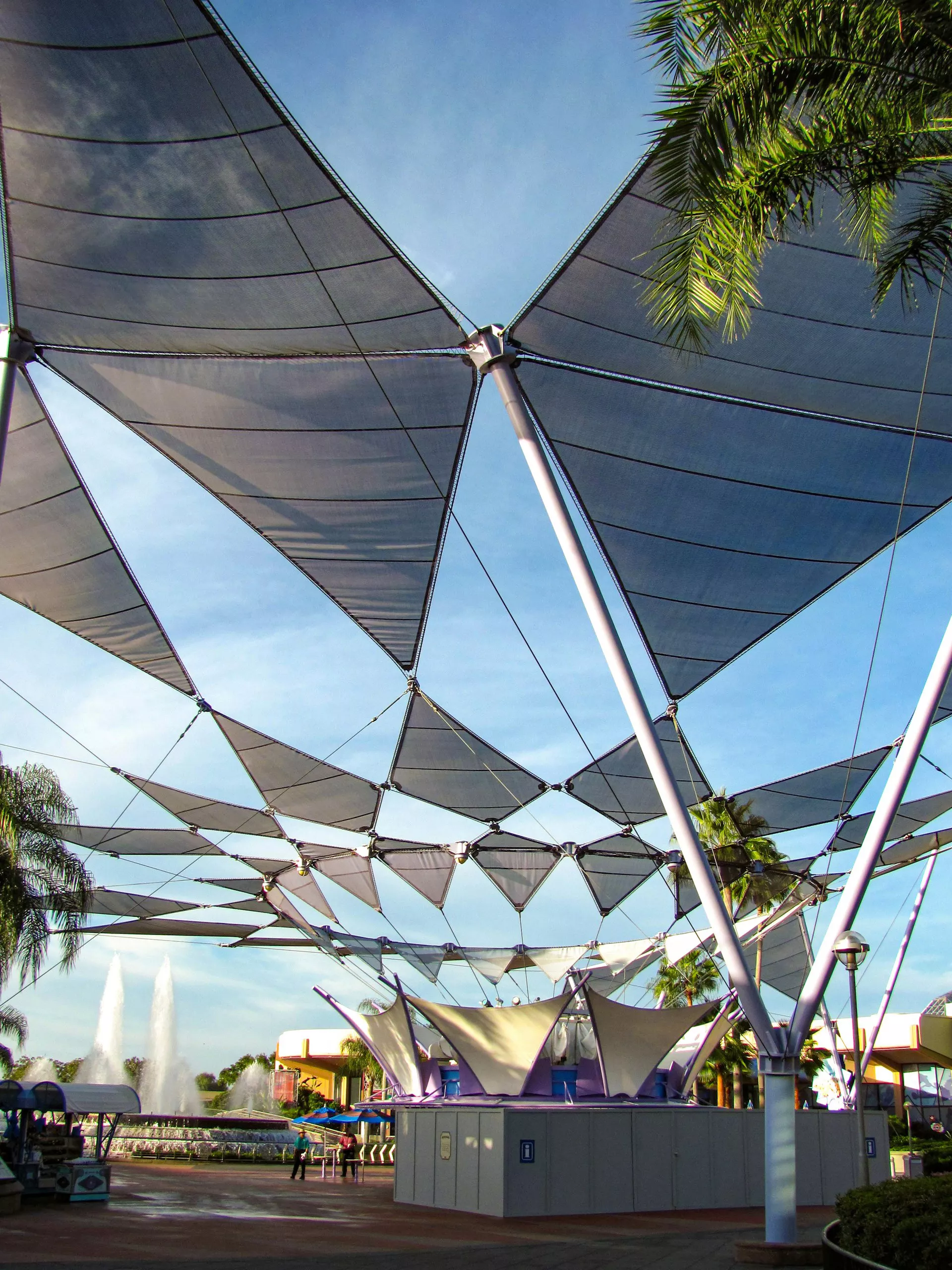
The coated membrane surface reflects a significant portion of solar radiation, keeping surface temperatures noticeably lower than an exposed metal or concrete roof during Sonipat's peak summer months. The tensioned fabric also sheds monsoon rainfall quickly due to its slope and smooth coating, preventing the pooling that flat roofs in this region often experience.
During winter fog, the coating resists moisture absorption, which limits mildew growth — a genuine concern given how long dampness can linger in Sonipat's foggy mornings between December and January.
Why Choose RS Tensile Pvt. Ltd. in Sonipat?
RS Tensile Pvt. Ltd.'s proximity to Sonipat means shorter response times for site visits and after-sales service compared to manufacturers based further away. The company's ISO 9001:2015, ISO 14001:2015, and ISO 45001:2018 certifications reflect documented quality, environmental, and safety management systems followed through every project stage.
CEO Radhey Shyam's direct background in tensile fabrication means design and engineering decisions are informed by hands-on manufacturing experience rather than outsourced consultancy, which shows in the consistency of finished installations across different project types.
If you're planning a car parking shed, walkway, auditorium cover, or any other tensile structure in Sonipat, RS Tensile Pvt. Ltd. can assess your site and provide a design suited to your specific location and requirements. Contact RS Tensile Pvt. Ltd. today to discuss your project.
FAQs
How long does a tensile structure installation take in Sonipat?
Most car parking or walkway installations in Sonipat are completed within two to four weeks after final design approval, depending on structure size and site conditions.
Can tensile structures handle Sonipat's monsoon rainfall?
Yes, tensile membrane structures are designed with sloped tensioning that sheds rainwater quickly, which is well suited to Sonipat's monsoon intensity between July and September.
Are tensile structures suitable for factory premises in Sonipat's industrial areas?
Yes, tensile lightweight structure Sonipat designs are widely used for factory parking, loading zones, and walkways across the Kundli and Rai industrial belts.
Do tensile structures need frequent maintenance in Sonipat's dust conditions?
The coated fabric surface resists dust adhesion better than painted metal sheds, and periodic cleaning is generally sufficient rather than intensive upkeep.
What is the typical lifespan of a tensile structure in Sonipat's climate?
With proper installation and periodic inspection, PVC-coated membranes typically last 10-15 years, while PTFE-coated options can last considerably longer.
Important Keywords & Tags for tensile structure in Sonipat
Popular Search Terms: People searching for tensile structure manufacturer in Sonipat also look for these related keywords and services.
